
The GEO Library: Every Guide We Have Published

This is everything VOCTOS knows about getting a brand cited by AI answer engines, organized so you can find the part you need. Thirty-six guides covering the terminology, the mechanics of each engine, how to measure visibility without fooling yourself, the work that actually moves citations, and the Arabic and Gulf specifics that no other publisher covers.
Two things shape how this is written. Every statistic links to the study it came from, because a large share of the numbers circulating in this field are restatements that have drifted from the original. And where the evidence argues against something we sell, the guide says so.
Start here: what these terms actually mean
The vocabulary is unsettled and most of it was coined by agencies. These five define the field.
Get cited, engine by engine
Engines do not behave alike. A source can lose most of its citation share on one while staying flat on the others, so each needs its own playbook.
Measure it, or you are guessing
Generative engines are non-deterministic. Anything reported without repeated sampling is noise with a dashboard on it.
The work itself
What actually moves citations: liftable passages, a clean entity, earned sources. In that order.
Arabic, the Gulf and Egypt
Arabic AI answers draw on a far smaller pool of sources than English ones. That window is open now and closing.
Careers, agencies and buying
How the discipline is staffed and sold, and how to tell a practitioner from a repeater.
Background reading
How the underlying search systems work, and where generative answers came from.
Want this done for you
Frequently asked questions
What is generative engine optimization?
Generative engine optimization, usually shortened to GEO, is the practice of making a brand and its content likely to be retrieved, quoted and attributed by AI answer engines such as ChatGPT, Google AI Overviews, Google AI Mode, Perplexity, Claude and Microsoft Copilot. It overlaps heavily with SEO, because most cited pages are already indexed and ranking, but the unit of work is different: you optimize a passage to be lifted rather than a page to be clicked.
Is GEO different from AEO?
In practice they describe the same work. AEO stands for answer engine optimization and GEO for generative engine optimization, and Google names both in its own documentation while stating that optimizing for generative AI search is still SEO. Where practitioners genuinely disagree is the measurement layer, not the fundamentals.
Does ranking on Google still matter for AI citations?
Yes. Google’s AI Overviews and AI Mode are generated from Google’s ranked index, so ranking for the question and its sub-questions remains the entry gate for citation. What ranking does not guarantee is the citation itself: that is decided by whether a passage on the page can be lifted cleanly and whether other sources corroborate you. Ranking remains the strongest lever you directly control, but it is no longer the gate it was.
How do I measure whether GEO is working?
By running a fixed prompt set across each engine separately, at a fixed cadence, with several runs per prompt, and reporting share of voice per engine rather than blended. Generative engines are non-deterministic: median citation overlap between two runs of the same query sits at roughly 0.30 to 0.50 depending on the engine, so a single reading tells you almost nothing.
Does GEO work in Arabic?
Yes, and the opportunity is larger than in English. Arabic is a supported language for both Google AI Overviews and AI Mode across Egypt and the Gulf, but Arabic answers draw on a far smaller pool of quality sources, which means a single well-structured Arabic page can become a defining source in weeks. The frontier model inside AI Mode is currently English-only, so both language versions matter for different surfaces.
Where should a brand start?
Confirm you are indexed and eligible to be shown with a snippet, because that is the entry gate. Then check in your server logs which AI crawlers actually fetch the site. Then set a baseline across a fifty-prompt set before changing anything, so you can tell optimization from ordinary drift.
The rest of the library
Related guides
- The GEO Guide: Everything You Need to Know About Generative Engine Optimization
- GEO: Generative Engine Optimization – Your Guide to Ranking on ChatGPT
- Generative Engine Optimization (GEO) Services in Egypt: The 2026 Playbook
- Top 10 GEO Agencies in 2026: The Best Generative Engine Optimization Companies
GEO versus paid placement. ChatGPT Ads is live in nine markets and excludes every paid subscriber tier. See why ChatGPT ads never reach Plus, Pro, Business, Enterprise or Edu subscribers.
Don't miss the chance to
make your website more visible!
Initial consultation and
audit of the current situation

Read also

Article Why AI Still Describes Your Old Brand: Knowledge Cutoffs Explained

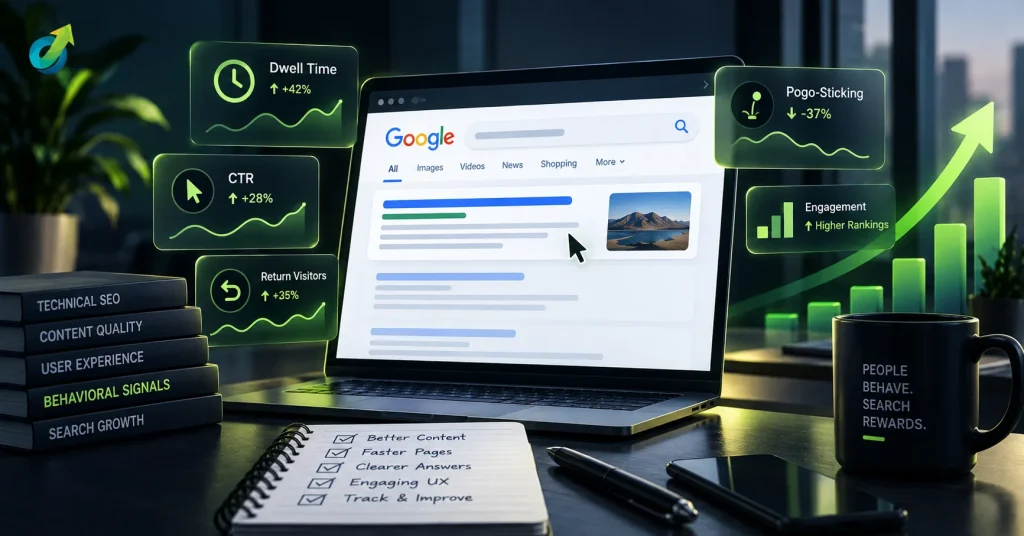
Article Behavioral Factors in SEO: What They Are and How to Improve Them
Article JavaScript Links Are Hiding MENA Sites From ChatGPT and Claude

Article VOCTOS Is a Top SEO, PPC and SEM Company in Egypt on Clutch for 2026
Article Commercial Ranking Factors: The Complete List

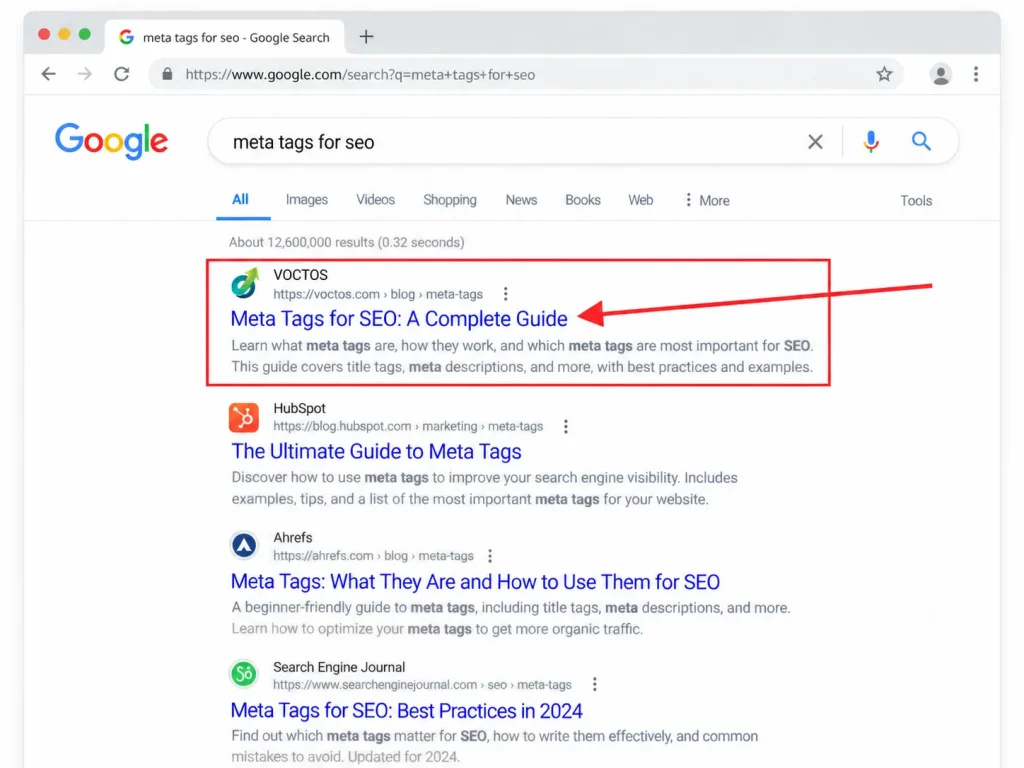
Article The Title Meta Tag: What It Is and How to Write It
Article The Role of Meta Tags in Search Engine Optimization
Article Can You Sue an AI for Defamation? Where the Law Stands





Real Results
More Wins
SEO & GEO for Delta Medical Labs
 GEO
GEO
1M+ monthly organic visits, 159,200 ranked keywords, 5,570 pages cited by AI engines, and 1,186 #1 rankings in KSA.

Arabic SEO, GEO & guest posting for VPNly
 SEO
SEO
65K peak monthly organic visits, 55 guest posts, and 149 pages cited by AI engines.

SEO & GEO for Ogaei Virtual Care
GEO
From 3 to 7,931 monthly organic clicks in 7 months, 2.9M+ impressions, and 40+ keywords in Google’s Top 10.

SEO for Eduverse
SEO
12× search traffic in 10 months, 45% of target keywords in the top 5, and 55% in the top 10.
Trusted by