

Home·Reputation Management·AI Reputation
Six engines have an opinion about you. None of them has an appeals process.
Search reputation had levers — outrank a bad result, or ask a platform to remove it. AI answers have neither. What is left is the supply side: the sources every engine reads before it answers.
Six engines, your own prompt set, answers stored with dates. You keep the report either way.
Engine by engine
Six engines,
six different clocks
They disagree with each other constantly, and the disagreement is diagnostic rather than noise. An answer that is wrong on one engine and right on another is a retrieval problem. An answer that is wrong on all six is an entity problem.
-
01
ChatGPT
Weeks, or a model releaseHow it sourcesIts own search index and live browsing, sitting on top of what the model absorbed during training. Three separate crawlers: GPTBot for training, OAI-SearchBot for the search index, and ChatGPT-User for a page fetched because somebody asked.
What moves itCorrecting the pages it retrieves. Anything held in training memory waits for the next model release, and every model’s training knowledge stops months before today.
Check it yourselfAsk the same question twice, once with browsing on and once off. If the two answers disagree, that is the diagnosis.
-
02
Perplexity
Fastest to moveHow it sourcesRetrieves for almost every question rather than answering from memory. Perplexity Bot builds the index; Perplexity-User fetches a page on demand when a question needs it.
What moves itPublishing a clearer and more current source than whatever it is currently reaching for. Retrieval is always in play, which makes this the most responsive engine in the set.
Check it yourselfAsk your category question and read the numbered citations. They tell you exactly which page produced each sentence.
-
03
Google AI Overviews
Follows your rankingHow it sourcesGoogle’s own index, assembled from pages already ranking for the query and for related ones. There is no separate submission and nothing to buy.
What moves itYour ranking, and how cleanly a passage answers the sub-question. Google-Extended governs some generative uses but does not control crawling for Search, so opting out protects nothing.
Check it yourselfSearch Console does not separate AI Overview impressions from ordinary ones. The query set has to be run and recorded by hand, weekly, with the answer text stored.
-
04
Google Gemini and AI Mode
Weeks to monthsHow it sourcesThe same Google index that powers Search, plus the model’s own knowledge. Google-Extended is a robots.txt token rather than a crawler, and Googlebot keeps crawling either way.
What moves itBeing indexed at all, then being the clearest answer inside the ranking set. Blocking Google-Extended removes you from grounding while your rankings look untouched, and nothing in Google’s own tooling reports that it happened.
Check it yourselfRun the query in AI Mode and note which sources it grounds on. If competitors appear and you outrank them in the blue links, the gap is structure rather than authority.
-
05
Claude
Weeks, if it retrievesHow it sourcesModel knowledge plus web search when the conversation calls for it. ClaudeBot trains, Claude-User fetches on request, and Claude-SearchBot maintains the index.
What moves itPrecise, attributable statements. Claude cites against a specific claim rather than a whole page, so one clean supported sentence outperforms a page that covers everything loosely.
Check it yourselfAsk for a recommendation in your category and watch whether it searches at all. If it answers without searching, the problem is entity strength rather than on-page work.
-
06
Microsoft Copilot
Follows BingHow it sourcesBing’s index. Copilot is Bing with a language model in front of it, crawled by bingbot and controlled through robots.txt and Bing Webmaster Tools.
What moves itYour Bing ranking, which is not the same set as your Google ranking. Bing weights exact-match terms and on-page signals differently, so a page sitting second on Google can be first here.
Check it yourselfCompare your Bing positions with your Google positions for the same terms. A wide gap is visibility nobody on your team is currently measuring.
We report each engine separately rather than averaging them into a single score. One number hides the only thing worth knowing — which engine is wrong, and why.
Why the playbook you already have does not transfer
| On Google | Inside an AI answer | |
|---|---|---|
|
The bad result
|
A URL you can see, rank against, or in some cases have removed. | A sentence generated on the spot. It has no URL, it is worded differently every time, and there is nothing to remove. |
|
Your options
|
Outrank it, request removal where policy allows, respond publicly, or wait for it to age. | Change the sources the model reads. There is no other lever, and there is no form. |
|
Legal recourse
|
Established. Defamation and right-to-be-forgotten routes exist and are used. | Untested and so far unfavorable. The first defamation case over a ChatGPT hallucination ended in summary judgment for OpenAI in May 2025. |
|
How fast it moves
|
Weeks to months, and you can watch the position change daily. | Retrieval can shift in weeks. Anything sitting in training memory waits for the next model release. |
|
What proves it
|
A screenshot of the SERP. The result is stable enough to photograph. | A stored answer history. Generative answers are rewritten constantly, so last month’s screenshot proves nothing. |
|
Who sees it
|
Anyone who searches that query and scrolls. | One person, in a private conversation, who will never tell you it happened. |


Who this is for
Where an AI answer costs the most
Every brand has an AI reputation. It matters more in some categories than others, and the pattern is consistent: the higher the trust required to buy, the more an answer is worth. These are the sectors where a single sentence in a private conversation decides whether the inquiry ever arrives.
Forex, trading and financial services
“Is [broker] a scam?”
The highest-risk category on this list, because the buying question is literally whether you are a fraud. Engines reach for complaint threads, warning lists and regulator notices, since that is where the discussion lives. A closed regulatory matter, a license that has since changed, or a name shared with a genuinely fraudulent operation all surface as current fact. And the answer is delivered privately to somebody who was about to move money, so the inquiry you lose is one you never knew existed.
If your category is not listed, the test is simple. Ask an assistant the question your buyer would ask before contacting you, in the language they would ask it in. If the answer is wrong, thin, or names somebody else, the category qualifies.
Where the answer comes from
What an engine trusts, in the order it trusts it
Reputation work fails when it is aimed at the wrong tier. Most budgets go to the hardest layer to move while the easiest one sits unattended.
Reference and editorial Hardest to move
Treated close to settled fact. A claim here tends to survive across engines and across model versions, which cuts both ways: it is the most durable place to be right and the most expensive place to be wrong.
Where that is: Wikipedia, Wikidata, major news and trade publications, analyst reports
Verified platforms and curated lists Best effort-to-effect ratio
Carries a verification signal your own marketing cannot buy. Brands with active profiles on Trustpilot, G2 and Capterra have been measured at roughly three times the likelihood of being cited by ChatGPT.
Where that is: G2, Capterra, Trustpilot, Clutch, and authoritative best-of list articles
Community and professional discussion Used for experience, not facts
Models reach for these when the question is subjective: what is it like to work with them, what went wrong for someone else. Measured share varies wildly by query set, so treat any single percentage you read with suspicion.
Where that is: Reddit threads, YouTube reviews, LinkedIn posts and articles
Your own site and listings Start here
The counterintuitive one. A Yext analysis of 6.8 million AI citations found first-party websites and business listings accounted for 86% of citations once intent and location were taken into account. The page that answers the question plainly outperforms most outreach.
Where that is: Your service and comparison pages, Google Business Profile, your own FAQ and documentation
Read this as a sequence rather than a ranking. Fix your own pages and listings first because they carry the largest share and cost the least. Repair the entity record second. Work the third-party layer third. Tier 1 is where you end up, not where you start.
How the engagement runs
-
Baseline
Weeks 1 to 2
- Agree a prompt set of 40 to 80 questions, written the way your buyers ask them
- Run it across all six engines, in every language your market uses
- Store the full answer text with its date, since nothing is retained engine-side
- Sort every problem answer into stale, merged, invented or absent
-
Diagnosis
Weeks 2 to 4
- Run each wrong claim with search on and with search off to separate retrieval from memory
- Read Perplexity’s numbered citations to name the exact page producing the claim
- Check the entity record across Wikidata, registers and listings for merge risk
- Deliver a source list rather than a general sense that the internet is unkind
-
Source correction
Weeks 4 to 12
- Correct and date your own pages so the current fact is unambiguous
- Repair structured data so the machine-readable version of you matches the human one
- Rebuild the review platform profiles engines reach for most often
- Publish the page that answers the question no existing source answers well
-
Re-measurement
Monthly, ongoing
- Re-run the frozen prompt set on the same schedule, every engine separately
- Report changed, unchanged or worse, with last month’s text beside this month’s
- Flag anything sitting in training memory as waiting on a model release
- Everything stored in your portal so a run from three months ago can be reopened
What you get, month by month
Six deliverables. The first one is useful on its own, and several clients have stopped there because the audit told them the problem was smaller than they feared.
The baseline audit
A prompt set built from real buying questions, run across ChatGPT, Gemini, Perplexity, Claude, Copilot and AI Overviews. Full answer text stored per engine per run, sentiment scored, every citation traced, and competitors named in your place recorded query by query.
Retrieval versus memory diagnosis
Each problem answer tested with search on and off, so you know whether you are fixing a page or waiting for a model release. This single test decides where the budget goes.
Source correction on what you control
Outdated pages, retired products, stale bios and missing structured data, fixed first because they carry the largest share of citations and cost the least to change.
Entity repair
Consistent naming across your site, Wikidata, your Google Business Profile and your listings, so a model resolves your name to you rather than to a company with a similar one.
Third-party and platform work
Review platforms, industry lists and directories, worked honestly and under your own name. Disclosure on anything posted on your behalf, and no fabricated reviews under any circumstances.
Monthly re-measurement
Same prompts, same engines, previous answers kept for comparison, and the months where sentiment fell reported rather than skipped.
Move across the pack to read each one.
Want to know what the engines are saying about you right now?
We will run your prompt set across six engines and send you the answers, the sentiment and the citations.
No obligation, reply within 24h.Before you buy this
What AI reputation work can and cannot do
Most of what is sold in this category quietly assumes powers that do not exist. Here is the line, drawn before you spend anything.
What it does
- ✓Show you exactly what six engines say about you today, stored with dates you can re-read later
- ✓Trace a wrong answer back to the specific page, listing or thread that produced it
- ✓Correct the sources you control, and repair the entity record so you stop being confused with a namesake
- ✓Rebuild the review platform profiles engines reach for roughly three times more often than an equivalent page
- ✓Tell you honestly whether a claim is fixable now, waiting on a model release, or accurate
What it does not
- ✗Delete a claim from an AI answer. No engine offers a takedown form for a business or an individual
- ✗Appeal a specific answer. Reporting a response feeds general model improvement, not a case file about you
- ✗Promise a legal remedy. The first defamation claim to reach judgment ended in summary judgment for the AI company
- ✗Give you a date for anything held in training memory. That waits for a model release nobody outside the lab controls
- ✗Outrun a complaint that is true. If your operations produced it, we will say so rather than bill you to bury it
If the honest finding is that the answer is accurate, we will tell you and decline the work. See it for yourself →
Trusted by

































The people who will run this for you
The team Head of SEO and GEO
Beshoy Adel
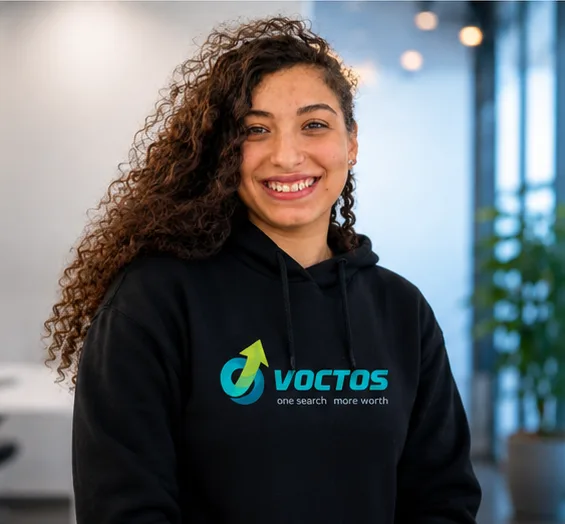 Senior SEO Specialist
Monika Gabriel
 Senior Full-Stack Web Developer
Reem Sameh
 Head of PPC
Keroles Mousa
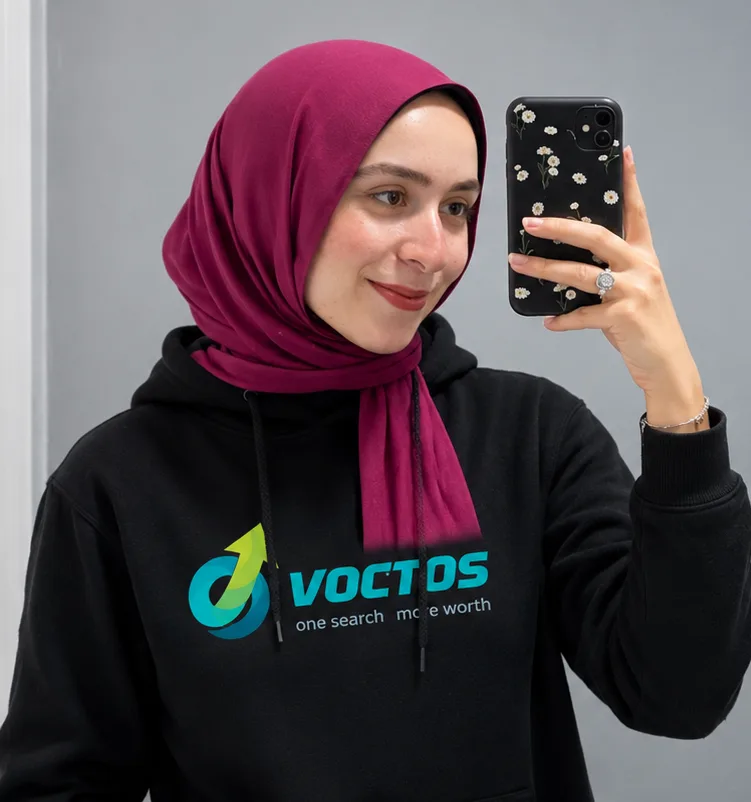 SEO Specialist
Tasneem Moustafa
 Link Building Specialist
Shadi Milad
 SEO Specialist
Aya Kandil
 SEO Content Writer
Marina Magdy
How we report it
Two clients, two completely different engine shapes
We report six engines separately on every engagement. These two clients show why: same agency, same method, opposite shapes.
Delta Medical Labs
Concentrated5,570 pages cited across AI assistants, July 2026
- AI Overview3,60065%
- AI Mode1,80032%
- ChatGPT1302%
- Gemini401%
Eduverse
Even spread171 pages cited across AI assistants, August 2026
- AI Mode6538%
- AI Overview5935%
- ChatGPT4727%
- 89.1%of the sites ChatGPT cites, Perplexity never touches for the same questionWellows, 804,058 answers, Sept 2025 to May 2026
- 79.6%of sources appear on one engine only22.7M citations across 1,146,483 questions, 2026
- 46xgap in brand citation rate between ChatGPT at 0.59% and Perplexity at 13.05%Study of 34,234 AI responses, 2026
Delta’s AI Overview count is 27 times its ChatGPT count. Eduverse’s top and bottom engines sit 18 pages apart. Same agency, same method, opposite shapes. Any single score we quoted you would have described neither.
Audit what the engines say about usClient reviews
All reviewsegyptpyramidstours.com

Marcous Fathy
Business Development Manager
We've just completed our first quarter with Beshoy, and the results have been outstanding. Our organic traffic grew from 3,650 to 18,720, we achieved a 300%+ ROI from reservations, and secured Featured Snippets for multiple tour packages.
24 September 2023
drserkanaygin.com

Dr. Serkan Aygın
Hair Transplant Surgeon
VOCTOS built an SEO strategy that grew our bookings and expanded our visibility to a whole new audience by 375%, with our keywords in the top search results up more than 1600%. Their understanding of Arabic search behavior made all the difference.
7 December 2021
vpnarabi.com

Samy Amin
Head of Editorial, VPN Arabi
VOCTOS developed and executed a full Arabic SEO strategy for our VPN company. We saw a 280% increase in organic traffic, secured the top spot for competitive keywords, and our content got cited 160 times in ChatGPT responses. What really impressed us was how well they understand the Arabic market, not just generic SEO translated into Arabic.
1 June 2025
Saif Cabinets Decor

Abraam Samy
CEO of Saif Cabinets Decor
When we first came to VOCTOS, our business was almost invisible online despite years of quality work. Their team fixed the technical issues holding us back and built an SEO strategy ready for AI search too. Within months we ranked on Google's first page for over 55 keywords, with organic traffic up around 170%.
4 June 2026
serialtranslation.com

Samy Ibrahim
General Manager of Serial Translation
VOCTOS took over our Google Ads campaigns and brought our CPC down by 53%, while our conversion rate jumped 164.7%, with much higher quality leads coming through. It has been a pleasure working with the entire team.
15 July 2022
royalhaircenter.com

Dr. Mathew John
Senior Surgeon
When we first partnered with VOCTOS, our clinic had just two physicians and one night doctor, with everyone juggling several roles. We've grown a lot since then, today we have three physicians, a full-time secretary, and dedicated cleaning staff, largely thanks to the steady flow of new patients their marketing brought in.
11 August 2021
nsfx.com

Rami Dawud
Marketing Manager
Beshoy is a true SEO professional, punctual, and the quality of his delivery is fantastic. His analysis gave us real insight and a clear path to build our brand's online presence.
1 May 2019
marketingcollege.com

Nahed Maher
Brand Ambassador
SEO is a complicated world, and few people bring the creative techniques Beshoy does. He stays on top of the latest SEO trends and genuinely cares about getting his clients the most value.
16 October 2016
nrg-digital.com

Ahmed Sabbour
CEO
It's been a real pleasure working with Beshoy. He's innovative, broad-minded, and has a great ability to analyze, summarize, and deliver strong results, even working remotely.
16 October 2016
vintage-vaults.com

Sherif El-Haddad
Founder / CEO
Beshoy has done a great job increasing our SEO ranking. He's also helped boost our conversions and improve the website.
7 December 2023
Questions we get asked about AI reputation
No, and neither can anyone else. There is no takedown form on any engine and no appeal process for a generated answer. The first defamation case brought over a ChatGPT hallucination ended in summary judgment for the model owner in May 2025, so the legal route is currently closed too. What can be changed is the supply side: correct the sources it reads, fill the gap that let the invention through, and re-measure. That works, it is just slower and less satisfying than a takedown button.
Then it is answering from memory rather than searching. Every ChatGPT model’s training knowledge stops months before today, so anything you changed after its cutoff does not exist in its memory until the next training run. Test it yourself: ask the same question with browsing on and with it off. If the two answers disagree, that is the diagnosis, and publishing more will not speed it up.
No. Nobody controls model output and any agency that claims to is describing something it does not have. What we commit to is the input side and the measurement: what we changed, when, and what the answers said before and after. If an engine will not move, you will see that in the report rather than hear an excuse.
Usually, and it is often the easiest win on the list, because it is rarely about them. The engine names them because their page answers the question and yours does not, or because their entity record is cleaner. Both are things you can act on this quarter. We record it query by query so you can see whether it is one competitor across everything or different ones per question, which are different problems.
Then we tell you, and the fix is operational rather than editorial. Burying an accurate complaint under content is expensive, temporary and it makes the eventual correction worse. What we can help with is making sure the resolution is as findable as the complaint, and that anything you have genuinely fixed is documented somewhere a model can read.
Perplexity moves first, often within weeks, because it retrieves for almost every question. Google AI Overviews follow your ranking, so they move when the ranking does. Anything held in training memory waits for a model release and no schedule for that is published. We report all three separately rather than averaging them into one number that describes none of them.
Yes, and the mechanics are the same while the sources differ. For a person, the entity record leans on LinkedIn, published bios, interviews and any Wikipedia or Wikidata presence, and the failure mode is usually confusion with someone who shares the name rather than an invented allegation. It is also the case where the stored answer history matters most, because a person may need to show what was being said and when.