
AI Search Optimization in Egypt: Ranking on ChatGPT, Gemini, Perplexity & Copilot
The last twelve months have rewritten the rules of search in Egypt. The marketing director of a Cairo fintech recently told us their three biggest demo-request drivers are now ChatGPT, Perplexity, and Google AI Overviews, in that order. Classic Google search, the engine we’ve optimized for since 2017, slipped to fourth.
That shift is measurable from Egypt specifically. We ran 16 matched commercial prompts through Google AI Overviews from an Egyptian IP address, and the Arabic answers cited 44 sources without a single B2B directory or third-party ranking list among them.
That is the new reality of AI Search Optimization. This guide explains exactly how VOCTOS approaches it for Egyptian brands, without the marketing fluff most agency pages are wrapped in.
What AI Search Optimization actually is
AI Search Optimization is the practice of engineering a brand’s web presence so that AI-powered search engines and assistants, ChatGPT, Google Gemini, Perplexity, Microsoft Copilot, You.com, Claude, and the next generation that will follow, surface, recommend, and cite that brand when users ask questions in their domain.
It overlaps with Generative Engine Optimization (GEO) and Answer Engine Optimization (AEO), but the lens is different. GEO focuses on generative responses, AEO focuses on direct question-answering, and AI Search Optimization is the umbrella discipline that aligns both with the new reality of LLM-powered discovery.
Why this matters for Egyptian companies in 2026
Egypt’s digital buyer journey has bifurcated. High-intent B2B and B2C research now happens inside AI assistants, especially among professionals in finance, technology, real estate, and education. Three signals make the urgency concrete:
- ChatGPT browsing is the default research workflow for many Cairo-based knowledge workers under forty.
- Perplexity has become a serious referrer for B2B SaaS sites in MENA, small in absolute volume, but extremely high in conversion rate.
- Google AI Overviews consume the entire above-the-fold area on most informational queries served from Egypt.
If your brand isn’t being cited inside these surfaces, your competitors are educating your prospects with their version of the truth.
How AI search engines actually pick what to cite
The mechanics differ across engines, but a common pattern emerges from our internal testing across hundreds of prompts in the Egyptian market:
- Authority signals first. The model favours candidates with existing search rank and recognisable brand signals. Sites that don’t rank in the top 20 on classic Google rarely get cited.
- Extractability second. Among authoritative candidates, the model picks the page where the answer is cleanest to extract, clear structure, explicit claims, structured data.
- Freshness and consensus third. When multiple authoritative sources agree, the model is more confident citing them. Outdated or contradictory pages get filtered out.
This is why “AI hacks” don’t work. There’s no prompt-injection trick that survives in production. The work is unglamorous: be authoritative, be extractable, be fresh.
The VOCTOS AI Search Optimization framework
1. Prompt-set definition
We start every engagement by defining a fixed set of 50–150 prompts that real prospects ask in the client’s category, in English and, where relevant, Arabic. This becomes the measurement spine for the entire program.
2. Baseline visibility audit
We run the prompt set across ChatGPT, Gemini, Perplexity, and Copilot and capture which brands are cited, which sources are pulled, and where the client currently sits. Most Egyptian brands start with single-digit citation rates on prompts they think they own.
3. Entity and authority reinforcement
If the model doesn’t already know your brand, citation is impossible. We rebuild entity signals, Wikidata, schema.org Organization, Crunchbase, LinkedIn Company, Egyptian and regional directories, and earned mentions in respected publications.
4. Citation-worthy content production
We produce the content forms LLMs preferentially cite: definitions, frameworks, original data, comparison tables, and structured how-to guides. Every asset is engineered to be self-contained, quotable without losing meaning.
5. Continuous monitoring
The prompt set is re-run monthly. We track citation rate, sentiment of mentions, and competitor displacement. Reporting goes far beyond classic rank tracking.
Local nuances that change everything in Egypt
Two factors make AI Search Optimization in Egypt different from the same work in London or Dubai:
Bilingual reality. Egyptian professionals query in English, but their team and clients often consume the answer in Arabic. Brands that publish bilingual, properly tagged content win citations in both languages from the same content investment.
Trust topology. AI assistants ground answers heavily on review platforms, Google Business Profile, and Trustpilot. In Egypt, a relentless review acquisition program produces disproportionate AI search lift compared to mature markets where reviews are saturated.
Mistakes that quietly kill AI search visibility
The mistake we see most often is treating AI Search Optimization as a content-only problem. Without entity work and structured data, even excellent content gets ignored. The second mistake is publishing AI-generated content unedited, which typically fails on accuracy, originality and first-hand experience.
The third mistake is impatience. Brands that rebuild their site for AI search and then stop after one quarter never give the engines time to update their grounding. The minimum serious commitment is two quarters; in our engagements citation lift has usually become measurable after two to three quarters, though it varies by starting authority.
What working with VOCTOS looks like
Our AI Search Optimization engagements run as 90-day foundations followed by ongoing monthly programs. The 90-day phase covers prompt-set definition, baseline audit, entity rebuild, schema layering, and the first cohort of citation-worthy assets. Ongoing work focuses on production cadence, monitoring, and authority outreach.
Frequently Asked Questions about AI Search Optimization in Egypt
Is AI Search Optimization the same as SEO?
No. SEO optimizes for ranking on Google’s results page. AI Search Optimization optimizes for being cited inside AI-generated answers across multiple engines. The two share fundamentals, authority, structure, schema, but the tactics, measurement, and target outcomes are different.
Which AI engine should an Egyptian brand prioritize?
Start with the engines your customers actually use. For most B2B Egyptian brands, that means ChatGPT and Google AI Overviews first, Perplexity second, and Gemini and Copilot tied for third. We define this priority order during the prompt-set discovery in week one.
Can my brand appear in ChatGPT without paying OpenAI?
Yes. Citations inside ChatGPT (with browsing enabled) are based on the open web, the same factors that determine SEO rank, plus structured-data extractability. There is no pay-to-be-cited model. The investment is in your content and authority, not in OpenAI.
How do you prove ROI on AI search work?
We measure citation rate on a fixed prompt set, AI Overview presence on tracked keywords, AI referral traffic in GA4, and brand search lift over time. Most clients also track attributed pipeline from “found you on ChatGPT” entries in their CRM.
Why hire VOCTOS for AI Search Optimization?
We’re a senior, Cairo-founded agency with nine years of operating history and Google Premier Partner status, and a deliberate focus on the AI search shift since 2024. Our team builds programs you can actually measure, not slide decks full of buzzwords.
Related guides
Don't miss the chance to
make your website more visible!
Initial consultation and
audit of the current situation

Read also

Article Tag Clouds in SEO: What They Are and How to Use Them
Article What Are Duplicate Pages and Why Are They Dangerous
Article Why AI Still Describes Your Old Brand: Knowledge Cutoffs Explained

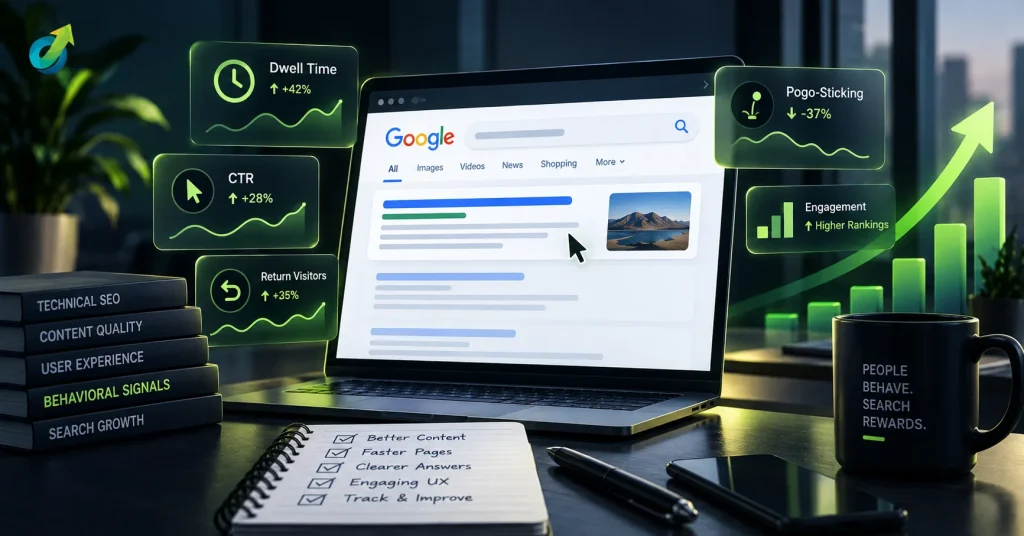
Article Behavioral Factors in SEO: What They Are and How to Improve Them
Article JavaScript Links Are Hiding MENA Sites From ChatGPT and Claude

Article VOCTOS Is a Top SEO, PPC and SEM Company in Egypt on Clutch for 2026
Article Commercial Ranking Factors: The Complete List

Article The Title Meta Tag: What It Is and How to Write It

Real Results
More Wins
SEO & GEO for Delta Medical Labs
 GEO
GEO
1M+ monthly organic visits, 159,200 ranked keywords, 5,570 pages cited by AI engines, and 1,186 #1 rankings in KSA.

Arabic SEO, GEO & guest posting for VPNly
 SEO
SEO
65K peak monthly organic visits, 55 guest posts, and 149 pages cited by AI engines.

SEO & GEO for Ogaei Virtual Care
GEO
From 3 to 7,931 monthly organic clicks in 7 months, 2.9M+ impressions, and 40+ keywords in Google’s Top 10.

SEO for Eduverse
SEO
12× search traffic in 10 months, 45% of target keywords in the top 5, and 55% in the top 10.
Trusted by