
The VOCTOS Client Portal: SEO, GEO, AEO and Paid Media Behind One Client Login
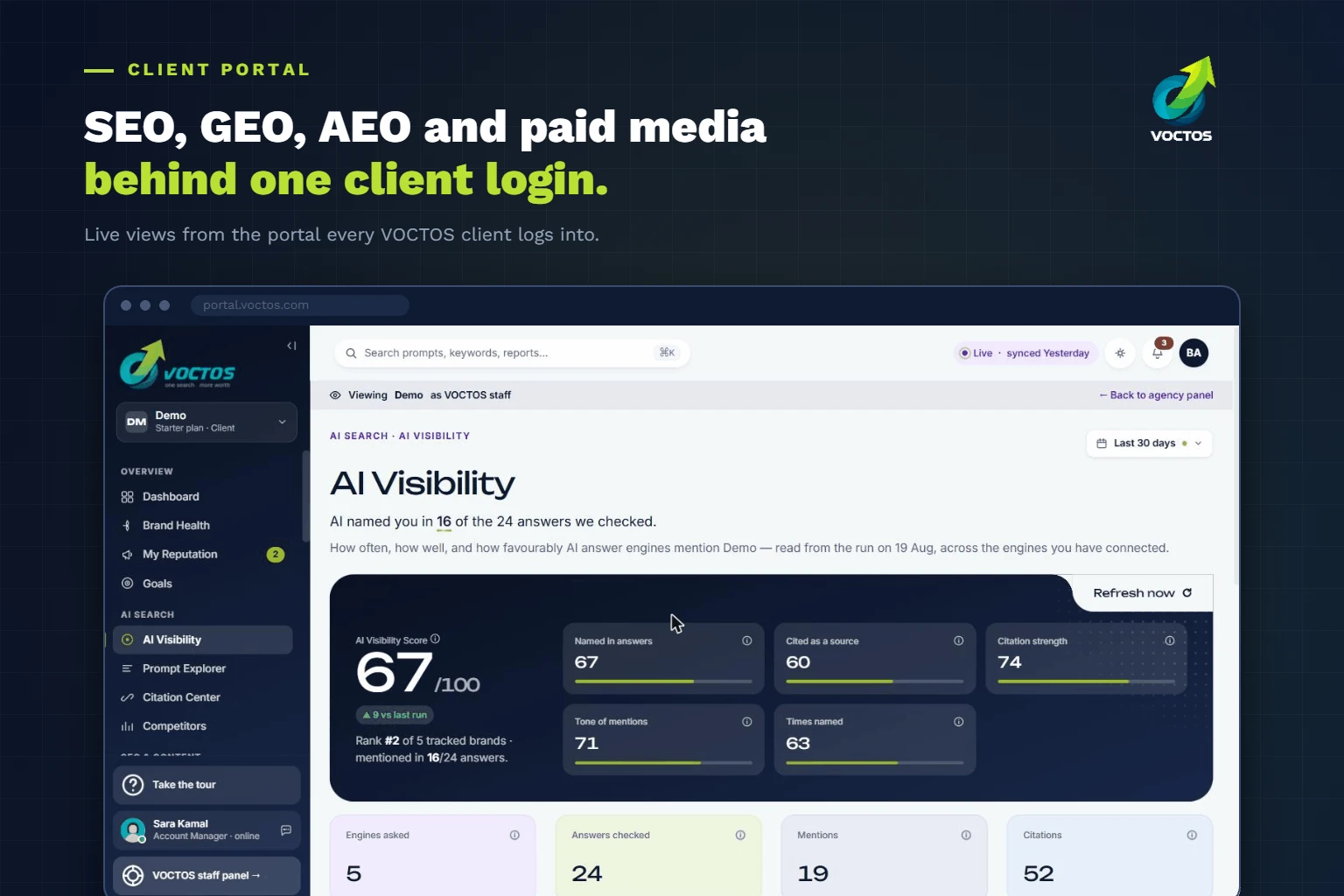
The VOCTOS Client Portal is a client-facing platform where a brand can watch how AI answer engines describe it, see the exact sources those answers were built from, and follow the SEO, content and paid media work that changes both. It runs at portal.voctos.com. A client logs in and sees AI visibility scored across five signals for ChatGPT, Claude, Gemini and Perplexity, every prompt we monitor, every citation gained or lost, Search Console and GA4 and Semrush unified into one SEO view, live Google and Meta ad performance with waste analysis, and the roadmap, tasks, content approvals, goals and invoices for the account. It comes with a VOCTOS engagement and is not sold as separate software.
As of August 2026, we have not found another agency in the Middle East that puts AI search measurement, technical SEO, content workflow, paid media management and billing behind one client login. This article defends that claim screen by screen. Every screenshot below is a live view of the portal running on a demo workspace, not a mockup.
This is the full walkthrough. If you only want the measurement side, the AI visibility scoring, prompt tracking and citation states explained on their own, read Inside the VOCTOS Client Portal: AI visibility measurement and campaign delivery in one login.
 Live portal · auto-playing tour
Why we built a portal instead of buying another tracker
The AI visibility tool market is not short of options. We have paid for several of them. The measurement is usually fine. The problem is what happens after the measurement.
A tracker tells a client that their score went from 58 to 67. It cannot tell them that the number moved because an ISO accreditation page went live three weeks ago, that Gemini picked it up first, that a Reddit thread which used to carry them has gone dead, and that the fix for the dead thread is sitting in a task queue with a name against it. Those facts live in four different systems: the tracker, the content calendar, the ticketing tool and somebody’s inbox.
That gap is expensive. In the AgencyAnalytics 2026 benchmarks survey of 494 agency professionals, 97% said accurate reporting matters for client retention and 76% called it extremely important, up from 70% the year before. The single most common question clients ask their agency is whether performance can be connected to revenue (55%). And 48% of agencies admitted they struggle to track users who discover a brand through AI tools at all, which is now the number one attribution problem in the industry.
Meanwhile the behavior being measured has moved fast. SparkToro and Similarweb put 68% of US Google searches ending without a click in the first four months of 2026, up from 60% in 2024. Pew Research found that when an AI summary appears, people click a traditional result on 8% of visits instead of 15%. And in G2’s March 2026 survey of 1,076 B2B software buyers, 51% now start their research with an AI chatbot more often than with Google, up from 29% eleven months earlier. A third of them bought from a vendor they had never heard of before the chatbot named it.
If a third of your future customers are meeting you inside a generated answer, the answer is the thing to manage. Managing it needs measurement and delivery in the same place.
The first screen: what a client sees at nine in the morning
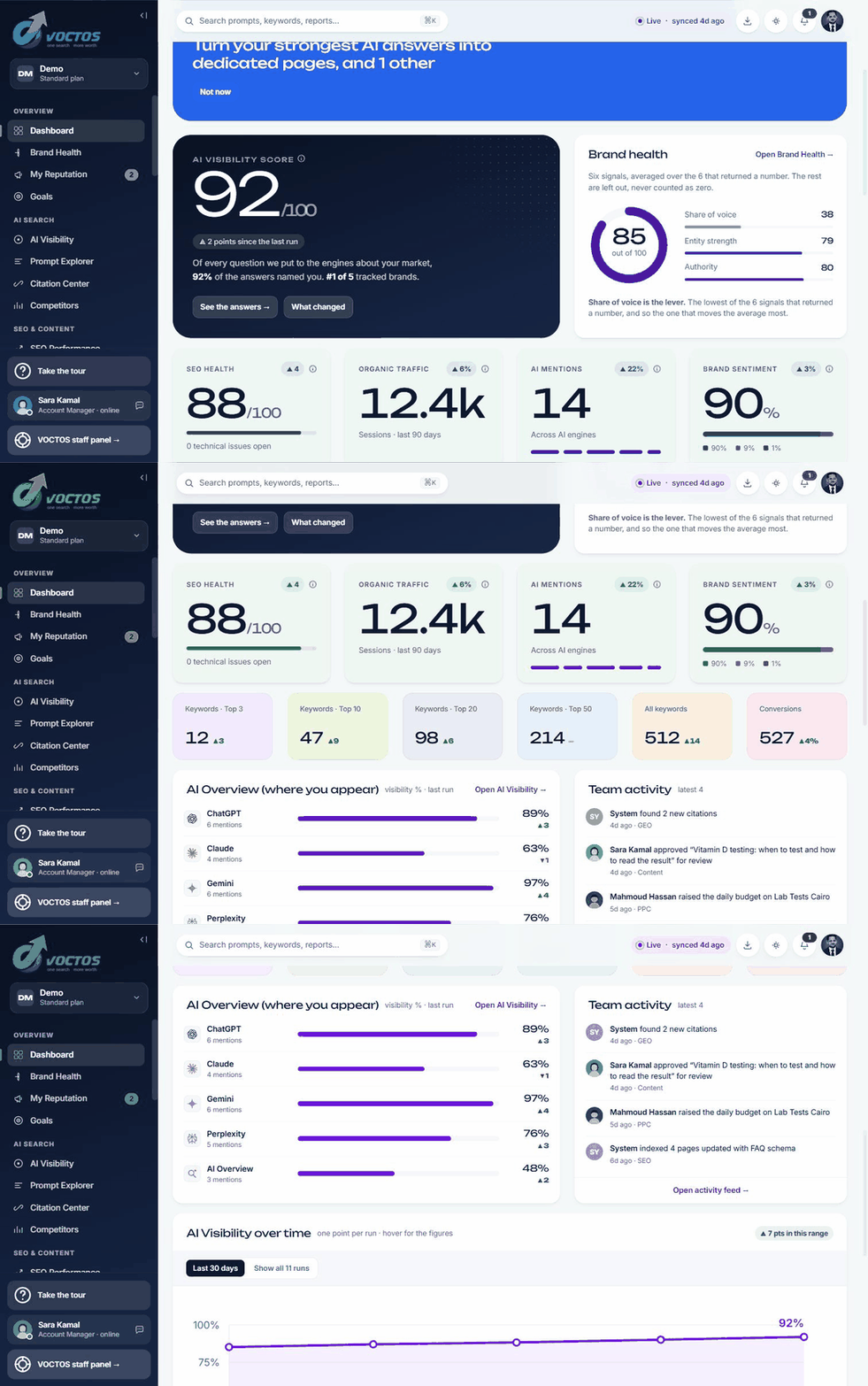
The dashboard opens on six numbers: AI Visibility Score, SEO Health, organic traffic, AI mentions, brand sentiment and the paid conversions figure. Under those sit keyword positions, open tasks, work completed this month and hours logged against the account. On the right, the next meeting, the current invoice and the last four things a named person actually did.
The sentence at the top is written fresh each morning from that day’s data. On the screenshot below it reads: AI visibility is up 9 points, and 2 new citations landed this week. That is the whole point of the screen. A client should not have to interpret a chart to find out whether the month is going well.
AI Visibility: one score, five signals
Most trackers report a single blended visibility percentage. It tells you something moved. It does not tell you who should fix it. The portal splits the score into five signals, and each one maps to a different piece of work:
| Signal | What it measures | What a low score sends you to do |
|---|---|---|
| Visibility | How often you appear at all in answers to your tracked prompts | Prompt coverage and topical presence. You are outside the consideration set. |
| Authority | How strong the sources were that the engine used when it named you | Earn placements on domains the engine already trusts |
| Citation Quality | Whether the pages cited about you are the ones you would have chosen | Make your own pages retrievable, and displace third-party pages that outrank them |
| Sentiment | How favorably you are described, separately from whether you are named | Go to the source material shaping the description: reviews, forums, press |
| Coverage | How much of the tracked prompt set returns you at all | Breadth. Usually there is no content for entire sub-topics |
| Freshness | How recent the material the engines are drawing on is | Update cadence on the pages that actually get cited |
| Entity Strength | How clearly the engines understand you as a distinct entity | Schema, Wikidata, directory consistency, knowledge panel |
| Brand Accuracy | Whether what the engine says about you is factually correct | Source correction, and the most urgent of the eight whenever it is low |
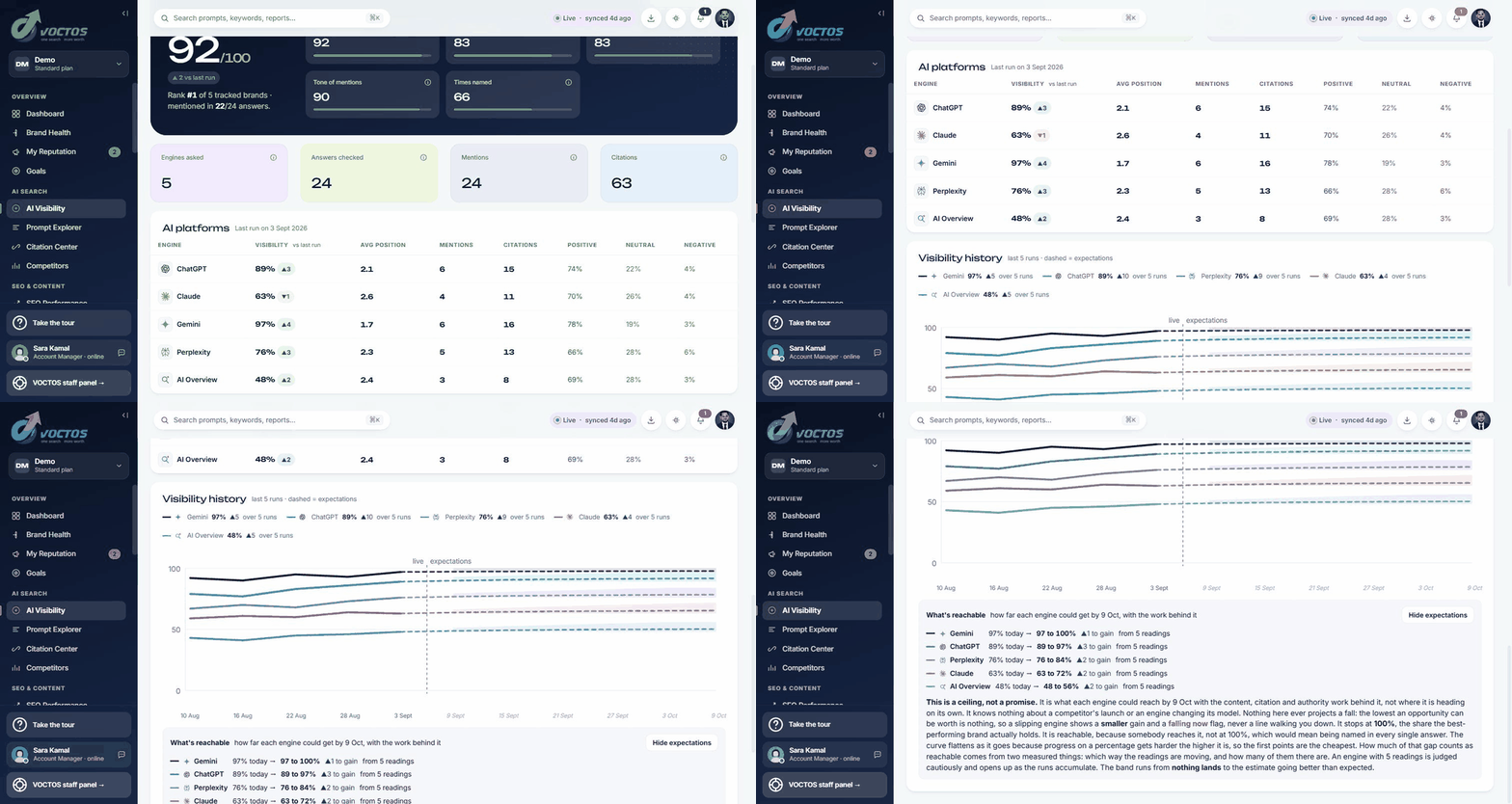
Under the composite score, every engine is reported on its own row: visibility percentage, average position, mentions, citations, and the positive, neutral and negative split. We keep them separate because they behave differently. In the run below, Gemini sits at 83% and Claude at 50% for the same brand on the same day. Averaging those two into one number would hide the only interesting thing on the screen.
The page also states its own method in plain text rather than treating it as a trade secret: we run your tracked prompts on each connected engine, then score presence, ranking position, citation authority, sentiment and entity accuracy. A client can argue with a method they can read.
Prompt Explorer: the questions, and who beat you to the answer
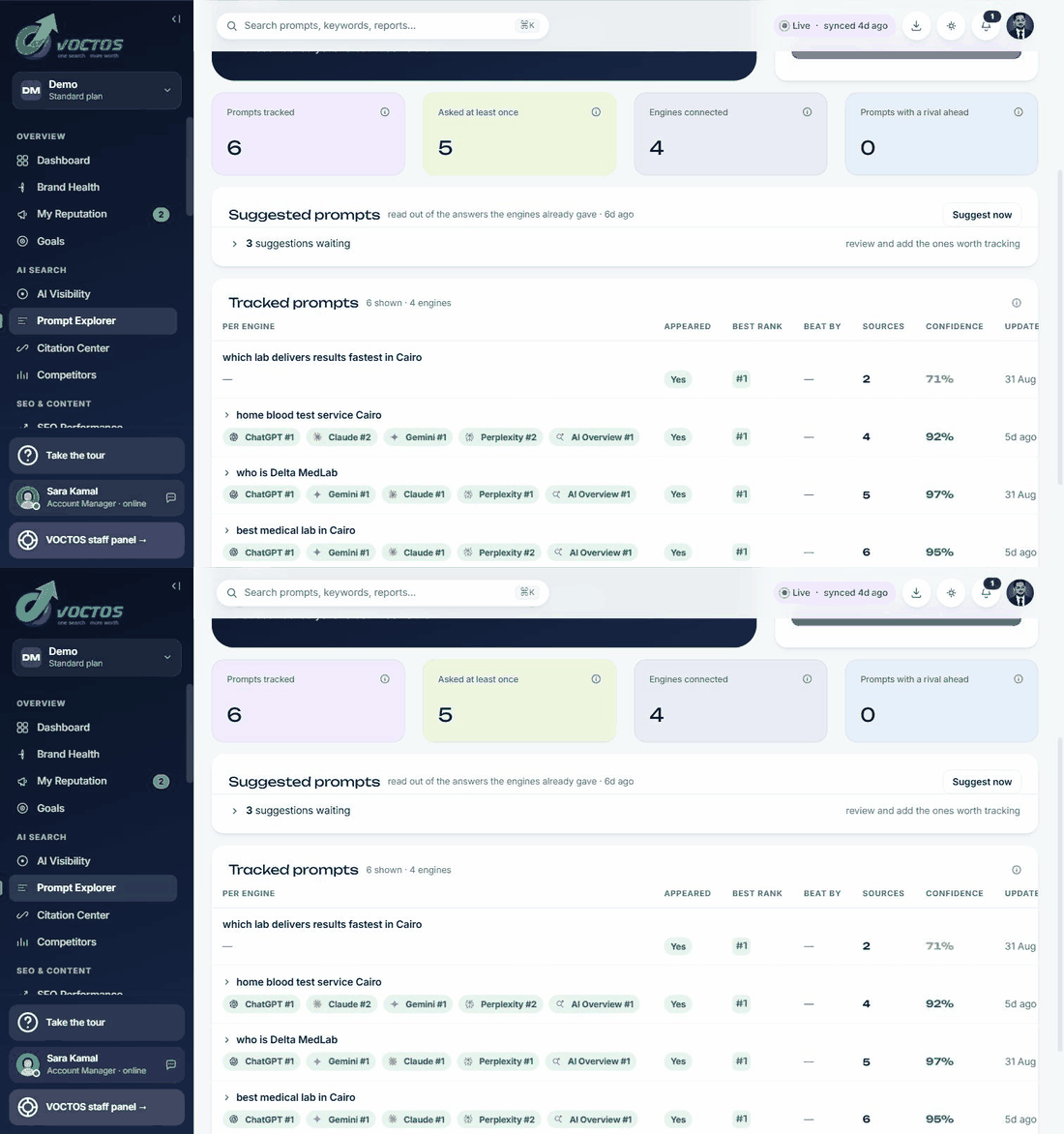
Every monitored prompt gets a row. Which engines returned you, whether you appeared at all, your best rank, the brand that outranked you, how many sources the answer drew on, and a confidence figure for the reading.
Two columns earn their place here. Beat by turns a bad result into a named target instead of a vague worry. And Replay stores the answer text itself, per engine, per run, with the date and the rank at that point. Generative engines rewrite their answers continuously, so a screenshot from last month proves nothing. A stored history lets you line a change in wording up against a page you published, a review that landed, or a competitor campaign that started.
Citation Center: new, lost, broken, and cited without you
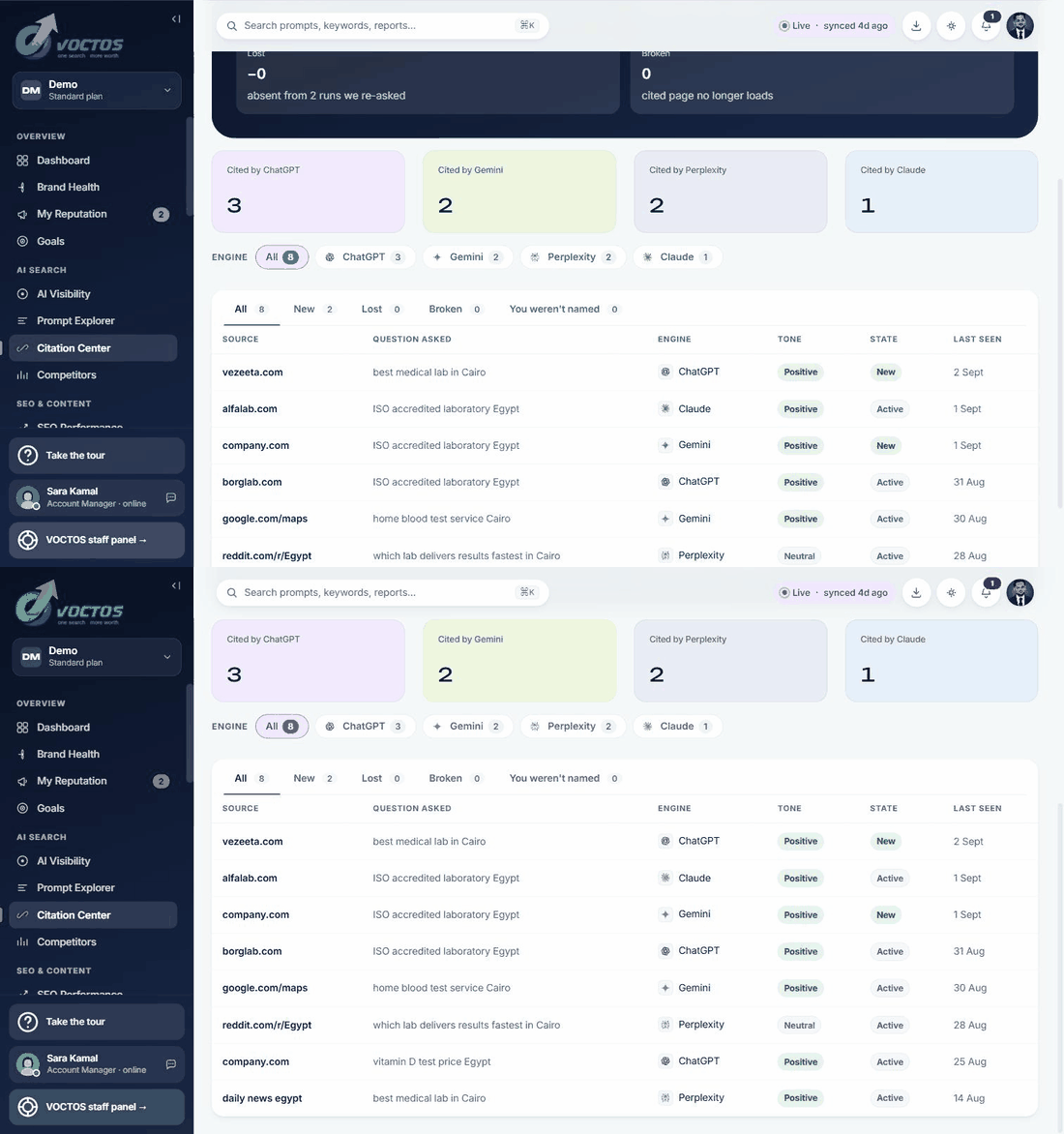
When an engine answers a question about you it links to the pages it built the answer from. Those links are citations, and most tools show you the current list. The portal tracks four states, because the states are where the work is:
| State | What it means | Why it is actionable |
|---|---|---|
| New | First seen in the latest run | A source that has just started carrying you. Reinforce it. |
| Lost | Absent from the last two runs we re-asked | The earliest warning available. A source drops you before the score falls. |
| Broken | The cited page no longer loads | An engine is sending people to a dead URL with your name on it. Free fix. |
| Cited without you | A source was used to answer your question, and your brand was not in the answer | The engine already trusts that source. This is a ranked list of where to earn a mention next. |
Every row also carries the exact question asked, the engine that asked it, the tone of the mention and when it was last seen. Ranking sources by how often an engine reaches for them is a better outreach list than any domain authority score, because it is derived from what the engine actually did.
Competitors the engines name, not the ones you listed
Competitor tracking normally starts with the client typing in three rivals. You then get told about the three rivals you already knew about.
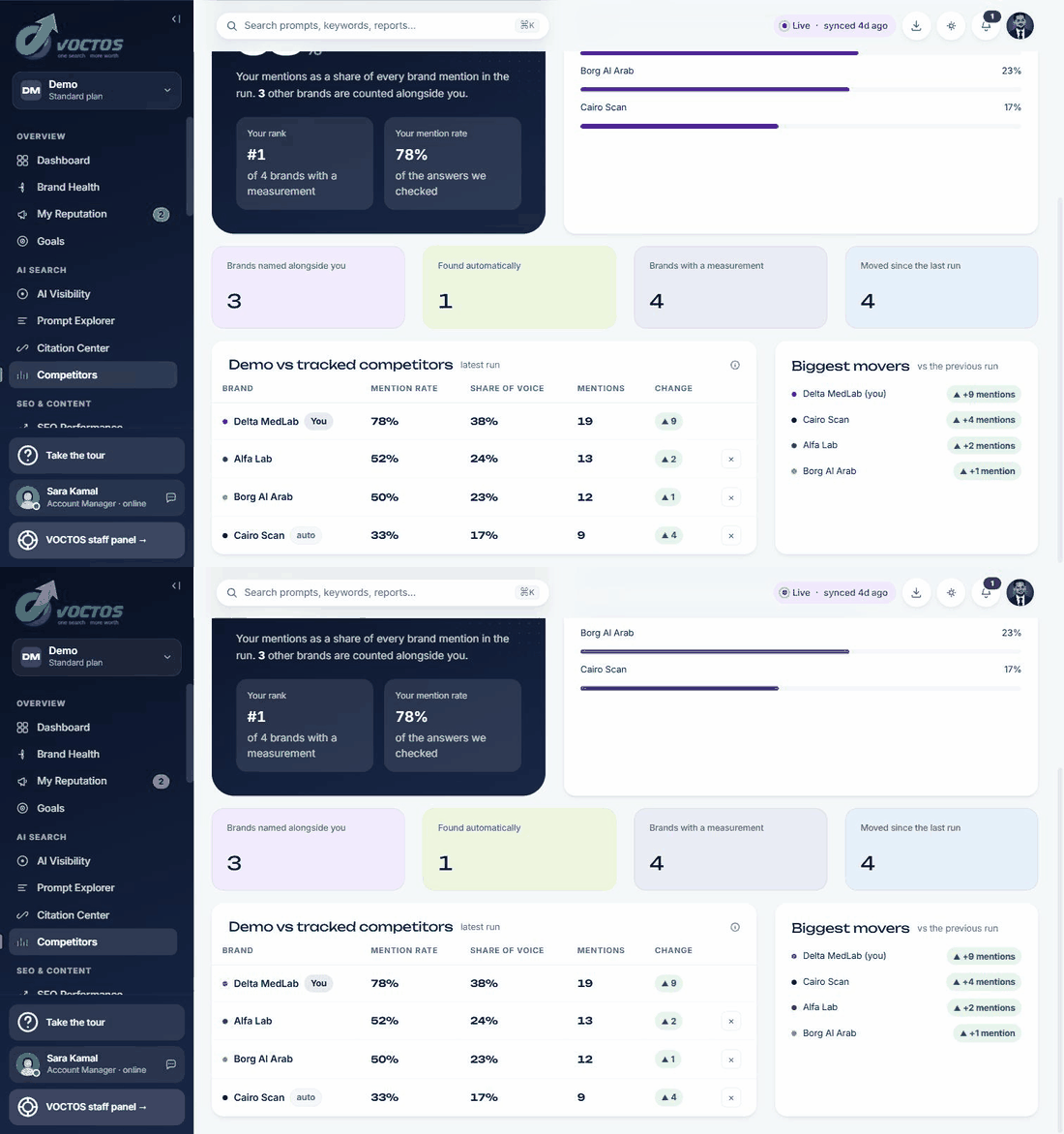
The portal reads the answers instead and counts every brand the engines name when they respond to your prompts. Anything it found on its own is tagged auto. Mention rate uses the same formula for every brand so the column compares like with like, and share of voice divides all brand mentions in the run so the column sums to 100%.
In a first audit this is usually where the uncomfortable finding lives. The engine has an opinion about who belongs in your category, and it is rarely the list on the client’s slide.
Brand Health: what the engines believe about you, checked sentence by sentence
This is the module clients react to most, and it is the one we have not seen anywhere else in this form.
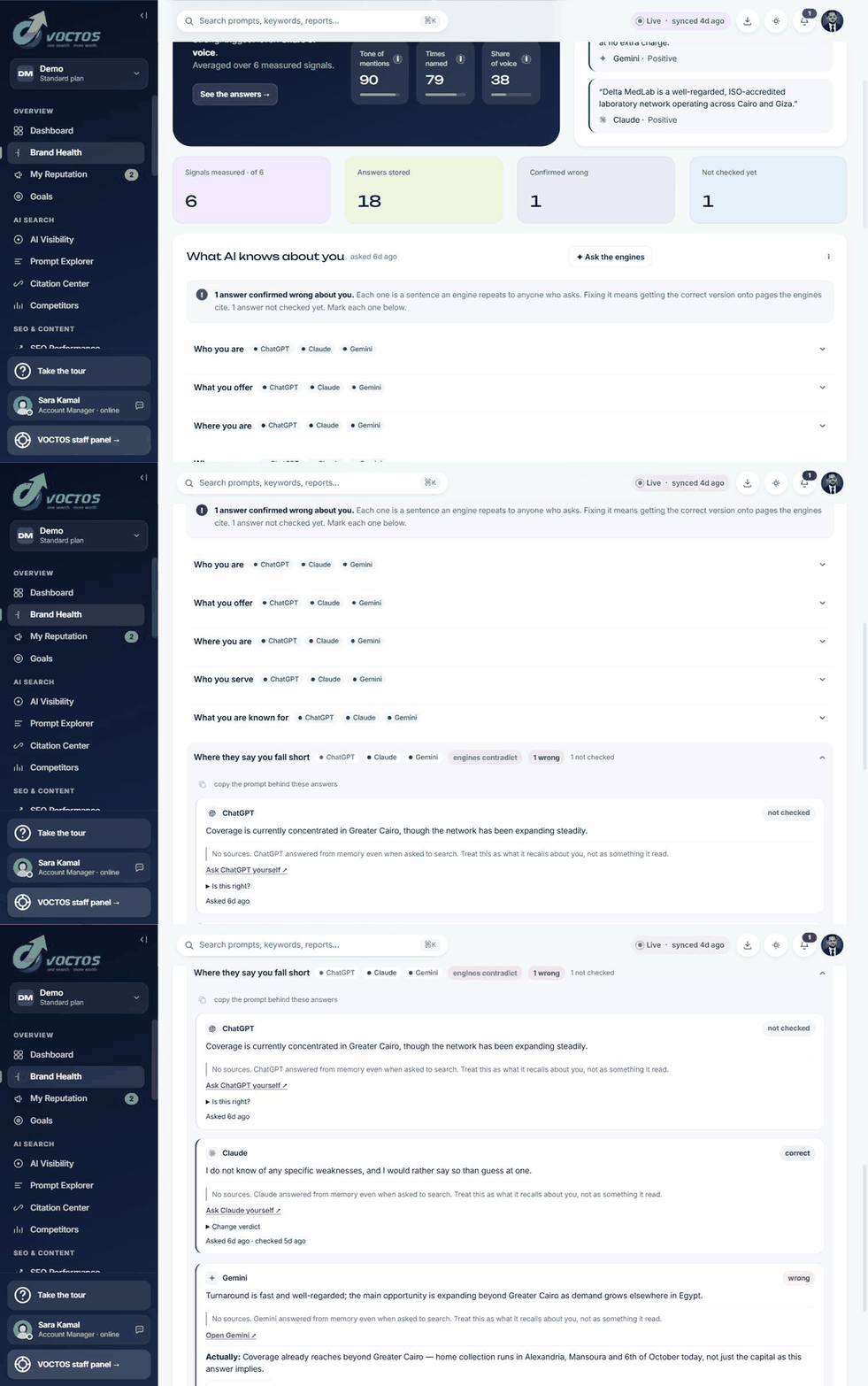
Once a month the portal asks every connected engine five direct questions about the client: who you are, what you offer, where you are, who you serve, what you are known for. It stores the answers verbatim, then a human marks each one correct or wrong and writes the correction underneath.
On the run below, Claude states that the lab has branches in Alexandria. It does not. All fourteen are in Cairo and Giza. That is not a ranking problem or a sentiment problem. It is a false sentence that an engine will repeat to anyone who asks, and the only fix is getting the correct version onto pages the engine cites. Nothing on a visibility chart would have surfaced it.
Alongside the verdicts the portal keeps representative quotes: the actual sentences the engines produce about you, attributed and tagged with sentiment. A score standing in for reality is easy to argue with. A quote is not.
SEO Performance: AI assistants now show up as a traffic channel
Search Console, GA4, Semrush, Ahrefs, PageSpeed and our own site crawl land in one view: traffic, keywords, backlinks, Core Web Vitals, schema coverage, crawl errors, broken links and cannibalization.
The detail worth pointing at is the channel split. AI Assistant is now its own acquisition channel, sitting next to Organic Search and Direct, with chatgpt.com listed among the top referring sources by session. For most of our clients it is still a small share of sessions. It is also the fastest-moving line on the page, and the one that explains why a flat organic number can hide a real change in demand.
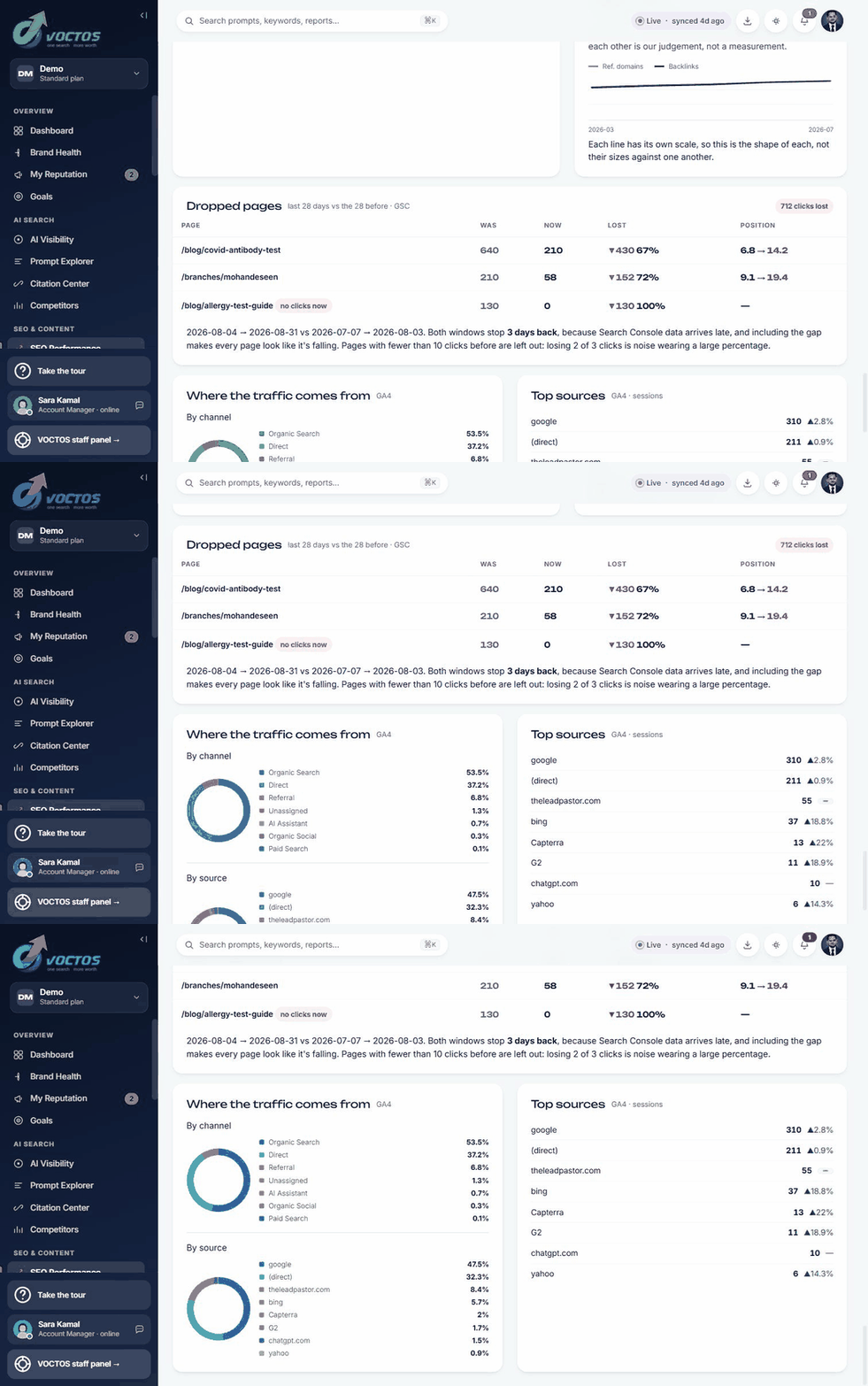
The technical panel is deliberately blunt: pages indexed against pages inspected, schema coverage as a percentage of every crawled page, crawl errors, broken links, and pairs of pages competing for the same query. Each number is a queue, not a grade.
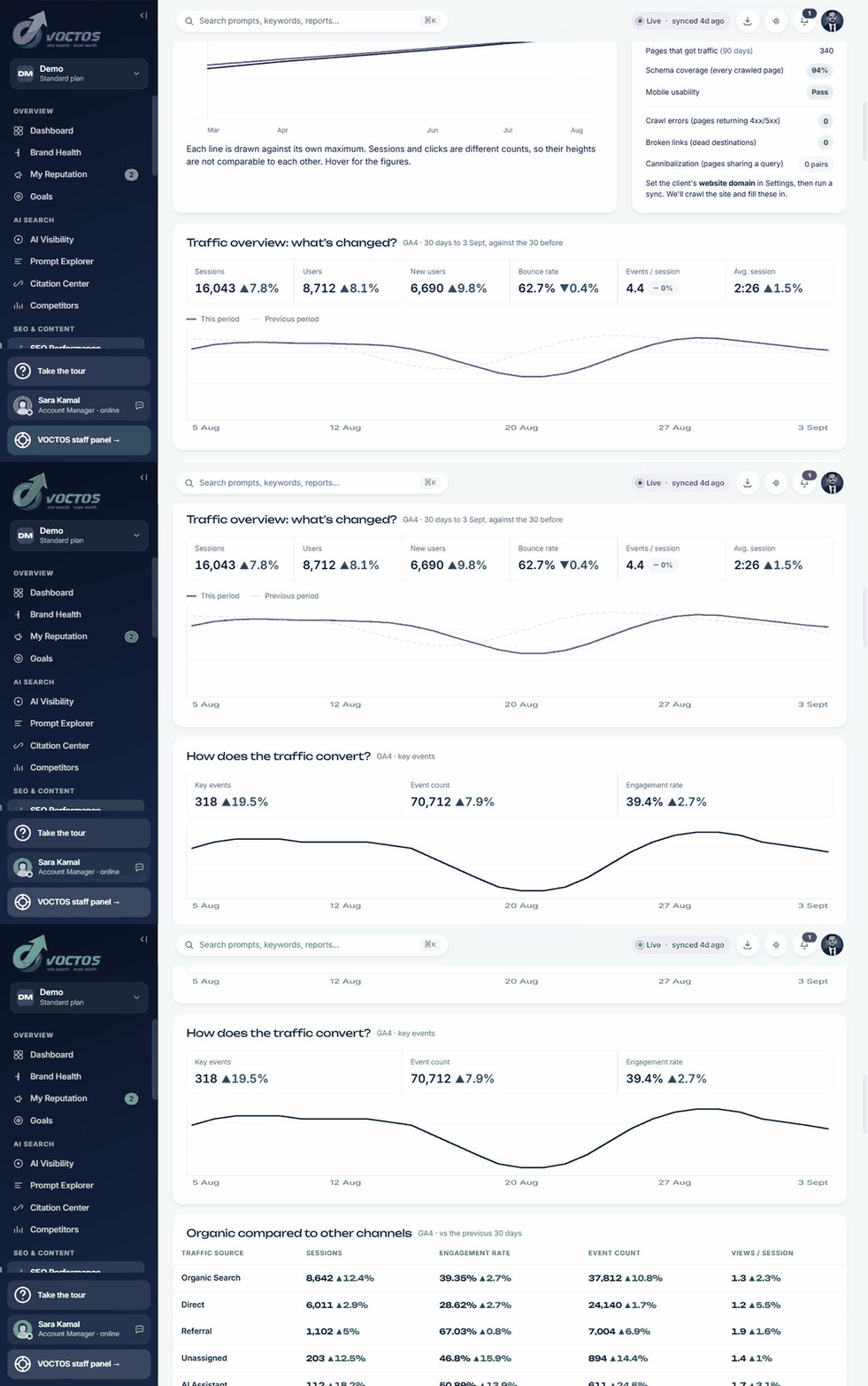
One habit here is worth calling out because it costs nothing and almost nobody does it. When a data source fails to sync, the portal says so on the page: which connector failed, what it fell back to, and what the client should do about it. A flat line in a normal reporting tool could be a flat result or a broken integration, and the reader has no way to tell. We would rather print the failure than print a zero.
Content Center: an SEO score and an AI citability score on the same row
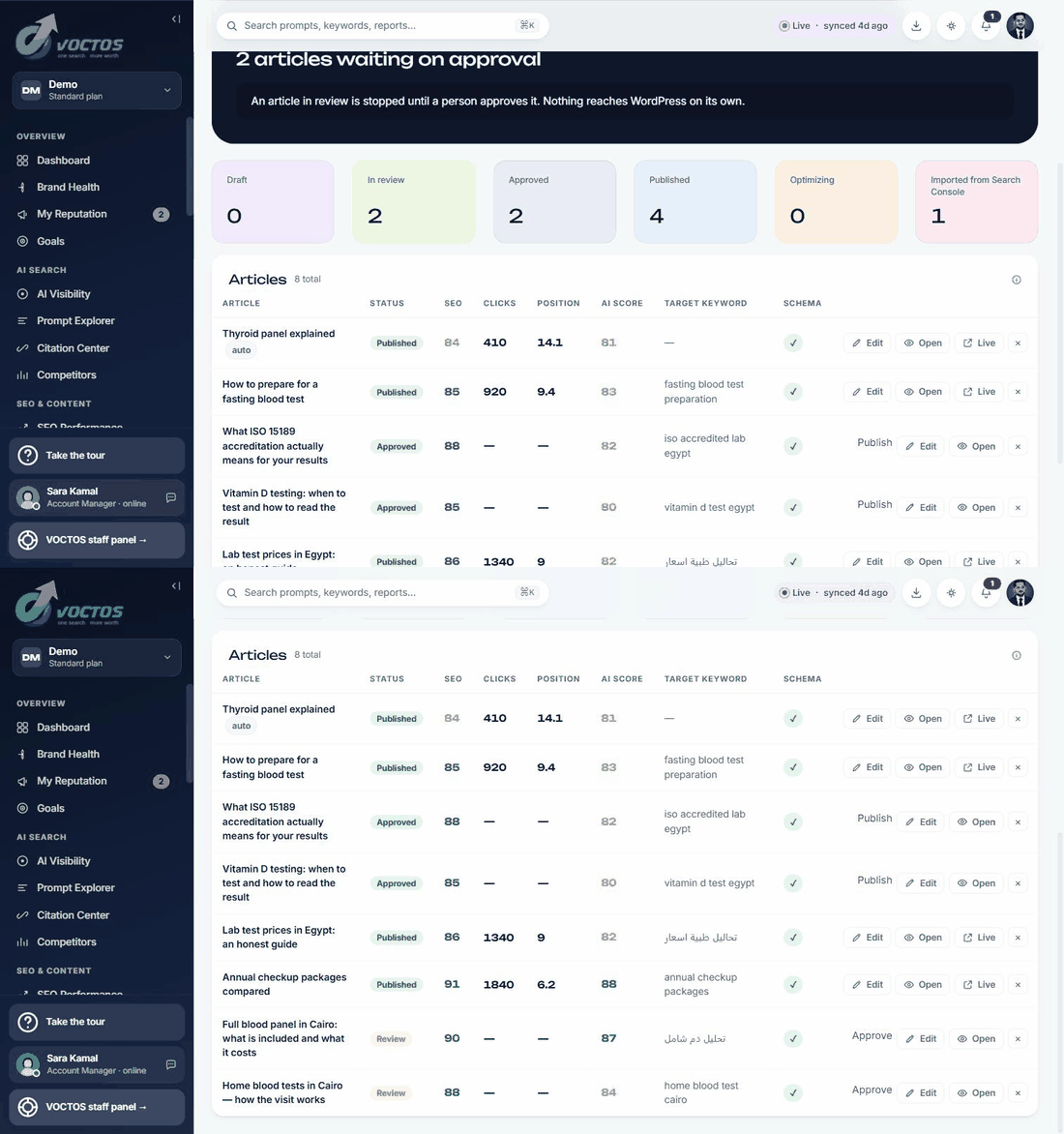
Every article sits in one table across its whole life: draft, in review, approved, published, optimizing. Each row carries the traditional SEO score, a separate AI score for how citable the piece is likely to be, whether its schema is complete, partial or missing, the target keyword, and the clicks and average position once it is live.
Two scores on one row is a deliberate choice. A page can be well optimized for a ranking and still be shaped in a way no engine will quote. The article below sitting at SEO 91 and AI 78 is doing better in Google than in ChatGPT, and that difference is the brief for the next revision.
Clients approve content here as well. The button that says Approve is the same button that moves the article into the publishing queue, so nothing gets approved in an email thread and lost.
Paid media: the part no AI visibility tool has
We looked at more than thirty AI visibility products while building this. Not one of them manages paid media. That is not a criticism, it is a category boundary. But it means a client running search ads and an AI search program is reading two unrelated systems and doing the arithmetic themselves.
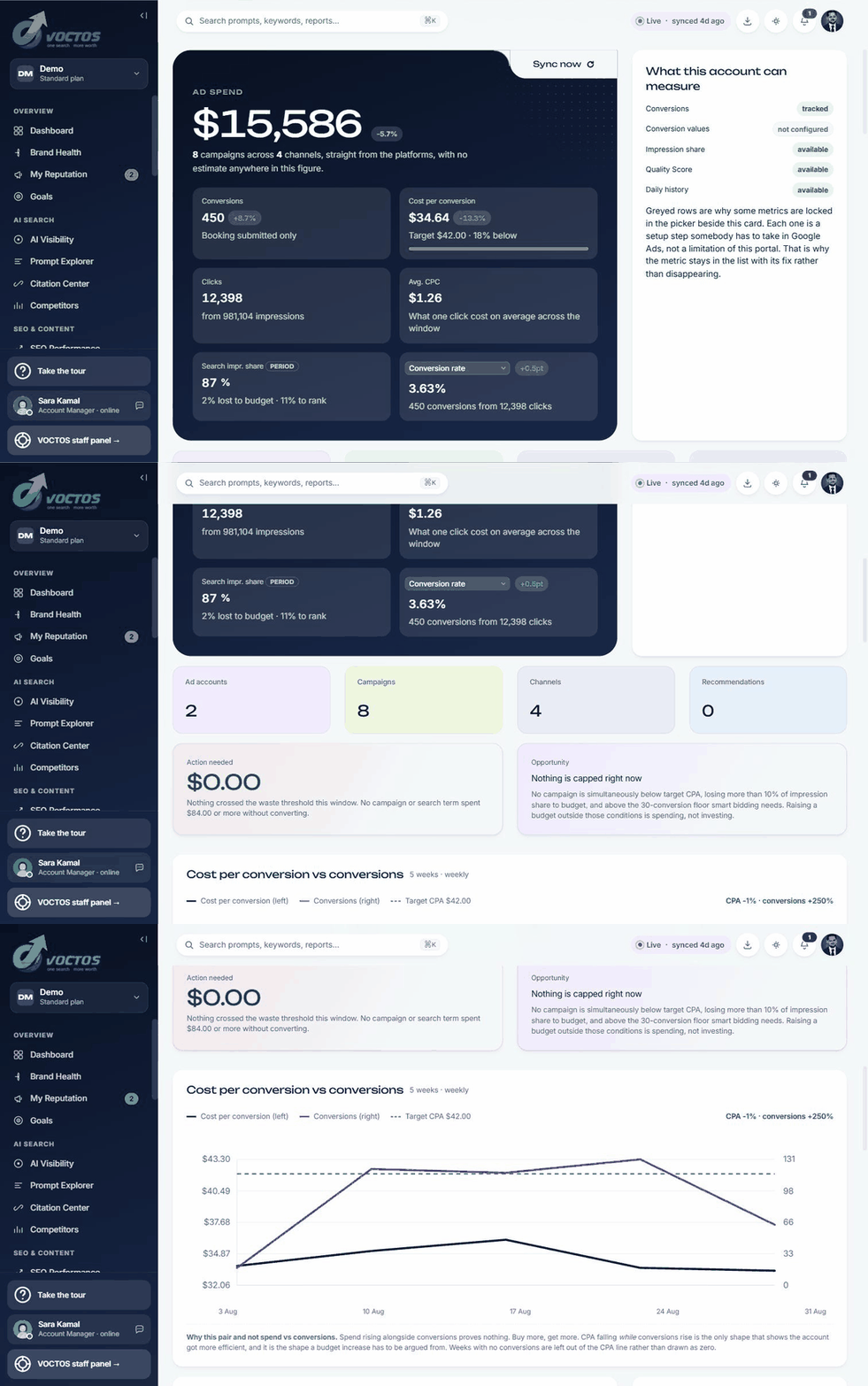
Inside the portal, Google Ads and Meta sit in the same navigation as the AI engines. Spend, conversions, cost per conversion against target, conversion rate and impression share lost to budget and to rank, then a waste figure: money spent on campaigns, keywords and search terms that produced nothing after the conversion lag window closed.
The number that tends to change the conversation is on the budget page. Most agencies report cost per conversion on media spend alone, which quietly leaves their own fee out of the client’s cost of a customer. The portal prints both: the media-only CPA and the all-in CPA, which adds our management fee to the media cost. On the account below that is $37.87 against $44.07. It also shows exactly what the client pays us and what percentage of total investment that represents, on the same screen as the results.
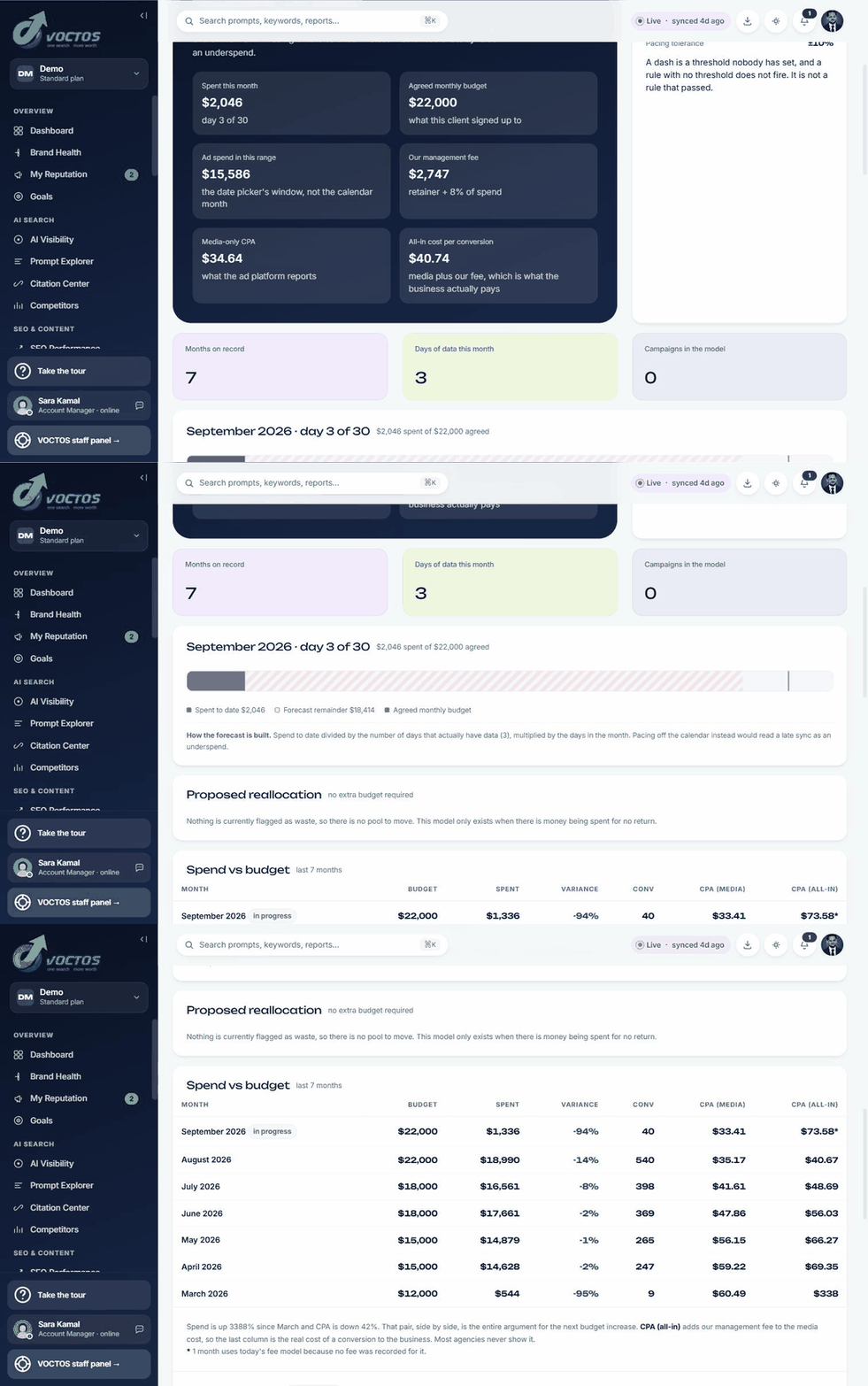
ROAS is absent from that panel, and the portal says why: the account records that a conversion happened but not what it was worth. Until conversion values are configured, any return figure would be invented. Printing the reason is better than printing a plausible number.
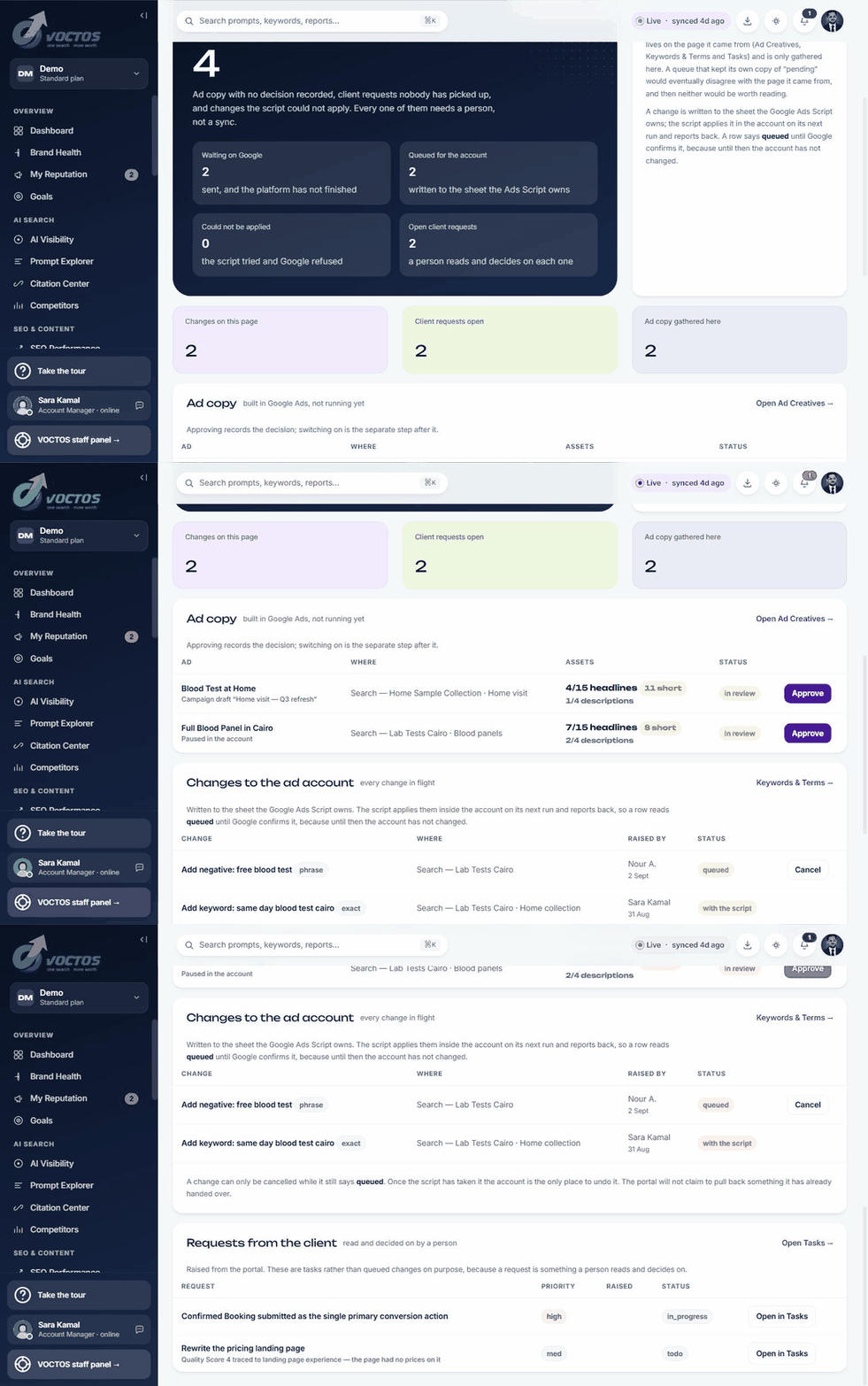
Approvals collect everything waiting on a decision: ad copy written in the portal and not yet live, requests the client raised, and their current status. The page holds no state of its own, which sounds like a small engineering note and is actually the reason it stays trustworthy. Every row lives on the page it came from, so a queue can never disagree with the source.
Delivery: the roadmap, the tasks, the targets and the bill
Everything above measures. The rest of the portal is the work, and it is the half that no tracker has.
The Roadmap lays the engagement out month by month with a phase label and a completion percentage on anything in progress. A client can see that month three was the paid media restructure, that month six is fixing conversion tracking, and that month seven turns on ROAS reporting across every other page.
Tasks is a board with four columns and a named owner and priority on every card. Requests a client raises anywhere else in the portal arrive here as tasks, which is how a comment on a keyword ends up with a person against it instead of dying in a thread.
Goals holds the numbers the engagement was actually signed for, with a live forecast of when each one lands at the current pace. Cost per booking, bookings per month, AI visibility and wasted ad spend are four different departments in most companies. Here they are four cards on one screen, each marked on track or at risk.
And Invoices is in the same login as the results, which is unusual enough that clients comment on it. Retainer, invoice history, what is pending, when it is due and how to pay. There is a reasonable argument that billing does not belong next to performance. We think the opposite: the fee and the outcome should be readable on the same afternoon.
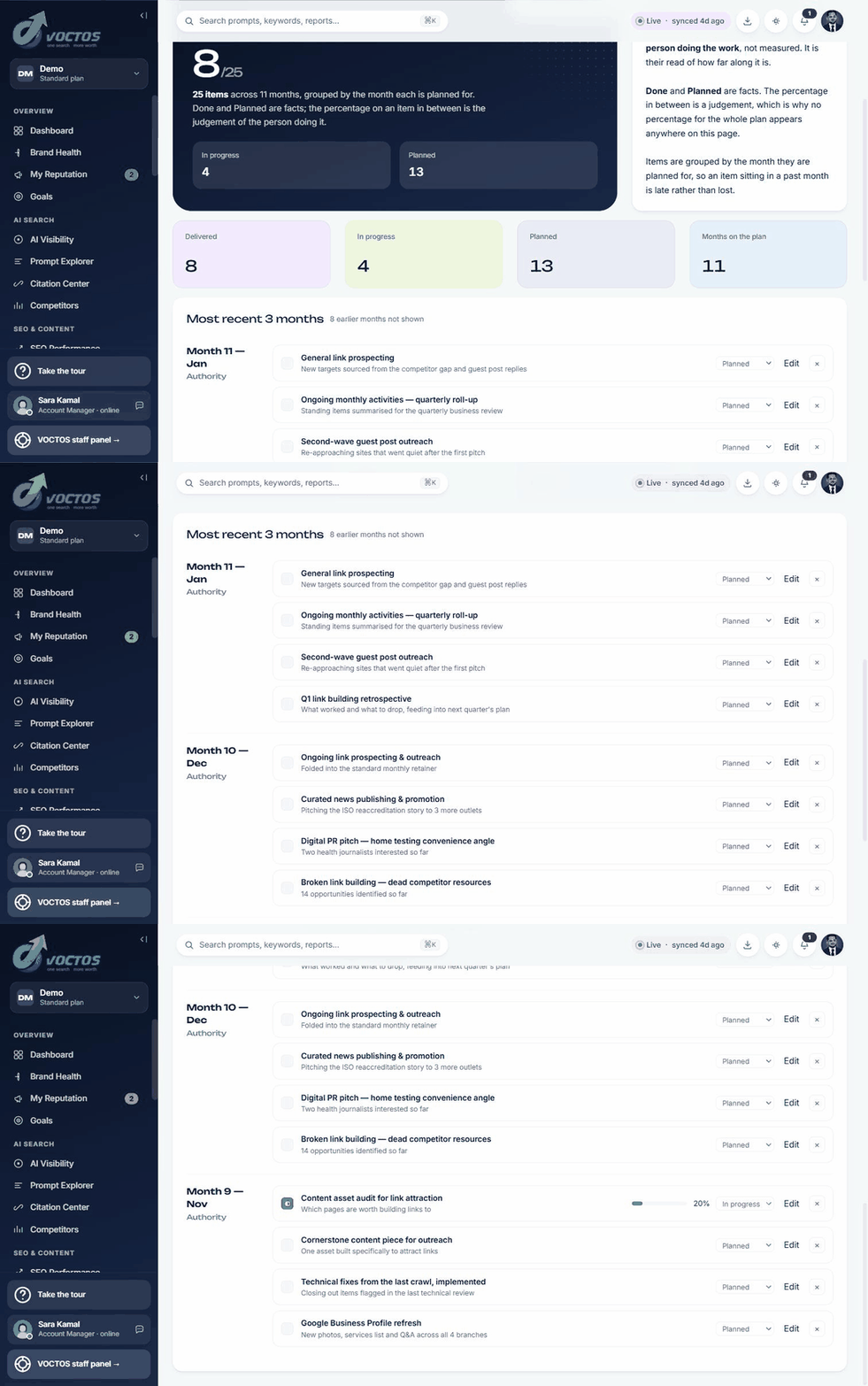
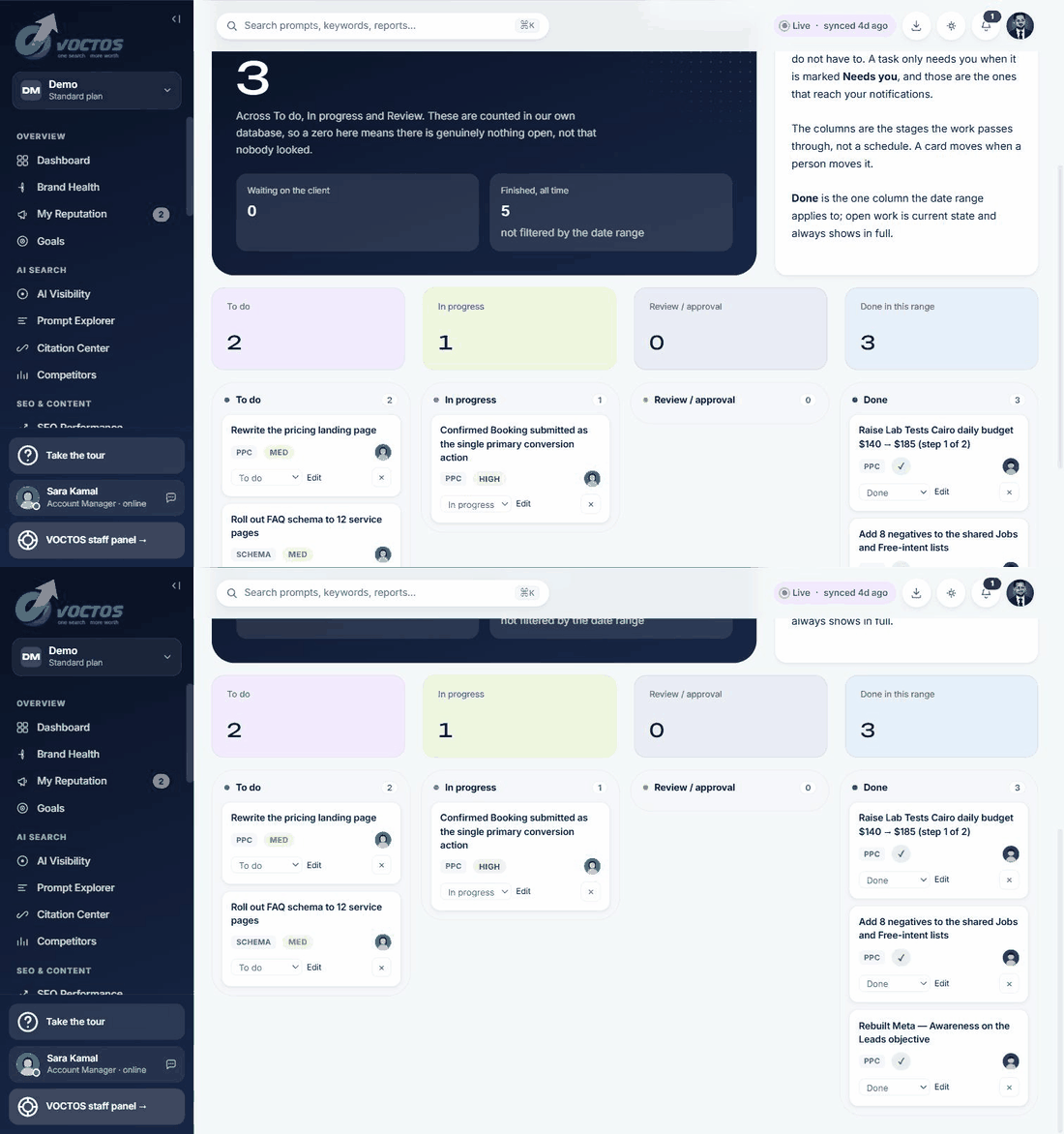
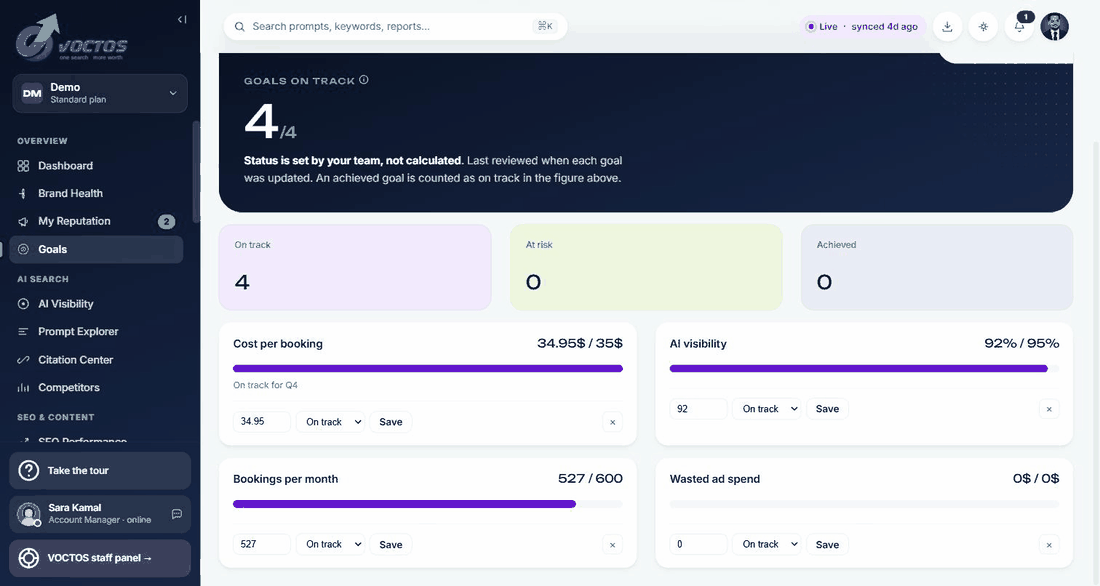
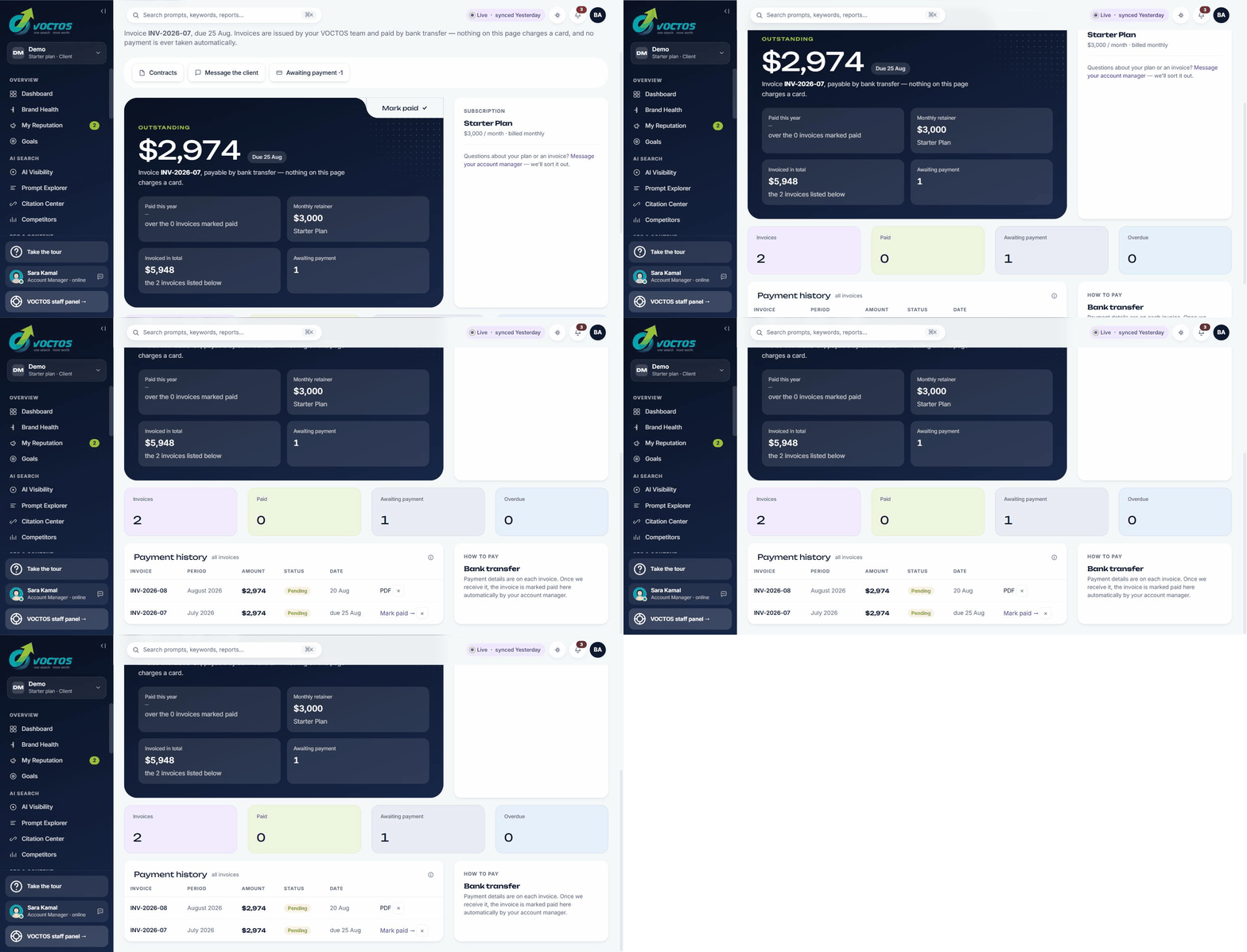 Delivery modules · auto-playing
Around those sit Messages, Meetings, Documents, Tickets, Team Activity and Integrations, where the client connects their own Search Console, GA4 and ad accounts so the numbers are theirs rather than ours.
Six rules the portal is built on
The interface is the visible part. These are the rules underneath it, and they are printed inside the product where clients can hold us to them.
- Never print a zero in place of a missing number. If a metric cannot be measured for an account, it stays in the list, greyed, with the reason and the fix. A zero and an unknown are different facts.
- Respect conversion lag. Nothing from the last seven days is judged as waste. A term clicked on Tuesday can convert on Friday, and calling it waste on Wednesday is how good accounts get broken.
- Keep a statistical floor. Below 100 clicks, a zero-conversion result is marked low confidence rather than stated as fact.
- No write access to any ad account. The portal cannot change a campaign. A specialist reviews, the client approves, VOCTOS executes. Automation that spends money without a human in the loop is not a feature.
- Print the rule that fired. Every recommendation shows the threshold it used and the numbers it read. Thresholds are set per client, so they can be argued with instead of taken on faith.
- Count our own fee as a cost. The all-in CPA includes what the client pays us. It makes our numbers look worse and the client’s decision better.
Where the tooling category ends
We reviewed more than thirty AI visibility products before building this. The measurement in most of them is fine. Put the capabilities side by side and the shape of the problem is obvious: the left column is a product category, the right column is a job.
| Capability | Measurement tools | What a client engagement needs |
|---|---|---|
| Prompt-level visibility | Yes, this is the core of the category | Yes, split into five signals that each point at a different fix |
| Per-engine reporting | Sometimes blended into one figure | Every engine on its own row, never averaged |
| Stored answer text | Rarely. Most keep the score, not the sentence | Full answer text per run, so you can read how a description changed |
| Citation states | Current sources listed | New, lost, broken and cited-without-you, each one a work queue |
| Factual accuracy of the answer | Not covered | Engine answers reviewed and marked correct or wrong, with the correction written underneath |
| Content workflow and approvals | No | Article lifecycle with an SEO score and an AI citability score on the same row |
| Roadmap and tasks | No | Month-by-month plan and a board with a named owner on every card |
| Paid media | No | Google Ads and Meta with waste analysis and budget pacing |
| Cost of a conversion including the agency fee | No | Media-only and all-in cost per conversion side by side |
| Invoicing and retainer view | No | In the same login as the results |
The portal is included in a VOCTOS retainer and is not licensed on its own. That is the commercial answer. The operational one matters more: a stack of separate products produces separate versions of the truth, and the client ends up being the integration layer between them.
Why this matters more in the Gulf and Egypt than it does in the US
The tooling for AI search was built in English, for English-speaking markets, and priced for them. The demand curve in this region is running ahead of it.
Deloitte surveyed 2,000 consumers aged 18 to 50 in the UAE and Saudi Arabia and found 58% already using generative AI tools, comfortably ahead of the UK and most of Europe. In Saudi Arabia alone, active use of AI tools moved from 49% to 66% in twelve months. PwC’s Middle East workforce survey put regional AI adoption at 75%, above the global average.
So the audience is here, asking in two languages, and the tools that measure the answers mostly assume one. Our keyword and prompt tracking runs Arabic and English side by side in the same table, because that is how a Cairo or Riyadh account actually behaves: a client can rank third for a high-volume Arabic query and be invisible for the English one describing the same service.
Being honest about the competitive picture: MENA-focused AI visibility products do exist, and so do regional agencies that specialize in answer engine optimization. None of the ones we have reviewed is the same thing as what is described above. They are either self-serve software with no delivery layer, or an agency service with no client portal, and none of them carries paid media, approvals or billing behind the same login. If you find an agency in the region that does all of it in one place, send it to us and we will say so here.
What the portal does not do
- It does not remove the variance in generative engines. The same prompt returns different answers on different runs. No dashboard fixes that. What a dashboard can do is sample repeatedly, report each engine separately rather than blended, and attach a confidence figure to every reading, which is what the confidence column in Prompt Explorer is for.
- It does not track state-backed Arabic models. ALLaM, Falcon, Jais and Fanar are live and no commercial tracker on the market monitors them, ours included. Where a client needs that, we measure it manually on a fixed prompt set at a fixed cadence, and we say so.
- It is not sold as software. There is no standalone license. If you want a tool you operate yourself, buy one of the trackers in the table above. We will tell you which one suits your budget.
- It does not change anything on its own. No write access to ad accounts, no auto-applied recommendations, no content published without approval.
Why an agency should own a system like this
Written for the agency owners who will read this and wonder whether it is worth building.
The first reason is that reporting stops being a monthly event. Ours used to take a specialist most of a day per client. It now takes the time to read what already updated overnight, and the client has usually read it first. That time went back into the work.
The second is that arguments get shorter. When a client questions a budget increase, the answer is a chart of CPA falling while conversions rise, next to the impression share the campaign is losing to its own cap, next to the rule and the threshold that produced the recommendation. Nobody has to be believed.
The third is that AI search is not measurable with the old reporting stack. Rankings and sessions do not describe an answer. If a client is being described inaccurately by an engine that a third of their buyers now start with, that fact has to appear somewhere in the reporting or it does not exist.
The fourth is retention, and it is the least romantic of the four. Clients who log in of their own accord, mid-month, without being sent anything, renew. In the AgencyAnalytics 2026 survey, transparent reporting was named by 32% of agencies as a top retention driver and a quarter of clients are actively asking for more visibility into performance. A portal is the cheapest way to give it to them.
Why an agency built this instead of buying a tool
There are good AI visibility tools on the market. We have used most of them. The problem is not their measurement: it is that measurement and delivery live in different places.
A typical arrangement looks like this: the agency pays for a tracking tool, exports a monthly PDF, emails it, and the actual work, the content queue, the technical fixes, the approvals, the invoices, happens in a spreadsheet, a shared drive, a chat thread and an accounting system. The client sees a number once a month and has no way to connect it to anything that was done.
So the client asks the only question they can ask: what did we pay for? And the honest answer requires four different tabs.
How this compares with the alternatives
We are an agency writing about our own product, so treat the framing with the skepticism it deserves and check the competitor claims yourself: every one below links to the vendor’s own page.
| VOCTOS Client Portal | Agency-built tools in the region | SaaS trackers (Scrunch, Profound, Peec) | |
|---|---|---|---|
| Who operates it | Your agency runs it; you read it | Their agency runs it; you read it | You operate it yourself |
| AI visibility scoring | 8 named dimensions | Proprietary multi-dimension score | Yes, varies by vendor |
| Prompt-level tracking | Yes, per engine, with who beat you | Yes | Yes |
| Stored answer replay | Yes, full answer text per run, dated | Not advertised | Not advertised |
| Citation states | New / lost / broken / cited without you | Citations and competitor citations | Citations, varies |
| Competitor discovery | Automatic, from the answers | Competitor intelligence module | Usually you name them |
| SEO data unified | GSC, GA4, Semrush, DataForSEO, PageSpeed, crawl | Separate product in their suite | No, different category |
| Roadmap and tasks | Yes | No | No |
| Content approvals | Yes | No | No |
| Reports, meetings, documents | Yes | Presentation builder for exports | Exports only |
| Invoices and tickets | Yes | No | No |
| Monthly cost to you | Included in the retainer | Agency pricing | $29–$800+/month, on top of your agency |
The two things it does not do
- It does not track Arabic-language state models. Falcon-H1 Arabic, ALLaM, Jais and Fanar are live and state-backed, and no commercial tracker on the market monitors any of them, ours included. We measure those manually, on a fixed prompt set, at a fixed cadence, and say so.
- It is not sold as software. You cannot license the portal on its own. It comes with the engagement. If you want a tool you operate yourself, buy one of the SaaS products above, we will even tell you which, and we have published their real prices.
Frequently asked questions
What is the VOCTOS Client Portal?
It is a client-facing reporting and delivery platform built by VOCTOS, a GEO and SEO agency headquartered in Cairo working with clients across Egypt, Saudi Arabia, the UAE and the wider Middle East. It measures how often and how favorably ChatGPT, Claude, Gemini and Perplexity mention a brand, unifies Search Console, GA4, Semrush and Ahrefs reporting, manages Google and Meta paid media, and carries the roadmap, tasks, content approvals, goals and invoices for the account. It runs at portal.voctos.com and is included in a VOCTOS engagement.
How does the portal measure AI visibility?
It runs the client’s tracked prompts on each connected AI engine, then scores the results across five signals: Named in answers, Cited as a source, Citation strength, Tone of mentions and Times named. Those combine into an AI Visibility Score out of 100. Each engine is also reported on its own row with visibility percentage, average position, mentions, citations and a positive, neutral and negative split, because engines disagree with each other often enough that a blended figure hides the movement that matters.
What does “cited without you” mean?
It is a citation state showing that an AI engine used a source to answer a question about your category but did not name your brand in the answer. It is the most useful gap in the system, because the engine already trusts that source, so the list tells you exactly where to earn a mention next based on the engine’s own behavior rather than on a domain authority guess.
Does the portal track Arabic AI answers?
Yes for the major commercial engines, which handle Arabic prompts across Egypt and the Gulf, and Arabic and English keywords sit in the same tracking table. It does not track the state-backed Arabic models such as ALLaM, Falcon, Jais and Fanar, because no commercial tracker currently does. Visibility inside those is measured manually on a fixed prompt set at a fixed cadence.
Can I buy the portal on its own?
No. It is not licensed separately, it has no price list, and it comes with a VOCTOS engagement. Brands that want a tool they operate themselves should buy a dedicated AI visibility tracker instead, and we are happy to talk through what to look for in one.
Does the portal make changes to my ad accounts?
No. It has no write access to any advertising platform. It reads the account, flags candidates using stated rules and thresholds, and waits. A specialist reviews, the client approves, VOCTOS executes.
What is the all-in cost per conversion?
It is the cost of a conversion once the agency management fee is added to the media spend. Most agencies report media-only CPA, which leaves their own fee out of the client’s cost of acquiring a customer. The portal prints both figures next to each other on the budget page.
Is VOCTOS really the first agency in the Middle East with a system like this?
To our knowledge, yes, and the claim is specific: as of August 2026 we have not found another agency in the Middle East where AI search measurement, technical SEO, content workflow, paid media management and invoicing sit behind one client login. Regional AI visibility software exists, and there are agencies in the Gulf that specialize in answer engine optimization, but we have not found one that combines measurement with delivery and billing in a single client-facing platform. If that changes, we will update this page.
See it with your own data
The fastest way to judge a portal is to look at your own numbers in it. Send us your domain and we will run a first AI visibility read across ChatGPT, Claude, Gemini and Perplexity, show you which sources are being cited about your category, and walk you through the portal on a call. If the answer is that you do not need us, we will say that too.
Book a walkthrough or try the free AI Visibility Grader first.
Related reading
- How to Measure AI Visibility (Share of Model)
- AI Search Optimization in 2026: SEO vs GEO vs AEO vs AIO
- Arabic GEO: getting Arabic content cited by ChatGPT, Gemini and AI Overviews
- Best AI Search and GEO Agency in the Middle East
- GEO (Generative Engine Optimization) services
Sources
- SparkToro and Similarweb, zero-click search study, June 2026: 68% of US Google searches end without a click
- Pew Research Center, July 2025: clicks fall from 15% to 8% when an AI summary appears
- G2, The Answer Economy, March 2026, n=1,076 B2B software buyers: 51% start research with an AI chatbot
- AgencyAnalytics, 2026 Marketing Agency Benchmarks, n=494: reporting, retention and AI attribution data
- Deloitte, Digital Consumer Trends Middle East, n=2,000 UAE and Saudi consumers: 58% generative AI adoption
- PwC Middle East Workforce Hopes and Fears Survey, reported by Arab News: 75% regional AI adoption
Last updated 9 August 2026. Screenshots are taken from a live VOCTOS portal demo workspace. Figures shown inside the screenshots are demo data.
Related guides
- Inside the VOCTOS Client Portal: AI Visibility Measurement and Campaign Delivery in One Login
- Social Media Marketing for Egyptian Brands in 2026: A Senior, Channel-by-Channel Playbook
- Social Media Marketing in Egypt 2026: What Actually Works
- VOCTOS Named a 2025 Google Premier Partner: What This Means for Our Clients
Agency rankings we publish
The delivery side, layer by layer. The portal measures. What the team actually does with those numbers is set out in the four GEO layers most agencies skip.
Paid AI placements, for context. The portal measures organic AI visibility. For where ChatGPT Ads stands and who can actually buy it, read ChatGPT Ads and the nine-country list.
Don't miss the chance to
make your website more visible!
Initial consultation and
audit of the current situation

Read also

Article Why AI Still Describes Your Old Brand: Knowledge Cutoffs Explained

Article Behavioral Factors in SEO: What They Are and How to Improve Them
Article JavaScript Links Are Hiding MENA Sites From ChatGPT and Claude

Article VOCTOS Is a Top SEO, PPC and SEM Company in Egypt on Clutch for 2026
Article Commercial Ranking Factors: The Complete List

Article The Title Meta Tag: What It Is and How to Write It
Article The Role of Meta Tags in Search Engine Optimization
Article Can You Sue an AI for Defamation? Where the Law Stands


Real Results
More Wins
SEO & GEO for Delta Medical Labs
 GEO
GEO
1M+ monthly organic visits, 159,200 ranked keywords, 5,570 pages cited by AI engines, and 1,186 #1 rankings in KSA.

Arabic SEO, GEO & guest posting for VPNly
 SEO
SEO
65K peak monthly organic visits, 55 guest posts, and 149 pages cited by AI engines.

SEO & GEO for Ogaei Virtual Care
GEO
From 3 to 7,931 monthly organic clicks in 7 months, 2.9M+ impressions, and 40+ keywords in Google’s Top 10.

SEO for Eduverse
SEO
12× search traffic in 10 months, 45% of target keywords in the top 5, and 55% in the top 10.
Trusted by