
Wikipedia, Wikidata and the Entity Record: Why AI Confuses Your Brand
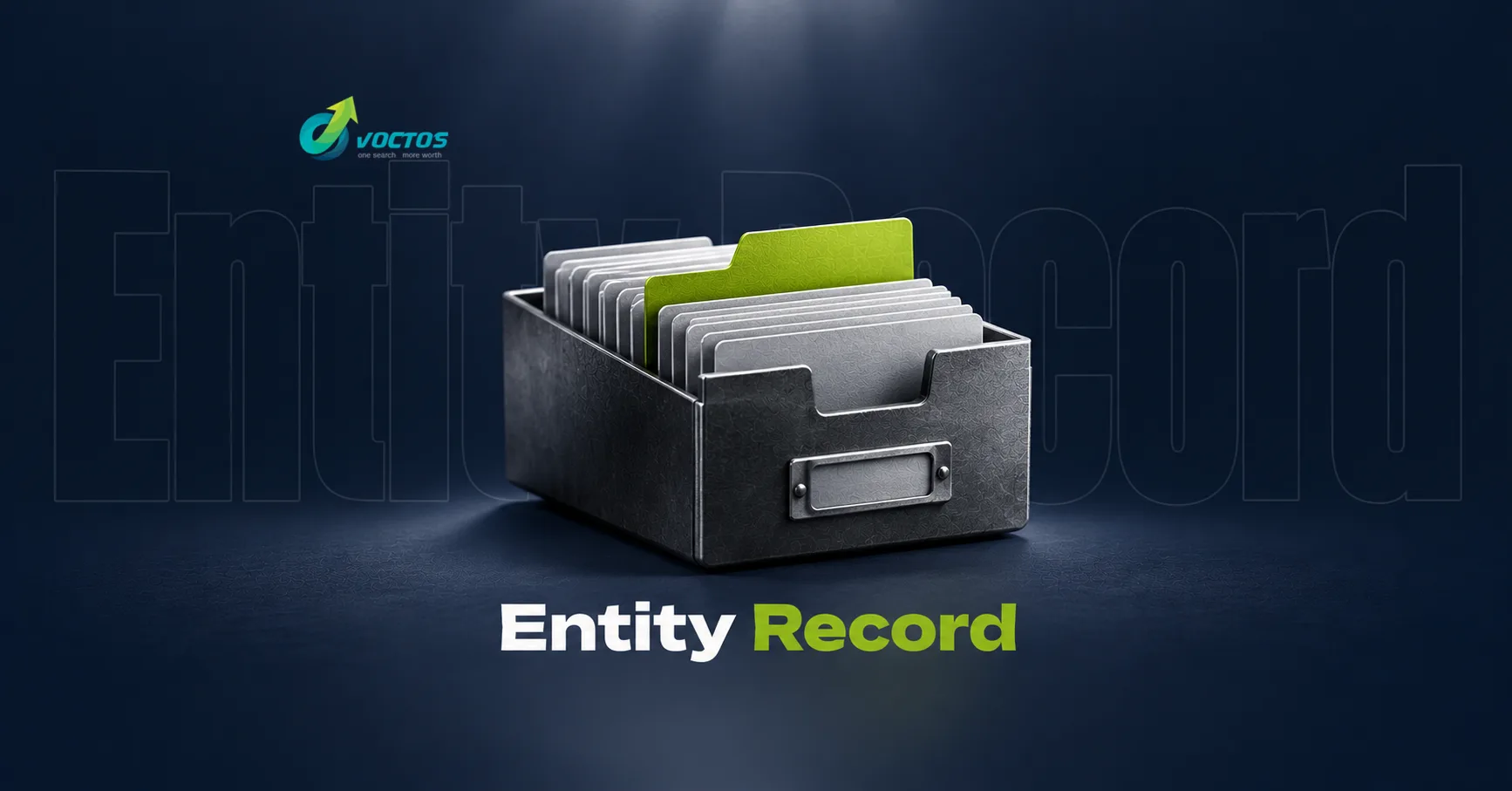
When an AI engine confuses your brand with somebody else, the cause is almost never bad content. It is entity resolution. The engine could not tell which real-world thing your name refers to, so it merged you with the nearest match. The fix is a consistent machine-readable identity across the records engines treat as authoritative, and Wikidata is the one most companies have never looked at.
This failure looks alarming and is usually mundane. A doctor inherits a namesake’s disciplinary record. A company in Cairo gets described with a competitor’s office in Dubai. A founder is credited with a company they never worked for. Every fact is real. None of them belongs to you.
What entity resolution actually is
Before an engine can answer a question about you, it has to decide what you are. Not what your page says, but which node in its picture of the world your name points at.
That decision is made from signals that agree with each other. Your name, your location, your category, your website, your identifiers, your associated people. When those signals are consistent across many independent sources, the engine resolves you confidently. When they conflict or are thin, it guesses, and a guess made once gets repeated in every answer afterward.
Ordinary content does not fix this. You can publish twenty articles and still be indistinct, because articles carry prose rather than identity claims.
The four records that decide it
Wikidata
A structured, machine-readable database of entities, openly licensed and openly editable. It is not Wikipedia and it does not have Wikipedia’s notability bar in the same form, which is why more organizations qualify for a Wikidata item than for an article.
Each item is a set of statements: this entity is an organization, founded in this year, located in this place, with this official website, in this industry. Every statement should carry a source. It is one of the cleanest ways to hand an engine an unambiguous identity, and it is routinely unowned inside marketing teams.
Two rules matter. Do not create an item for something that does not meet the criteria, because it will be deleted and the attempt is public. And do not treat it as a marketing surface. Statements with sources survive. Promotional language does not.
Wikipedia
Higher bar, higher weight. An article requires significant independent coverage, and most companies do not have it. Do not write your own. Conflict-of-interest editing is visible, reversible, and it damages more than it helps.
What you can do legitimately is make sure that if independent coverage exists, it is findable, and that any existing article about you is factually correct through the proper channels. Beyond that, this is a record you earn rather than build.
Your structured data
Organization or Person markup on your own site, with the identifiers filled in rather than left blank. Legal name, address, founding date, official identifiers, and the sameAs links to your verified profiles elsewhere. The sameAs list is doing the heavy work here: it states, in machine-readable form, that this website and these social profiles and these directory listings are all the same entity.
Most sites carry a partial version of this markup that was generated once and never revisited. Compare what it says today against what is true.
Listings and registers
Business registries, industry regulators, professional bodies, review platforms, map listings. Consistency across these is what turns a claim into a confirmed fact, and inconsistency is the single most common cause of merged identity we find.
The specific killers are name variants and address changes. If you appear as three slightly different names across your listings, you are three weak entities rather than one strong one.
The audit, in an afternoon
- Write down your canonical facts. Exact legal name, trading name, address, founding year, category, website. One version, agreed internally.
- Search Wikidata for your name and for every namesake. Find out who you are competing with for the name. If there is an existing item for you, check every statement. If somebody similar exists, note it, because that is your merge risk.
- Read your own structured data. Compare it line by line with the canonical facts. Check that sameAs actually lists your real profiles.
- List every place your name appears in a directory or register. Mark each as correct, stale or wrong.
- Ask the engines directly. Who is [name]? What is [company]? Is [name] connected to [other company]? The confusion, if it exists, will show up in the first answer.
Why individuals suffer more than companies
Companies usually have registration numbers, tax identifiers and a single official website. People often have none of that in machine-readable form.
A doctor with a common name may appear on six directories with different specialties, two hospital pages, a professional body register, and no structured record connecting any of them. The engine has to guess, and it guesses from whatever is most prominent, which may be somebody else entirely.
The fix for individuals is a single authoritative page you control with Person markup on it, then pointing every other profile at that page. It is unglamorous and it is the most effective thing available.
Frequently asked questions
Do I need a Wikipedia article?
No, and most companies will not qualify. Wikidata is the more realistic target and it does most of the entity work.
Can I create my own Wikidata item?
Yes, if the entity meets the criteria and every statement carries a source. Declare your connection rather than hiding it, and write statements rather than marketing copy.
How long before this changes an answer?
Slower than content work and more durable. Entity signals have to be crawled and corroborated, so weeks to months is realistic. What changes is not one answer but the confidence of every answer about you.
Is this the same as a knowledge panel?
Related. A knowledge panel is one visible output of the same underlying entity understanding. Our entity and knowledge panel page covers that side.
Where this fits
Entity repair is the slowest and most durable part of our AI reputation management engagement. If your problem is a stale fact rather than a merged identity, start with the knowledge cutoff diagnosis instead, because the two look similar and need different work.
Related guides
- How to Build a Knowledge Panel and Brand Entity for AI Search
- Google’s Search Generative Experience (SGE) and AI Overviews: What Egyptian Brands Need to Know in 2026
- GEO: Generative Engine Optimization – Your Guide to Ranking on ChatGPT
- Generative Engine Optimization (GEO) Services in Egypt: The 2026 Playbook
Want more people
to find your website?
Strategy call and
full site audit

Read also

Article How to Recover Lost Website Traffic
Article How VOCTOS Handles the Technical Side of GEO and AEO: 12 Layers We Check

Article Google’s AI Opt-Out Control: What Gulf and Egyptian Brands Should Do
Article How to Do GEO Optimization: A 16-Week Workflow, From Baseline to Citations
Article Ways and Methods of Promoting an Online Store
Article Do Trustpilot and G2 Reviews Affect What ChatGPT Says About You?
Article 10 Tools for Analyzing Competitor Websites
Article Gemini Now Tags Its Links: How to Measure AI Search Traffic in Saudi Arabia, the UAE and Egypt



Real Results
More Wins
SEO & GEO for Delta Medical Labs
 GEO
GEO
1M+ monthly organic visits, 159,200 ranked keywords, 5,570 pages cited by AI engines, and 1,186 #1 rankings in KSA.

Arabic SEO, GEO & guest posting for VPNly
 SEO
SEO
65K peak monthly organic visits, 55 guest posts, and 149 pages cited by AI engines.

SEO & GEO for Ogaei Virtual Care
GEO
From 3 to 7,931 monthly organic clicks in 7 months, 2.9M+ impressions, and 40+ keywords in Google’s Top 10.

SEO for Eduverse
SEO
12× search traffic in 10 months, 45% of target keywords in the top 5, and 55% in the top 10.
Trusted by