
The GEO Guide: Everything You Need to Know About Generative Engine Optimization

Generative engine optimization, or GEO, is the practice of shaping a brand’s content and online presence so that it gets surfaced, quoted, and credited by AI answer engines such as ChatGPT, Google AI Overviews, Google AI Mode, Perplexity, and Microsoft Copilot. Unlike traditional search engine optimization, which aims to win a click on a results page, GEO aims to win a citation inside a generated answer. The underlying mechanics overlap heavily with SEO, since most cited pages are already indexed and ranking well, but the actual unit of optimization shifts from the page to the individual passage that an engine can lift and quote.
Key Takeaways
- GEO means optimizing for citations inside AI answers, not just clicks on a results page.
- Each engine (ChatGPT, Gemini, Perplexity, Copilot) favors different sources, so one playbook does not fit all.
- Visibility must be measured with repeated prompts per engine, since a single check is unreliable.
- Quotable content, a clean entity profile, and earned mentions move citations more than technical shortcuts.
- Arabic content faces far less competition right now, making it a strong near-term opportunity.
- A recurring visibility scan, not a one-time check, is what turns GEO progress into a trend you can track with confidence.
Classic Search vs. AI Answer Engines: What Actually Changes
The shift from search to generative answers changes more than the interface. A results page hands a user ten links and lets them decide; an AI answer hands the user one synthesized response and decides for them which sources back it up. The table below lays out where the two models diverge in practice.
| Dimension | Traditional Search | AI Answer Engines |
|---|---|---|
| What the user sees | A list of ranked links to click through | One synthesized answer, often with no click at all |
| What decides visibility | Keywords, backlinks, and page authority | Structured, quotable, and independently verified content |
| How you check your standing | A rank tracker shows your position for a keyword | You have to run the actual prompt against each engine to see if you are cited |
| How many brands get named | Ten or more brands can share a single results page | Usually only one or two sources get named in the answer |
The practical consequence is that a page can rank on page one and still be invisible inside an AI answer, because ranking gets you into the candidate set while passage-level clarity decides what gets lifted, and there is no results page to fall back on if the citation goes to a competitor instead.
GEO, AEO, and AIO: Sorting Out the Terminology
The vocabulary in this space is still settling, and several overlapping acronyms are used almost interchangeably by different agencies. Answer Engine Optimization, or AEO, describes largely the same discipline as GEO, with most disagreement concentrated in how practitioners measure success rather than in the underlying tactics. AI Optimization, or AIO, is sometimes used as a broader umbrella term, and it is worth distinguishing from optimizing specifically for Google’s AI Overviews feature, since the two are not the same target. What matters more than the label is understanding that ranking well in classic search results still helps, but it is no longer the only gate that determines whether an AI engine will cite a source.
Why Engines Behave Differently
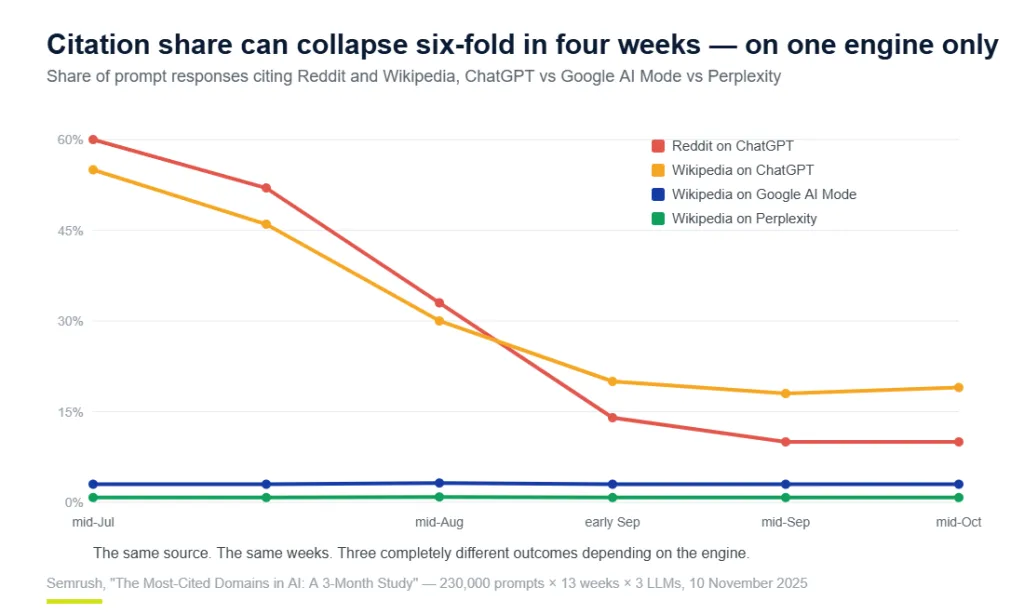
Each AI answer engine draws on a different mix of sources and applies different retrieval logic, so a strategy that works for one can fall flat on another. Perplexity tends to lean on community discussion and institutional sources, which makes participation in trusted forums and reference sites more valuable. Google Gemini tends to over-index content from Google’s own properties, so a presence across those surfaces carries extra weight. Microsoft Copilot generally cites fewer distinct domains per answer than other engines, which means securing a placement among that smaller set matters more. ChatGPT only performs a live web search for a portion of user queries, so much of the optimization opportunity there depends on whether a query triggers that browsing behavior in the first place. Because engines are non-deterministic by nature, the same prompt can return different citations from one run to the next, which is an important caveat for anyone trying to judge results from a single check.
| Engine | What It Tends to Favor |
|---|---|
| Perplexity | Community discussion and institutional sources |
| Google Gemini | Google’s own properties |
| Microsoft Copilot | A small set of domains, cited repeatedly |
| ChatGPT | Live search results, but only on a portion of queries |
Measuring AI Visibility Properly
Because generative engines are non-deterministic, a single query run tells you very little. A more reliable approach is to build a fixed set of representative prompts, run them repeatedly across each engine on a regular cadence, and report citation share per engine rather than blending the results together. This kind of repeated sampling is what separates a genuine visibility measurement from noise dressed up as a dashboard metric.
Automating the Tracking: Inside a GEO Visibility Score
Running prompts by hand across four engines on a recurring schedule is exactly the kind of task that benefits from a dedicated tool rather than a spreadsheet. VOCTOS built its AI Visibility Grader around this problem: the tool runs a site through 45 individual checks, then puts real buyer questions to ChatGPT, Perplexity, and Gemini live, and returns a single score out of 100 broken down across four signal groups.
| Signal Group | What It Checks | Weight |
|---|---|---|
| AI Crawler Access | Whether GPTBot, PerplexityBot, Google-Extended, and other AI crawlers can actually reach and read the site | Up to 35 points |
| Content Structure & Clarity | Headings, schema markup, and how directly pages answer real buyer questions | Up to 30 points |
| Authority & Citations | Mentions, reviews, and third-party sources engines use to confirm a brand is real and trustworthy | Up to 20 points |
| Brand Consistency | How consistent business details are across the sites and directories engines pull from | Up to 15 points |
Every finding links back to evidence on the actual site rather than a generic checklist, and the same scan can be re-run after fixes ship, which turns a one-off audit into an ongoing tracking loop rather than a static report.
Run a free AI visibility scan to see the current score for a specific site before making any changes.
The Work That Actually Moves Citations
Three areas of work tend to matter most. The first is writing content in a form that can be lifted cleanly as a standalone quote, since engines favor passages that make sense without surrounding context. The second is building a clean, well-structured entity presence through schema markup and knowledge base platforms so that engines can describe a brand accurately. The third is earning genuine mentions on domains that engines already trust, since digital PR and earned coverage tend to carry more weight than self-published claims. Technical additions such as an llms.txt file are sometimes proposed as a quick fix, but the evidence so far suggests they have had limited real-world impact, so they are best treated as a minor addition rather than a core strategy.
The Arabic and Gulf Opportunity
Arabic-language AI answers currently draw from a much smaller pool of source material than English-language answers do. That gap represents a real opportunity: a single well-structured Arabic page can become an authoritative source for a given topic much faster than would be possible in the more crowded English-language landscape. Brands operating in Egypt and the Gulf that invest early in structured, high-quality Arabic content stand to gain a disproportionate share of citations while that window remains open.
Real-World Results: GEO and SEO Working Together
The theory behind GEO holds up when it is tested against live campaigns rather than isolated experiments. The examples below come from projects where GEO work ran alongside an existing SEO program.
| Project | Scope | Result |
|---|---|---|
| Delta Medical Labs | GEO + SEO, KSA | 1M+ monthly organic visits, 159,200 ranked keywords, and 3,600 Google AI Overview citations |
| Ogaei Virtual Care | GEO + SEO | Organic clicks grew from 3 to 7,931 a month in 7 months, with 2.9M+ impressions |
| VPNly | Arabic SEO + GEO + guest posting | 65K peak monthly organic visits and 149 pages cited by AI engines |
| Eduverse | SEO | Organic traffic grew 12x in 10 months, with 45% of tracked queries in the top 5 |
Full methodology and timelines for these projects are available in the VOCTOS case studies library.
Where to Start
A sensible starting point is to confirm that a site is properly indexed and eligible to appear with a snippet, since that is the basic entry requirement before any citation can happen. From there, checking server logs for AI crawler activity shows whether engines are even reaching the content. Finally, establishing a baseline across a broad set of test prompts before making any changes makes it possible to tell real improvement apart from ordinary day-to-day fluctuation.
Why Brands Working on GEO Choose to Track It With VOCTOS
VOCTOS runs GEO and SEO programs full-time rather than as an add-on service, and the agency’s own visibility tooling is built from that day-to-day work rather than borrowed from a generic SEO suite.
#1
GEO agency in Egypt, TechBehemoths ranking
9+
years in the search marketing industry
500+
projects delivered
22+
countries served
Frequently Asked Questions
Is GEO a replacement for SEO?
No. Most pages that get cited by AI engines are already well-indexed and ranking in classic search, so GEO builds on an existing SEO foundation rather than replacing it.
How often should AI visibility be checked?
Because engine outputs vary from one run to the next, a single check is not enough. A recurring scan on a fixed set of prompts, repeated on a regular cadence, is what turns a one-time snapshot into a reliable trend.
Does GEO work for Arabic-language brands?
Yes, often faster than in English. Arabic answers currently draw from a smaller pool of source material, so a well-structured Arabic page can become a cited source more quickly than the same page would in a more competitive English-language market.
What is the fastest way to see where a brand stands today?
Running the free VOCTOS AI Visibility Grader gives a same-minute score out of 100 with evidence for each finding, without requiring a signup.
For a tailored plan, explore the VOCTOS GEO service or start a conversation with the team.
Related guides
- The GEO Guide: Generative Engine Optimization, End to End
- GEO: Generative Engine Optimization – Your Guide to Ranking on ChatGPT
- Generative Engine Optimization (GEO) Services in Egypt: The 2026 Playbook
- Top 10 GEO Agencies in 2026: The Best Generative Engine Optimization Companies
Where advertising fits. For the current state of ChatGPT Ads, its category restrictions and what to prepare, read how to prepare for ChatGPT Ads before they launch.
Don't miss the chance to
make your website more visible!
Initial consultation and
audit of the current situation

Read also

Article Amanleek SEO Case Study: From an Unreadable Angular Site to #1 for “Best Insurance Company” in Egypt
Article AI Search Citations Just Shifted: What It Means for MENA Brands

Article Tag Clouds in SEO: What They Are and How to Use Them
Article What Are Duplicate Pages and Why Are They Dangerous
Article Why AI Still Describes Your Old Brand: Knowledge Cutoffs Explained
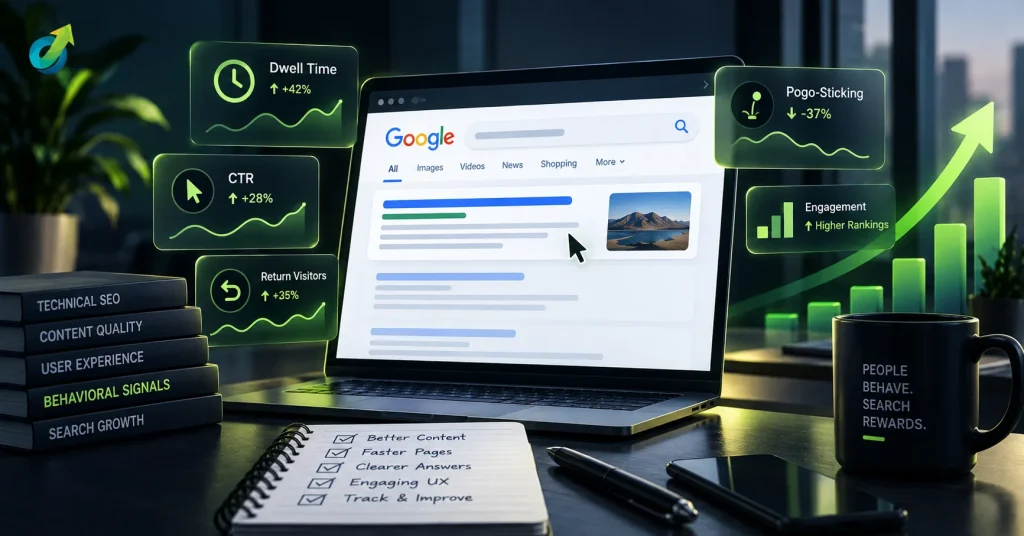
Article Behavioral Factors in SEO: What They Are and How to Improve Them
Article JavaScript Links Are Hiding MENA Sites From ChatGPT and Claude

Real Results
More Wins
SEO & GEO for Delta Medical Labs
 GEO
GEO
1M+ monthly organic visits, 159,200 ranked keywords, 5,570 pages cited by AI engines, and 1,186 #1 rankings in KSA.

Arabic SEO, GEO & guest posting for VPNly
 SEO
SEO
65K peak monthly organic visits, 55 guest posts, and 149 pages cited by AI engines.

SEO & GEO for Ogaei Virtual Care
GEO
From 3 to 7,931 monthly organic clicks in 7 months, 2.9M+ impressions, and 40+ keywords in Google’s Top 10.

SEO for Eduverse
SEO
12× search traffic in 10 months, 45% of target keywords in the top 5, and 55% in the top 10.
Trusted by