

Why You Should Combine SEO and Content Marketing
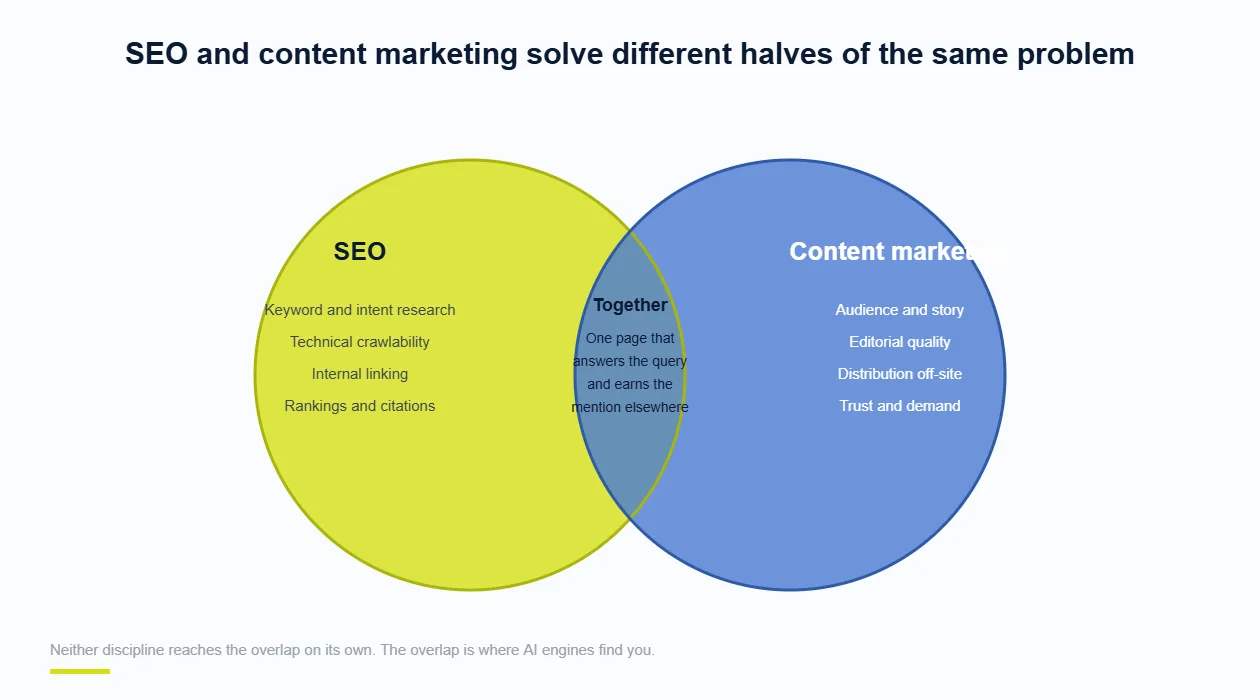
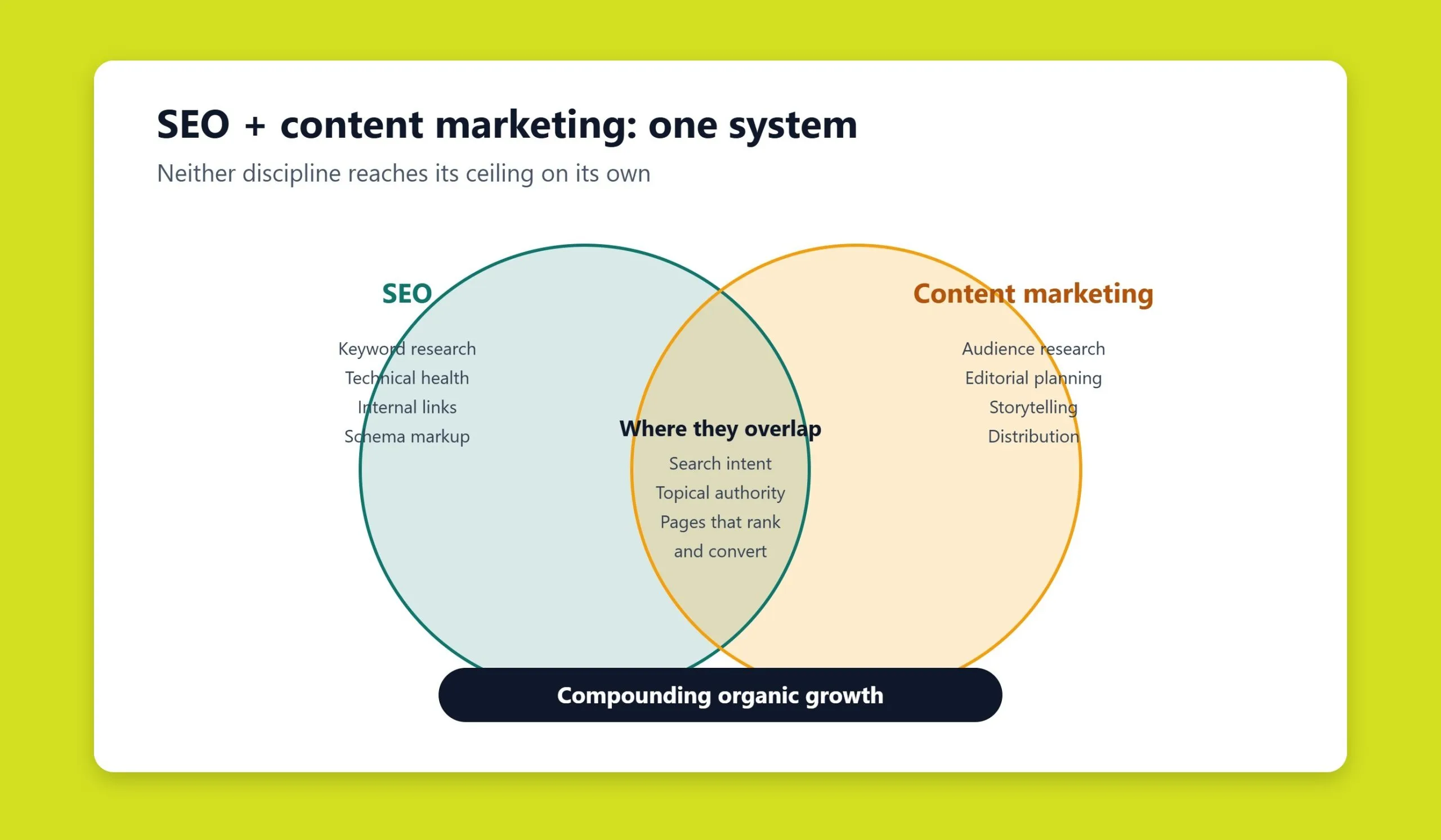
SEO and content marketing are not competing strategies you have to choose between; they are two halves of the same growth engine. SEO makes your content discoverable through technical structure and keyword intent, while content gives search engines something genuinely valuable to rank. Run them together and you compound the results: higher rankings, more qualified traffic, stronger authority, and, increasingly, visibility inside AI-generated answers.
Key takeaways
- SEO and content marketing solve the same problem from two directions: SEO helps people find your content, and quality content gives SEO something worth ranking.
- Used alone, each strategy underperforms. Content without SEO stays invisible; SEO without valuable content has nothing to lift into the top results.
- A topic-cluster and pillar-page model is the most reliable way to structure the two disciplines into one plan.
- The payoff is measurable: greater visibility, natural backlinks, better engagement signals, and more conversions.
- In 2026, well-structured, genuinely helpful content is also what earns citations in Google AI Overviews and other AI answer engines (GEO and AEO).
SEO vs. content marketing: what actually separates them
It helps to define both clearly before explaining why they belong together.
SEO (search engine optimization) is the process of improving a website so it ranks higher in search results. In practice that means technical optimization, keyword research, meta tags, internal linking, and earning authoritative backlinks. The end goal is simple: help people find your site when they type a relevant query into Google.
Content marketing is the creation and distribution of useful, engaging content for a defined audience. Good content demonstrates expertise, holds attention, and builds trust. It is published across channels, primarily a blog on your own site, but also external platforms such as Medium and LinkedIn.
On the surface, SEO looks technical and narrow while content marketing looks broad and creative. That contrast is exactly why so many teams treat them as separate budgets. It is also why so many campaigns stall.
Why SEO and content marketing work better together
Ask yourself two questions. Will anyone read a thin, unhelpful article? And if you publish a genuinely useful article, how will people ever find it? The answer to both reveals the dependency between the two disciplines.
Content marketing fails without SEO, and SEO fails without content. Here is the mechanism:
- SEO for content: when you write, you map each piece to real search intent and target keywords so search engines can understand, index, and surface it, ideally on page one.
- Content for SEO: the more helpful and well-crafted the content, the more people read it, link to it, and share it, which raises your authority and rankings over time.
The industry has already reached this conclusion. Research from BrightEdge has repeatedly found that the vast majority of marketers now see SEO and content as a single, merged discipline rather than two functions. Treating them separately is the outdated approach.
Three jobs the combined strategy does for you
When SEO and content marketing operate as one, they solve three business problems at once:
- Visibility and reach. You publish quality articles, optimize them for the terms your audience searches, and those readers discover you organically, then arrive on your site as potential customers.
- Natural backlinks. Content strong enough to be cited and referenced by other sites earns organic links. These are far more valuable and durable than purchased links because they genuinely raise your site’s authority.
- Traffic and better engagement signals. Content that proves your expertise keeps visitors on the page longer and encourages them to explore. Content that proves your expertise keeps visitors reading and makes them more likely to link to and share it, which is what raises authority.
Building a topic-cluster and pillar-page strategy
The most dependable way to merge SEO and content is the pillar-and-cluster model. A pillar page covers a broad subject comprehensively, for example, “content marketing.” Around it sit cluster pages that each answer a narrower question in depth, such as “how to write a content brief” or “how to measure content ROI.” Every cluster page links back to the pillar, and the pillar links out to the clusters.
This structure does three things at once. It signals topical authority to Google, so the whole cluster ranks more easily. It distributes internal link equity where it matters. And it maps neatly onto how real people search, from broad exploration to specific questions. If you are not sure which topics deserve a cluster, an SEO audit will surface the gaps and opportunities in your existing content.
A step-by-step plan to integrate the two
You do not need to rebuild everything at once. Work through these steps in order.
- Research intent, not just keywords. Group your keywords by the underlying question and the stage of the buyer journey. This tells you what to write and how to frame it.
- Map topics to clusters. Assign each keyword group to a pillar page or a supporting cluster article so nothing overlaps or cannibalizes.
- Write for the reader first. Answer the query fully, structure it with clear headings, and only then refine on-page elements such as titles, meta descriptions, and internal links. Professional content marketing and SEO services work best when they share one editorial brief.
- Optimize the technical layer. Ensure fast load times, clean URLs, structured data, and a crawlable internal link structure so search engines can reach every page.
- Distribute beyond your own site. Republish or adapt selected pieces on platforms like Medium and LinkedIn to reach new audiences and earn referral traffic and links.
- Refresh on a schedule. Update top pages as information changes so they stay accurate and competitive.
Measuring the results
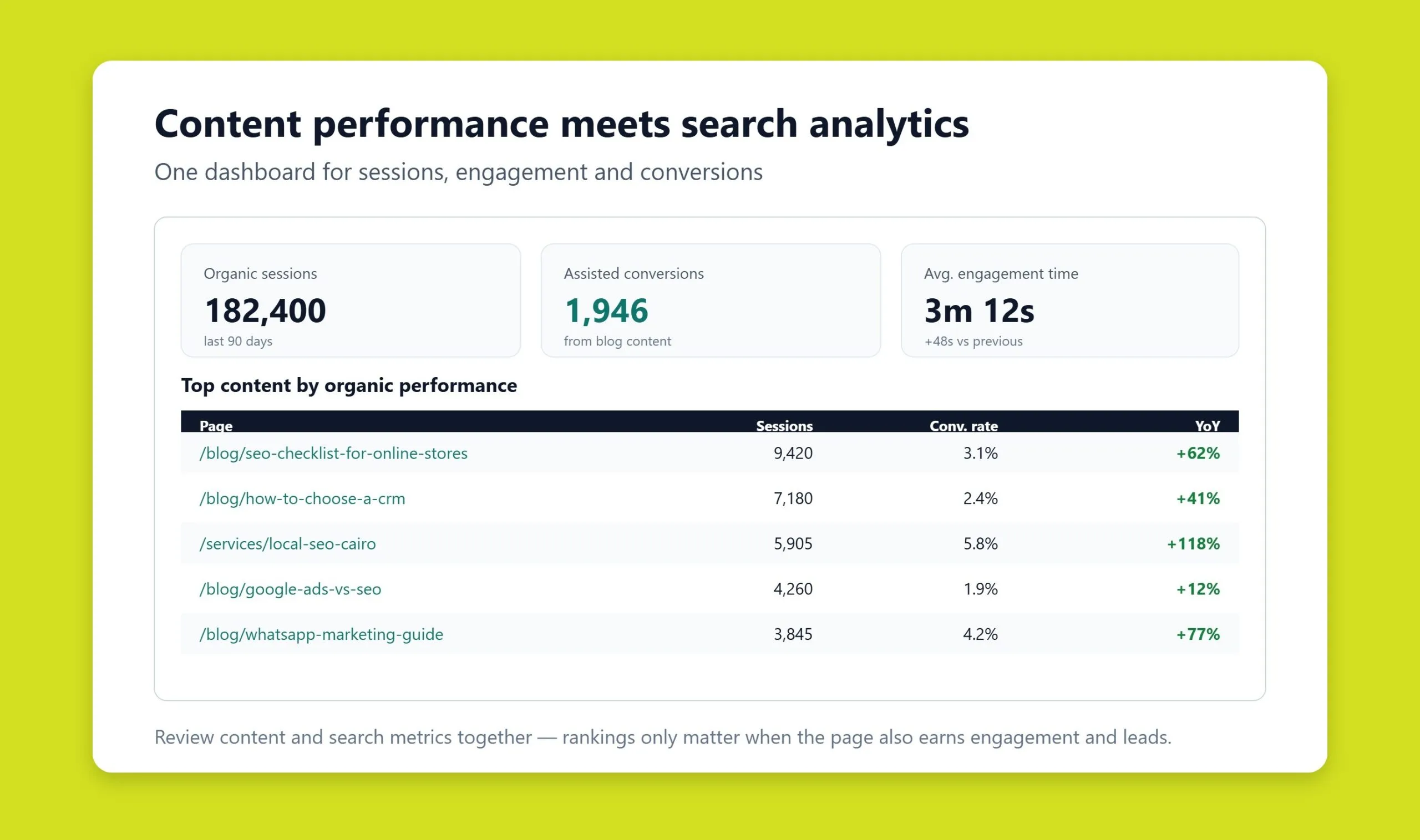
A combined strategy is easy to hold accountable because the metrics reinforce one another. Track these together rather than in silos:
- Organic traffic and rankings for target keywords and whole clusters, not just single pages.
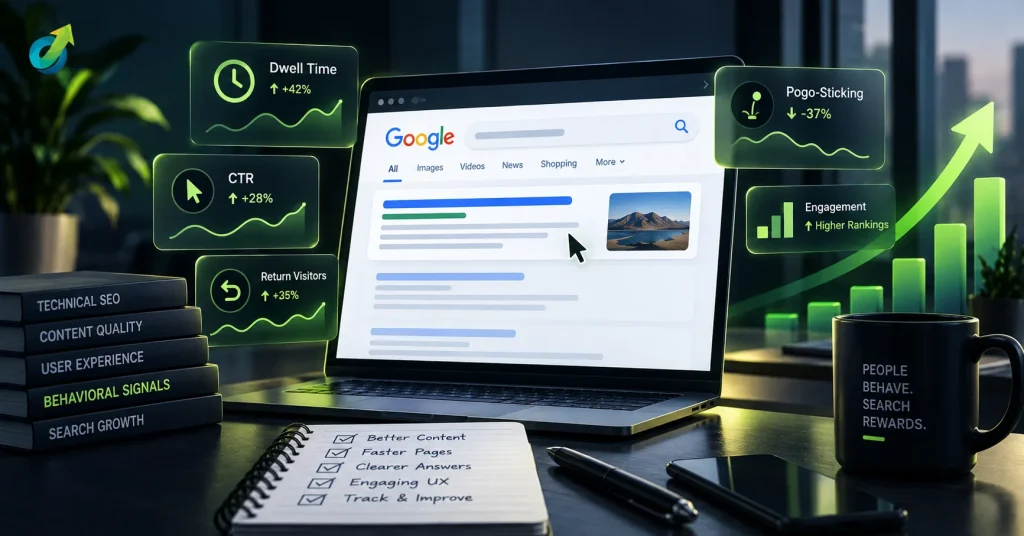
- Engagement signals such as time on page, scroll depth, and pages per session, which show whether the content actually satisfies intent.
- Backlinks and referring domains earned by your best content.
- Conversions and assisted conversions to connect content directly to pipeline and revenue.
Review these on a regular cadence and let the data decide what to expand, refresh, or retire.
How this now feeds AI answer engines and GEO
The stakes have risen. Google AI Overviews and AI assistants like ChatGPT, Gemini, and Perplexity increasingly answer questions directly, and they pull those answers from content that is genuinely helpful, clearly structured, and demonstrably authoritative, the exact qualities that a combined SEO and content approach produces.
This is where generative engine optimization (GEO) and answer engine optimization (AEO) come in. To be cited in an AI answer, your content needs to state clear answers up front, use logical headings and lists that machines can parse, and back claims with evidence and expertise. In other words, the discipline that ranks you in traditional search is the same discipline that gets you quoted by AI. Teams that already merged SEO and content are best positioned for this shift; those still running them separately are twice behind.
Why the combination matters more in Arabic markets
The argument above holds in any language. It holds harder in Arabic, for a reason that has nothing to do with strategy and everything to do with who else is publishing.
Arabic search results for commercial topics contain far fewer genuinely well-written pages than English ones. A large share are machine translations, thin summaries, or pages abandoned years ago. That produces an unusual situation: the technical side of SEO in Arabic is no easier than in English, but the content side is dramatically less contested. A business that publishes properly written Arabic content, consistently, competes against a much weaker field than the same business would face in English.
What this changes about the workflow
- Editing matters more than volume. In English, publishing more is often the lever. In Arabic, publishing fewer pieces that are actually written rather than translated usually beats a larger translated library.
- The keyword research step changes shape. Arabic spelling variants split demand across several tool entries, so grouping variants before planning content is part of the research, not an afterthought.
- Do not mirror your English calendar. The questions people ask in Arabic are not always the Arabic version of the questions they ask in English. Building the Arabic plan from Arabic queries surfaces topics the English plan never contains.
- One strong Arabic piece can outrank a whole English cluster. Where competition is thin, depth on a single page often achieves what would require a full topic cluster in English.
The window will not stay open indefinitely. As more regional businesses invest in content properly, Arabic results will look more like English ones. Until then, the combination of solid technical SEO and content that reads as though a person wrote it remains one of the cheapest competitive advantages in this market.
Frequently asked questions
Is SEO or content marketing more important?
Neither works well in isolation. SEO without valuable content has nothing worth ranking, and content without SEO stays invisible. The right question is not which to choose but how to run them as one strategy, so each amplifies the other.
How long does it take to see results from a combined strategy?
Content marketing and SEO are long-game investments. Most sites see meaningful movement in three to six months as pages get indexed, earn engagement, and start attracting links, with compounding gains after that. Technical fixes can produce faster wins.
What is a topic cluster and why does it matter?
A topic cluster is a broad pillar page supported by several in-depth articles that link back to it. It signals subject-matter authority to search engines, spreads internal link value, and mirrors how people actually search, making the whole group easier to rank.
Does combining SEO and content help with AI Overviews?
Yes. AI Overviews and answer engines reward content that is genuinely helpful, well structured, and authoritative, precisely what a merged SEO and content strategy creates. Adding GEO and AEO practices increases your chance of being cited in AI-generated answers.
Can I do this without external platforms like Medium or LinkedIn?
You can, and your own blog should be the core of the strategy. But publishing on external platforms extends your reach to new audiences and can earn referral traffic and natural backlinks that strengthen your site’s authority.
Related guides
Don't miss the chance to
make your website more visible!
Initial consultation and
audit of the current situation

Read also

Article Behavioral Factors in SEO: What They Are and How to Improve Them
Article JavaScript Links Are Hiding MENA Sites From ChatGPT and Claude

Article VOCTOS Is a Top SEO, PPC and SEM Company in Egypt on Clutch for 2026
Article Commercial Ranking Factors: The Complete List

Article The Title Meta Tag: What It Is and How to Write It
Article The Role of Meta Tags in Search Engine Optimization
Article Can You Sue an AI for Defamation? Where the Law Stands

Article Cloudflare’s 15 September AI Crawler Defaults: The Check Gulf and Egypt Brands Should Run Today





Real Results
More Wins
SEO & GEO for Delta Medical Labs
 GEO
GEO
1M+ monthly organic visits, 159,200 ranked keywords, 5,570 pages cited by AI engines, and 1,186 #1 rankings in KSA.

Arabic SEO, GEO & guest posting for VPNly
 SEO
SEO
65K peak monthly organic visits, 55 guest posts, and 149 pages cited by AI engines.

SEO & GEO for Ogaei Virtual Care
GEO
From 3 to 7,931 monthly organic clicks in 7 months, 2.9M+ impressions, and 40+ keywords in Google’s Top 10.

SEO for Eduverse
SEO
12× search traffic in 10 months, 45% of target keywords in the top 5, and 55% in the top 10.
Trusted by