
The Arabic AI Reputation Gap
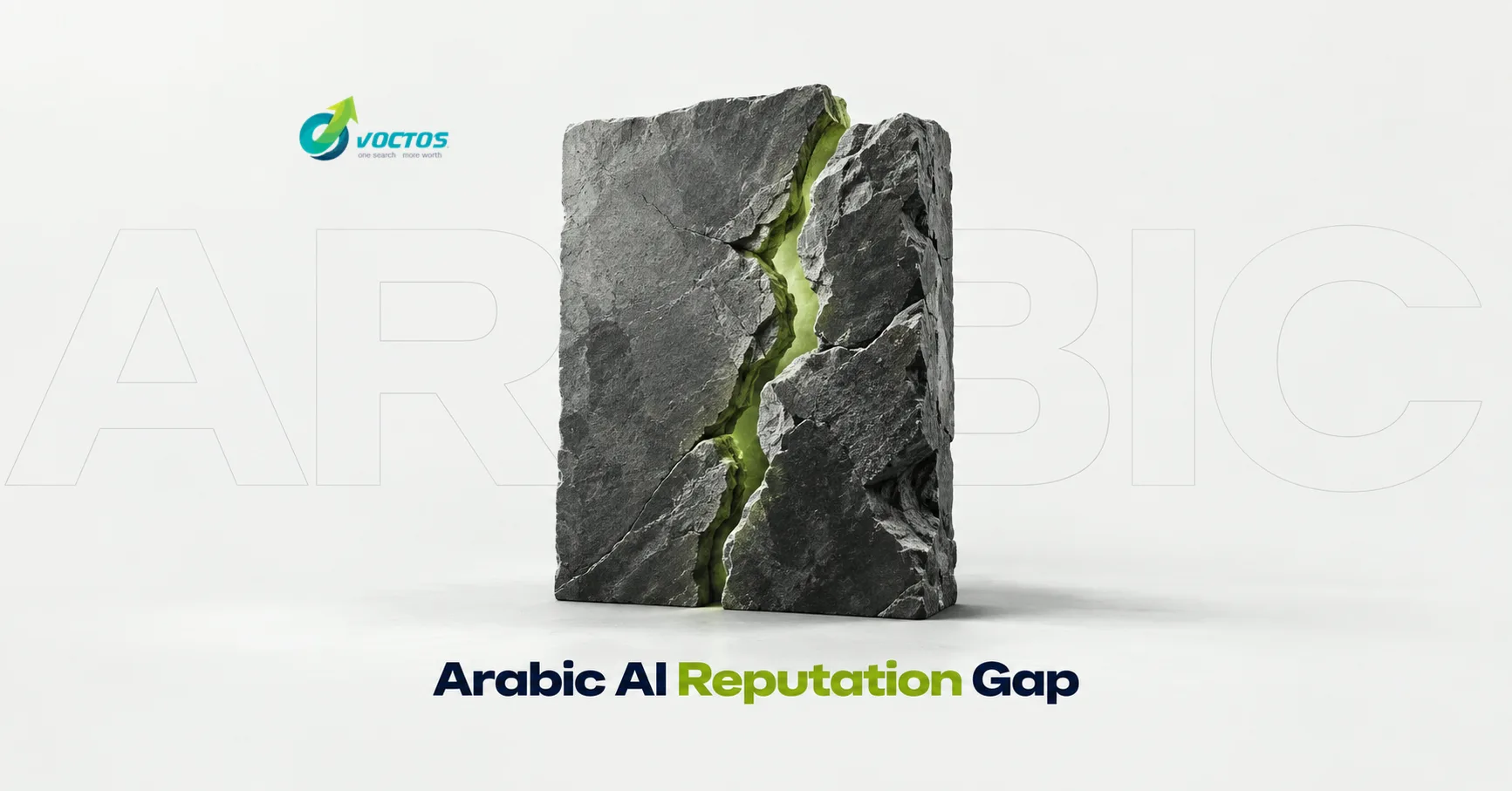
An Arabic-language AI answer about your brand is built from a much smaller pool of sources than the English one. Fewer sources means each source carries more weight, which cuts both ways: a single stale directory entry or one unhappy forum thread can dominate an entire answer, and a small amount of correct, well-structured Arabic material can move that answer faster than the same effort would in English.
Most brands in the region check their AI reputation in English, because that is the language of the marketing team. Their buyers frequently ask in Arabic, and the two answers are not the same answer.
Why the Arabic answer differs
Three things stack up.
The published record is thinner. Less indexed Arabic content exists about most companies than English content about equivalent companies elsewhere. Roundups, comparisons and independent coverage are all sparser, so the engine has fewer places to look.
Retrieval is inconsistent across languages. An engine may retrieve heavily for an English query and answer largely from memory for the Arabic equivalent, because it found less worth retrieving. That pushes the Arabic answer toward whatever the model absorbed during training, which is older and harder to change.
Entity resolution is harder. Arabic names transliterate several ways. A company appearing under two transliterations, plus an Arabic-script name, plus a legal name that differs from the trading name, is four weak entities rather than one strong one. This is the single most common cause of merged identity we find in the region.
What this looks like in practice
The same question, asked in two languages, produces answers with different tones, different sources and sometimes different facts. We see a consistent pattern:
- The English answer cites the company website, a review platform and an industry roundup.
- The Arabic answer cites a directory listing, a forum thread and occasionally nothing at all.
- The Arabic answer is more likely to be out of date, because less recent material exists to displace what the model already believed.
- The Arabic answer is more likely to omit the company entirely on an unnamed recommendation question, because the Arabic roundups that would name it are fewer.
None of this is a judgment about the engines. It is a description of what is available for them to read.
Which cuts in your favor
Scarcity is leverage. In a crowded English category, becoming a cited source means competing with hundreds of well-optimized pages. In the Arabic version of the same category, the competition is frequently a handful of thin pages and an out-of-date directory.
A single clear, well-structured Arabic page that answers the buyer’s actual question completely can become the source an engine reaches for, in a way that would take a great deal more work in English. This is the argument for doing the Arabic work first rather than translating it later.
What to do
Run the prompt set in Arabic, not translated from English
Ask the question the way an Arabic speaker would type it, including the dialect phrasing your market actually uses. A literal translation of your English prompt tests a question nobody asks. Include the trust question, because in this region it is often the first one.
Settle your name in every script and transliteration
Decide the canonical Arabic-script name and the canonical Latin transliteration. Then make every listing, profile, register entry and structured data field agree. State both forms on your own site, connected, so the engine can see they are the same entity. This is unglamorous and it is the highest-yield item on the list.
Publish the Arabic source that does not exist yet
Not a translation of your English page. The question your Arabic-speaking buyer asks, answered completely, in one passage, with a visible date. Where the Arabic record is thin, this is how you go from being a subject to being a source.
Fix the regional directories and registers
Local business directories, chamber and regulator listings, and the regional review platforms. These carry disproportionate weight precisely because there is less else to read, and they are the entries most likely to be years out of date.
Measure the two languages separately
Never average them. An English answer that is accurate and an Arabic answer that is wrong is not a brand that is doing fine on average. It is a brand failing in the language its buyers use.
The regional model question
Arabic-first and regionally developed models are an active area, and how much they will change the picture is not settled. What is safe to say is that they will read the same underlying Arabic web. Whatever thin or stale material shapes today’s answers is the same material a new model trains on. The work of putting a correct, well-structured Arabic record in place is worth doing regardless of which model ends up asking.
Frequently asked questions
Should I translate my English pages into Arabic?
Translation alone rarely performs, because it answers English questions in Arabic words. Write for the question as it is actually asked, then keep the facts consistent between the two versions.
Which engines matter most in the region?
The same six, and their relative strength varies by market and by device. Run all of them rather than assuming, and record which ones actually retrieve for your Arabic queries.
Does hreflang fix this?
It helps engines understand which page serves which language, and it does not create sources that do not exist. Treat it as plumbing rather than as strategy.
Is the gap closing?
The Arabic web is growing and the gap in most categories is still wide. Which is the window, and it will not stay open indefinitely.
Why we can write this one
VOCTOS works from Cairo across Egypt, the Gulf and wider MENA, and we have been measuring Arabic AI citations against English ones since we moved into this work. If you want the same measurement for your brand, it is part of every AI reputation management engagement, and it sits alongside the visibility side in our GEO service.
Related guides
- Arabic GEO: How to Get Your Arabic Content Cited by ChatGPT, Gemini and AI Overviews
- Best AEO Tools in 2026: Verified Prices, and Which Ones Actually Work in Arabic
- Sovereign AI in the Gulf: What Arabic Models Mean for How Your Business Gets Found
- What AI Overviews Cite in Arabic vs English: A 16-Prompt Audit
Want more people
to find your website?
Strategy call and
full site audit

Read also

Article Gemini 4 Hydrogen in Google AI Mode: What Changes for Arabic Answers and Citations
Article Medical Lab SEO Case Study: How Delta Medical Labs Cut a SAR 1M Monthly Google Ads Budget by 87%
Article ChatGPT Ads in Kuwait: Our Campaign Results Against 14 Published Case Studies

Article When a Competitor Gets Named Instead of You
Article Bing’s AI Performance Report: What Gulf and Egyptian Brands Can See About Copilot Citations

Article Google Moves Brand AI Overviews to the Side: What MENA Brands Should Track Now
Article Arab AI Visibility Index: method, registered before data
Article How to get cited by ChatGPT (and recommended in its answers)




Real Results
More Wins
SEO & GEO for Delta Medical Labs
 GEO
1M+ monthly organic visits, 159,200 ranked keywords, 5,570 pages cited by AI engines, and 1,186 #1 rankings in KSA.

Arabic SEO, GEO & guest posting for VPNly
 SEO
65K peak monthly organic visits, 55 guest posts, and 149 pages cited by AI engines.
SEO & GEO for Ogaei Virtual Care
GEO
From 3 to 7,931 monthly organic clicks in 7 months, 2.9M+ impressions, and 40+ keywords in Google’s Top 10.

SEO for Eduverse
SEO
12× search traffic in 10 months, 45% of target keywords in the top 5, and 55% in the top 10.
Trusted by