
SEO Content Strategy 2026: A Practical Plan for Egyptian Brands
SEO content strategy in Egypt 2026 is the difference between a blog that generates leads and a blog that generates nothing. Most content strategies we are asked to review are either spreadsheets full of keywords with no commercial logic, or vague mood boards built around buzzwords. Neither produces revenue.
A real SEO content strategy is a sequenced production plan that ties each piece of content to a measurable business outcome and to a specific stage in the buyer journey. This article walks you through the framework VOCTOS uses to build content strategies for Egyptian B2B and B2C clients, the same approach we have used across 500+ projects for 350+ clients since 2017.
What Is an SEO Content Strategy and Why Does It Matter in 2026?
An SEO content strategy is a documented plan that defines: which topics to cover, in what order, targeting which keywords, for which audience, with what business goal. Without this plan, content production is expensive and largely random.
In 2026, SEO content strategy matters more than ever because:
- AI search engines (ChatGPT, Gemini, Perplexity) now answer queries directly, only well-structured, authoritative content gets cited.
- Google’s Helpful Content system rewards depth and expertise over keyword density.
- Egyptian market competition is intensifying across every sector, brands that publish strategically are compounding authority while others are spinning wheels.
If you want to understand how SEO fits into the bigger picture, read our guide on the 4 pillars of an effective marketing strategy in Egypt.
Step 1: Start From Revenue, Work Backward to Topics
The first move in our content strategy process is to map the customer’s path to purchase, then identify the search queries that occur at each stage. For an enterprise software client, that path looks different from a hair-transplant clinic in Cairo, but the principle is identical: you do not pick topics because they have search volume, you pick topics because they sit between a potential customer and a decision.
The Three Content Tiers We Use for Every Client
- Bottom-of-funnel (BOFU): Content targeting buyers ready to purchase. These pages convert highest and should be built first. Examples: “best SEO agency in Egypt,” “SEO services Cairo pricing.”
- Middle-of-funnel (MOFU): Content targeting buyers who are evaluating options. Examples: “how to choose a digital marketing agency in Egypt,” “SEO vs paid ads for Egyptian brands.”
- Top-of-funnel (TOFU): Content targeting buyers in the awareness stage. Examples: “what is SEO,” “how does Google rank websites.” High volume, lower conversion, build these after BOFU and MOFU.
Most Egyptian brands do the opposite, they start with TOFU because those keywords have the highest volume. This is why most content strategies fail to generate revenue.
Step 2: Keyword Research for Egyptian Markets
Keyword research for Egyptian brands requires a different approach from global keyword research. The Egyptian search market has specific characteristics:
- Bilingual searches: Egyptian users search in both Arabic and English, often mixing both in the same query.
- Lower search volumes: Many high-value commercial keywords have lower monthly search volumes than equivalent terms in larger markets, but higher conversion intent.
- Growing Arabic SEO opportunity: Arabic-language content is still significantly underserved relative to demand, creating a major opportunity for Egyptian brands.
- Local intent signals: Keywords including “Egypt,” “Cairo,” “Alexandria,” or specific neighbourhoods signal high local intent and often convert at 2-3x the rate of generic terms.
For a deeper dive into finding the right keywords, read our guide on how to find related keywords and use them properly in 2026.
Step 3: Content Architecture and Internal Linking
Content architecture is the structure of your content, how pages relate to each other, which pages link to which, and how authority flows through your site. A well-architected content strategy looks like a hub-and-spoke model:
- Pillar pages (hubs): Comprehensive, authoritative pages covering a broad topic. Example: “SEO Guide 2026: How to Win Search and AI Visibility in Egypt.”
- Cluster pages (spokes): Focused articles covering specific subtopics, all linking back to the pillar page. Example: “Long-Tail Keywords: How to Find Them and Rank For Them in 2026.”
Internal linking between cluster pages and pillar pages does three things: it signals to Google that your pillar page is the most authoritative resource on the topic, it keeps readers engaged by surfacing relevant content, and it distributes page authority (PageRank) across your site.
For a comprehensive overview of SEO in Egypt, see our SEO Guide 2026: How to Win Search and AI Visibility in Egypt. For off-page strategy, read our guide on Off-Page SEO in 2026: The Tactics That Still Boost Visibility.
Step 4: Content Production Standards
Content production quality separates strategies that build topical authority from those that create thin content penalties. Our production standards for every piece of content:
- Minimum 1,200 words for informational content, 800 for commercial landing pages.
- Original research or data wherever possible, statistics from Egyptian market context outperform generic global stats.
- Expert authorship, every article should demonstrate first-hand experience or expertise (Google’s E-E-A-T signals).
- Structured data markup, FAQ schema, Article schema, and HowTo schema where appropriate.
- Media enrichment, at least one original image, chart, or infographic per article.
- Internal links, minimum three internal links per article, linking to related content.
Step 5: Content Measurement and Iteration
A content strategy without measurement is a content calendar. You need to track:
- Organic sessions by article, which content is driving traffic?
- Keyword rankings by article, are you ranking for your target keywords?
- Conversion rate by article, which content is generating leads or sales?
- AI citation rate, in 2026, is your content being cited by ChatGPT, Gemini, or Perplexity when users ask relevant questions?
For a practical guide to measurement, read our article on [The Google Analytics Metrics That Actually Matter for SEO in 2026](https://www.voctos.com/blog/google-analytics-metrics-that-matter/).
The SEO Content Strategy Framework: Summary
- Step 1: Map the buyer journey, identify revenue-generating topics first.
- Step 2: Conduct keyword research with Egyptian market context, bilingual, local intent, commercial priority.
- Step 3: Build a hub-and-spoke content architecture with strong internal linking.
- Step 4: Produce content to high quality standards: depth, expertise, structured data, media.
- Step 5: Measure performance, iterate monthly, and double down on what works.
Brands that follow this framework consistently outperform competitors who publish randomly. The compounding effect of a well-executed content strategy, where each article reinforces the authority of every other article, is the closest thing to a sustainable competitive advantage in digital marketing.
Frequently Asked Questions: SEO Content Strategy in Egypt 2026
How many articles should an Egyptian brand publish per month?
Quality over quantity. Two to four thoroughly researched, well-structured articles per month will outperform ten thin pieces. Start with BOFU content, then MOFU, then TOFU as your authority grows.
Should Egyptian brands write content in Arabic or English?
Both, ideally in separate content tracks. English content targets international search and higher-educated local audiences. Arabic content captures a significantly larger local search audience and faces less competition. For most Egyptian B2C brands, Arabic-first is the right strategy.
How long does it take for content to rank in Egypt?
New content typically takes three to six months to rank competitively in Egypt. Well-structured content on a domain with existing authority can rank in four to eight weeks. This is why building genuine topical authority through consistent publishing matters before expecting rapid results.
What is the difference between a content strategy and a content calendar?
A content calendar tells you what to publish and when. A content strategy tells you why you are publishing each piece, which keyword it targets, which audience it serves, and what business outcome it should produce. A calendar without a strategy is just a publishing schedule.
How does AI change SEO content strategy in 2026?
AI changes the distribution layer, content that answers questions clearly and cites credible data is now surfaced by AI search engines as well as traditional search. This rewards the same content qualities that have always mattered (expertise, depth, clarity) while adding new requirements: structured data, clear authorship, and citation-worthy statistics.
Related guides
- Five Real Reasons VOCTOS Is the Right Digital Marketing Agency for Egyptian Brands in 2026
- What is SEO? The Complete Guide for Egyptian Businesses in 2026
- Senior SEO Strategies for Egyptian Brands in 2026: 12 Tactics That Actually Move the Needle
- SEO Copywriting: How to Write Content That Ranks on Google and AI
Don't miss the chance to
make your website more visible!
Initial consultation and
audit of the current situation

Read also

Article Tag Clouds in SEO: What They Are and How to Use Them
Article What Are Duplicate Pages and Why Are They Dangerous
Article Why AI Still Describes Your Old Brand: Knowledge Cutoffs Explained

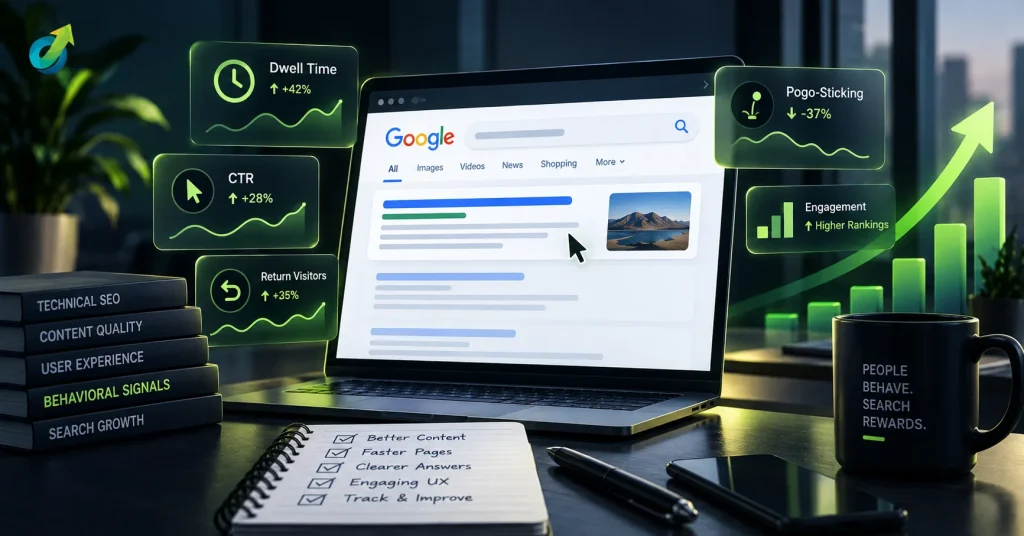
Article Behavioral Factors in SEO: What They Are and How to Improve Them
Article JavaScript Links Are Hiding MENA Sites From ChatGPT and Claude

Article VOCTOS Is a Top SEO, PPC and SEM Company in Egypt on Clutch for 2026
Article Commercial Ranking Factors: The Complete List

Article The Title Meta Tag: What It Is and How to Write It

Real Results
More Wins
SEO & GEO for Delta Medical Labs
 GEO
GEO
1M+ monthly organic visits, 159,200 ranked keywords, 5,570 pages cited by AI engines, and 1,186 #1 rankings in KSA.

Arabic SEO, GEO & guest posting for VPNly
 SEO
SEO
65K peak monthly organic visits, 55 guest posts, and 149 pages cited by AI engines.

SEO & GEO for Ogaei Virtual Care
GEO
From 3 to 7,931 monthly organic clicks in 7 months, 2.9M+ impressions, and 40+ keywords in Google’s Top 10.

SEO for Eduverse
SEO
12× search traffic in 10 months, 45% of target keywords in the top 5, and 55% in the top 10.
Trusted by