

Keywords in SEO: All Types of Search Queries Explained

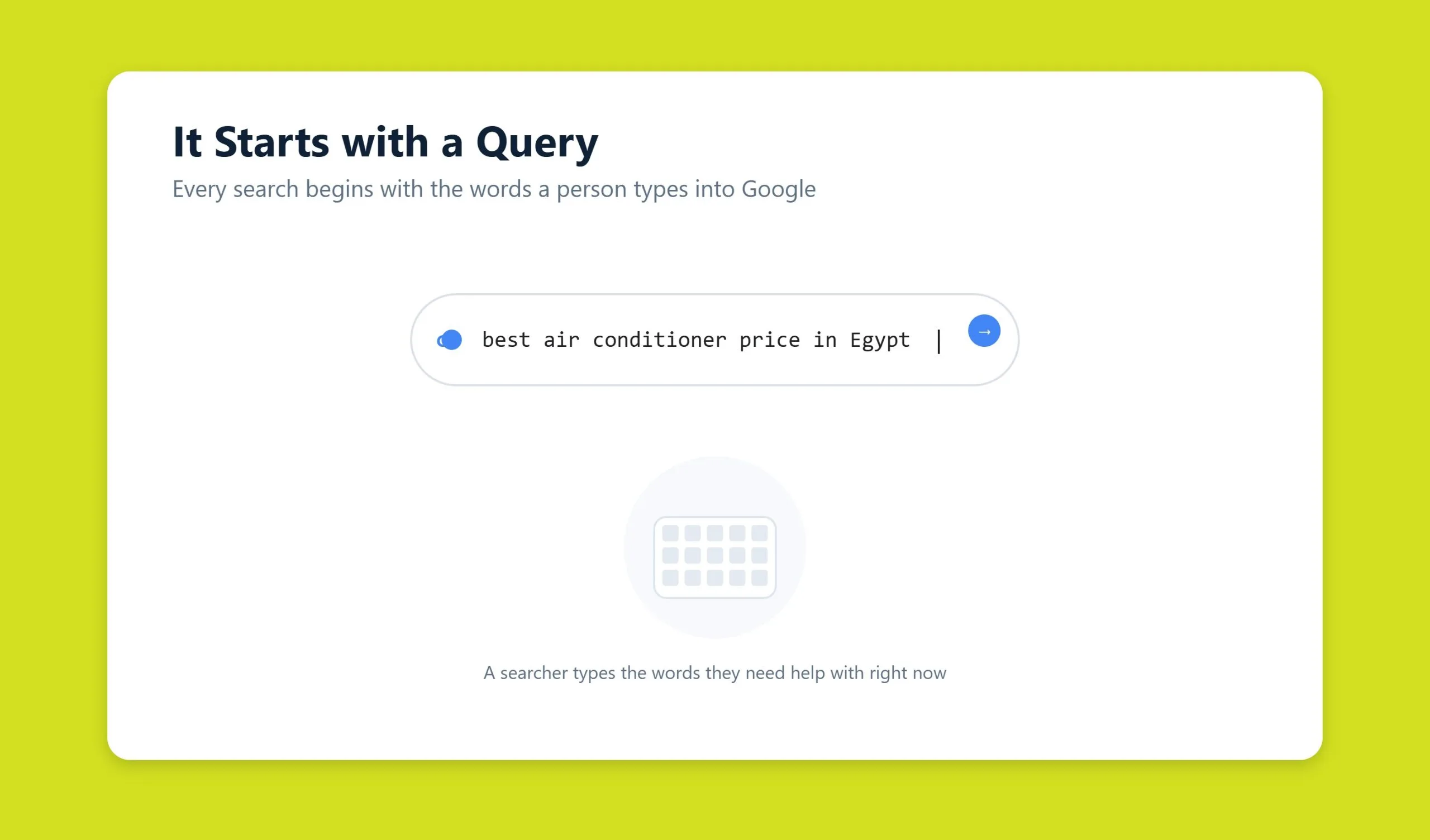
Keywords are the words, phrases and full questions people type into a search engine to find what they need. When someone searches for “pizza delivery near me,” “how to write a dissertation” or “buy wireless headphones,” that query is a keyword, and it signals exactly what the searcher wants. For any website, keywords are the bridge between a user’s intent and your page. Get them right and Google shows your content to the people already looking for it; ignore them and even a great site stays invisible.
Key takeaways
- Keywords represent search intent, they tell Google what a page is about and which queries it should rank for.
- Keywords are classified several ways: by search volume (high, mid, low), by intent (informational, navigational, commercial, transactional), by geo-dependence, and by length (short-tail vs. long-tail).
- High-volume terms bring reach but fierce competition; long-tail and low-volume queries convert better because intent is more specific.
- Modern algorithms use natural-language understanding, so keywords must read naturally, stuffing risks penalties, not rankings.
- Research tools like Google Keyword Planner, Ahrefs and Semrush reveal volume, difficulty and intent so you can build a full keyword map.
- Every keyword should map to a single page, matched to that page’s purpose in the buyer journey.
What keywords are and why they matter
A keyword (or search query) is any word, phrase or sentence a user enters into a search engine to find information, a product or a service. The engine processes that query and returns the pages it judges most relevant. If the results don’t satisfy the searcher, they rephrase and try again. In that sense, keywords are a direct expression of intent: a snapshot of what someone hopes to find the moment they hit “search.”
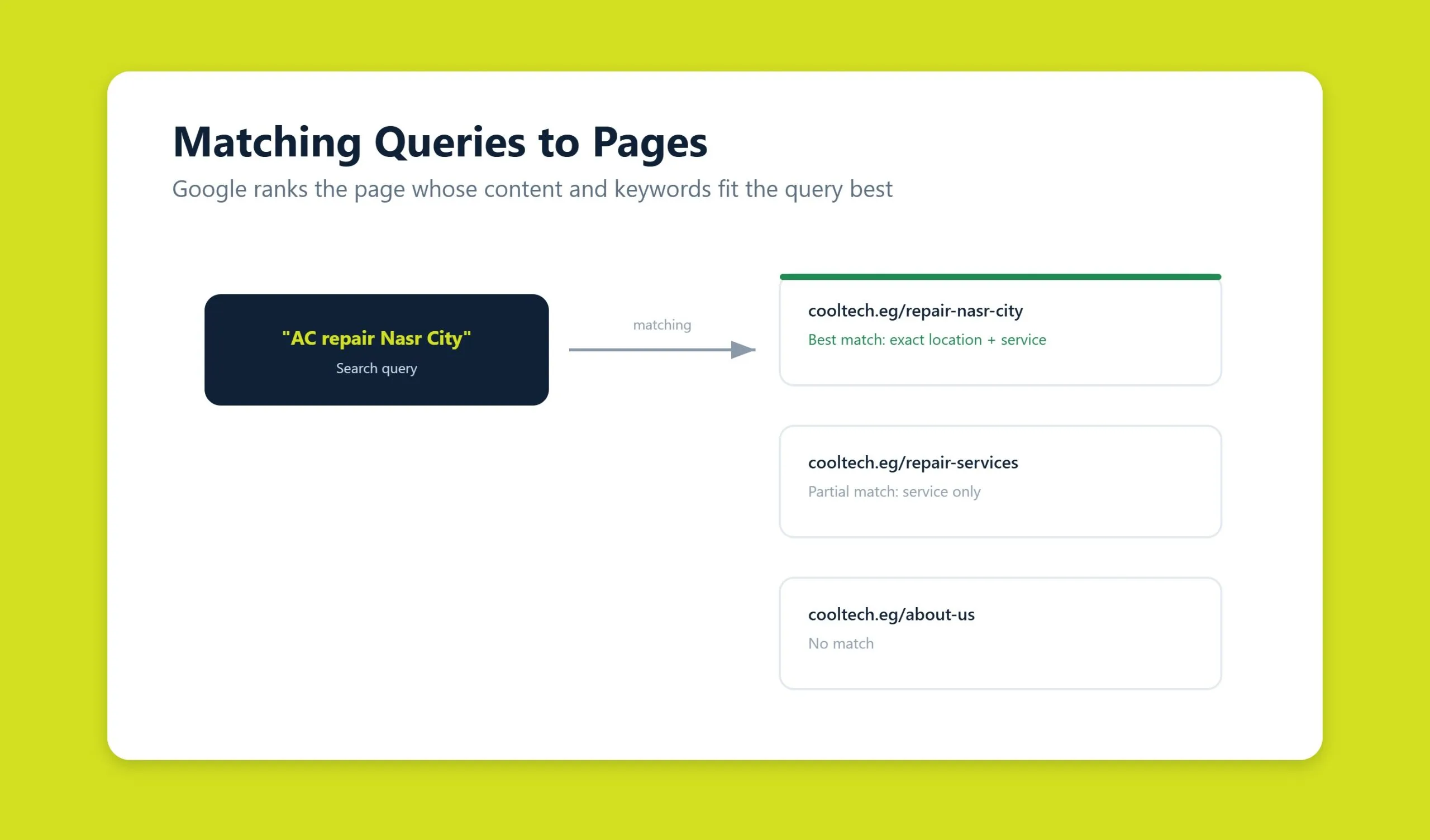
Keywords matter because they are how search engines connect your pages to real demand. Google analyzes vast amounts of data and relies on the words and phrasing on a page to judge how well it answers a given query. Picture an online store selling crystal glassware. The site looks beautiful, every product is photographed, and staff are ready to process orders. A shopper types “buy wedding champagne flutes.” If the phrases “wedding,” “champagne flutes” and “buy” appear nowhere on your pages, the engine has no reason to surface your store, and that customer never sees it.
This is why professional SEO starts with building a keyword map: the full set of search queries relevant to your business. You collect those queries, clean out the irrelevant ones, group them, and place each cluster on the page it fits best. Only then do you write the content, craft the metadata and handle the on-page work that puts those keywords to use.
In the early days of search, site owners and SEOs leaned on manipulative tactics, dumping comma-separated keyword lists onto a page, or publishing thin text crammed with repeated phrases. Today’s engines are far more sophisticated. Over-optimized, unnaturally dense keyword usage can trigger algorithmic filters and demotions. Keywords have to be woven in naturally and match the genuine subject of the page. Neural-network-based systems now understand meaning and context, so trying to “trick” the algorithm is a losing game.
Can you rank without keywords at all? No. Without relevant terms, search engines have nothing to match your pages against, and users simply can’t find you. Done well, keyword-led optimization is exactly what lifts a site into the top results.
Classifying keywords by search intent
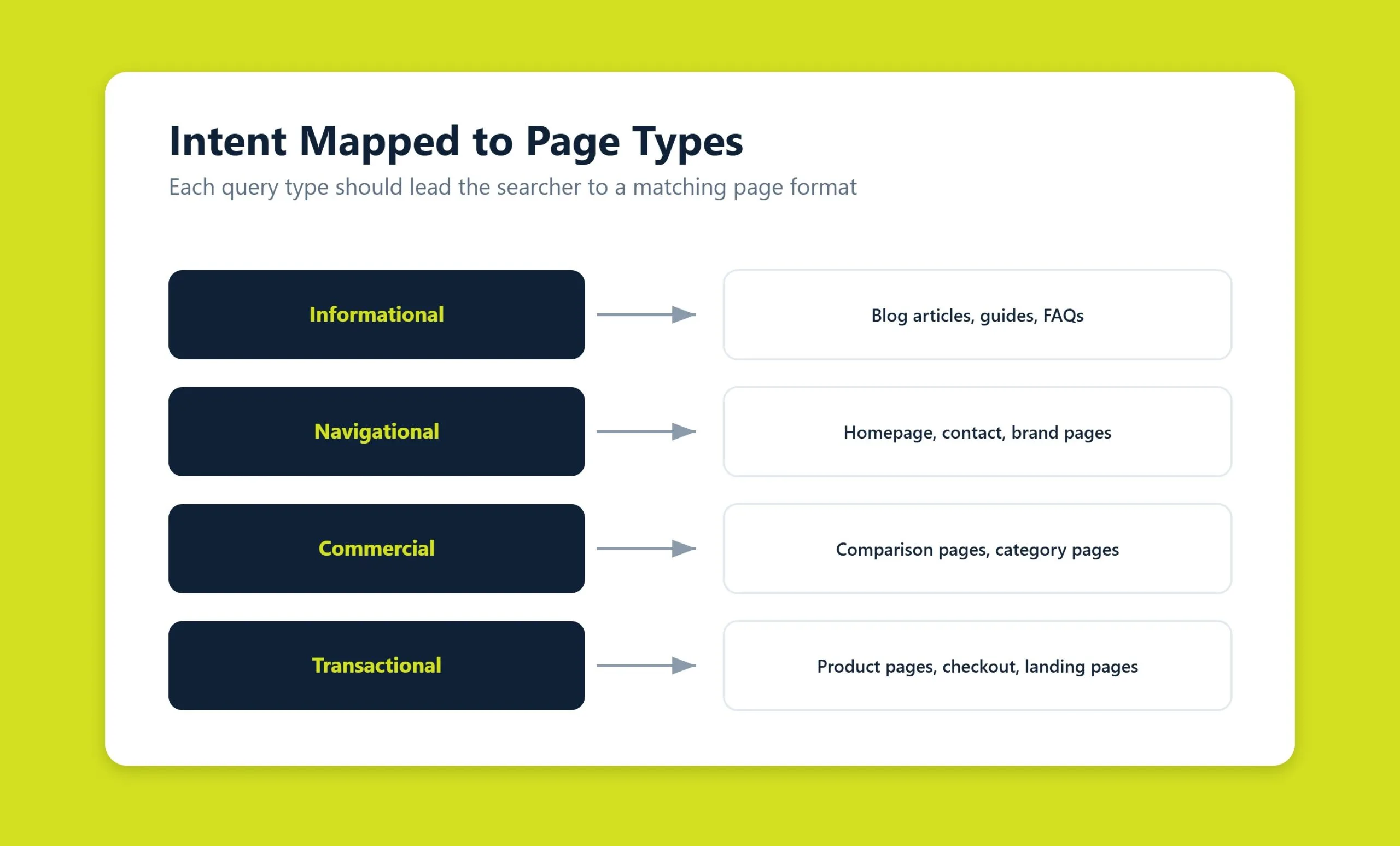
Keywords can be grouped by several attributes. The most important is intent, what the searcher actually wants to do.
General (ambiguous) queries
These are terms where intent is hard to read. Take “Asus laptop.” Does the user want to see which models exist, compare prices, read reviews, or buy one outright? All are plausible. In response, Google typically serves a blend of commercial and informational pages until it learns more about what searchers on that query prefer.
Informational queries
People use informational keywords when they want to learn something rather than buy. These often begin with question words, “what,” “why,” “how,” “who.” Examples: “how to write a dissertation,” “how to apply to a foreign university,” “what is a metaphor.” Engines frequently treat broad terms as informational; search “Vonnegut” and Google will surface Wikipedia before it shows stores selling his books. Informational queries are the backbone of blog and content marketing strategy.
Navigational queries
Navigational keywords help a user reach a specific resource, brand or service they already have in mind but can’t recall the exact address for. Examples include “Toyota official website,” “free online library” or “plagiarism checker.” The searcher knows the destination; they’re just using the engine to get there quickly.
Commercial queries
Commercial-investigation keywords sit between information and purchase. The user intends to buy soon but is still comparing, think “best CRM for small business,” “iPhone 15 vs iPhone 16” or “top running shoes 2026.” These queries power comparison pages, reviews and buying guides that nudge a researcher toward a decision.
Transactional queries
Transactional keywords express a clear intent to act: order, buy, watch, read, download, install, book. They usually contain one of those verbs, “latest iPhone buy,” “watch The Mandalorian online,” “book a hotel in Rome.” These are the highest-value terms for e-commerce and service pages, because the searcher is ready to convert.
Media queries
Media (multimedia) keywords relate directly to video, audio or images. Media intent is really an added dimension that can attach to commercial, informational or navigational queries alike, “online cinema” and “watch funny videos” are both media queries, but with very different purposes underneath.
Classifying keywords by geo-dependence
Geo-dependence describes whether the results for a query change significantly based on where the searcher is located.
Geo-dependent queries
These are tied to a specific city, region or country. “Pizza delivery,” “buy a laptop” or “emergency plumber” all return different results depending on location, because the searcher wants a local option. Local businesses live and die by ranking well for geo-dependent terms.
Geo-independent queries
Here the results look the same regardless of region: most often informational queries, or those that already name a place. “Museums in London,” “pizza delivery Manchester” or “what is photosynthesis” resolve to the same set of pages no matter where you search from.
How to check geo-dependence
Dedicated SEO platforms include geo-checking features that let you enter a keyword and see whether its results shift by location. Tools such as Semrush and Ahrefs let you compare rankings across regions, and Google’s own local-pack behavior is a quick manual signal, if a map with local listings appears, the term is almost certainly geo-dependent.
Classifying keywords by search volume (frequency)
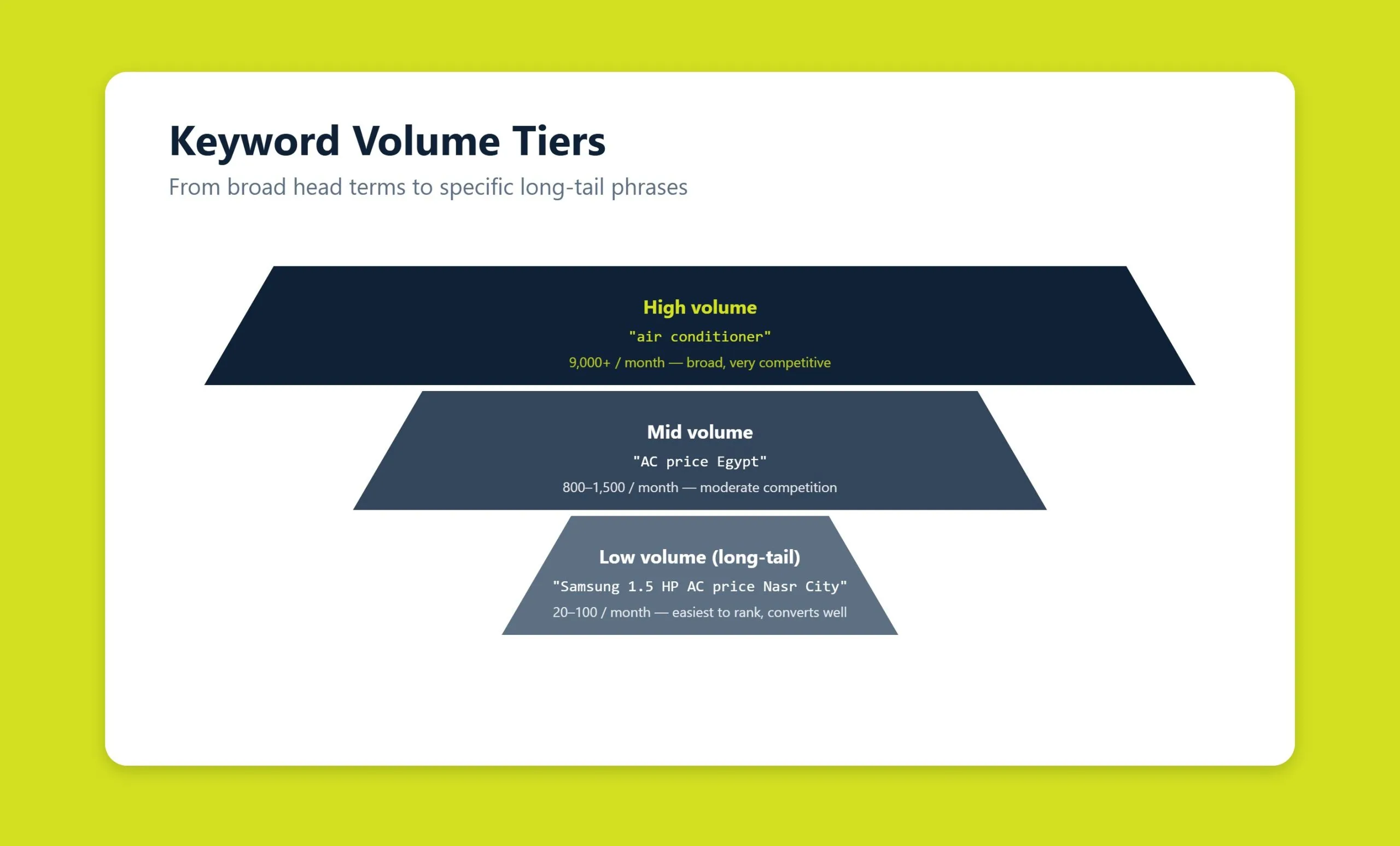
Search volume measures how often people search a given term. Google, Ahrefs and Semrush all provide tools that report this metric so you can size the opportunity behind each keyword.
High-volume keywords
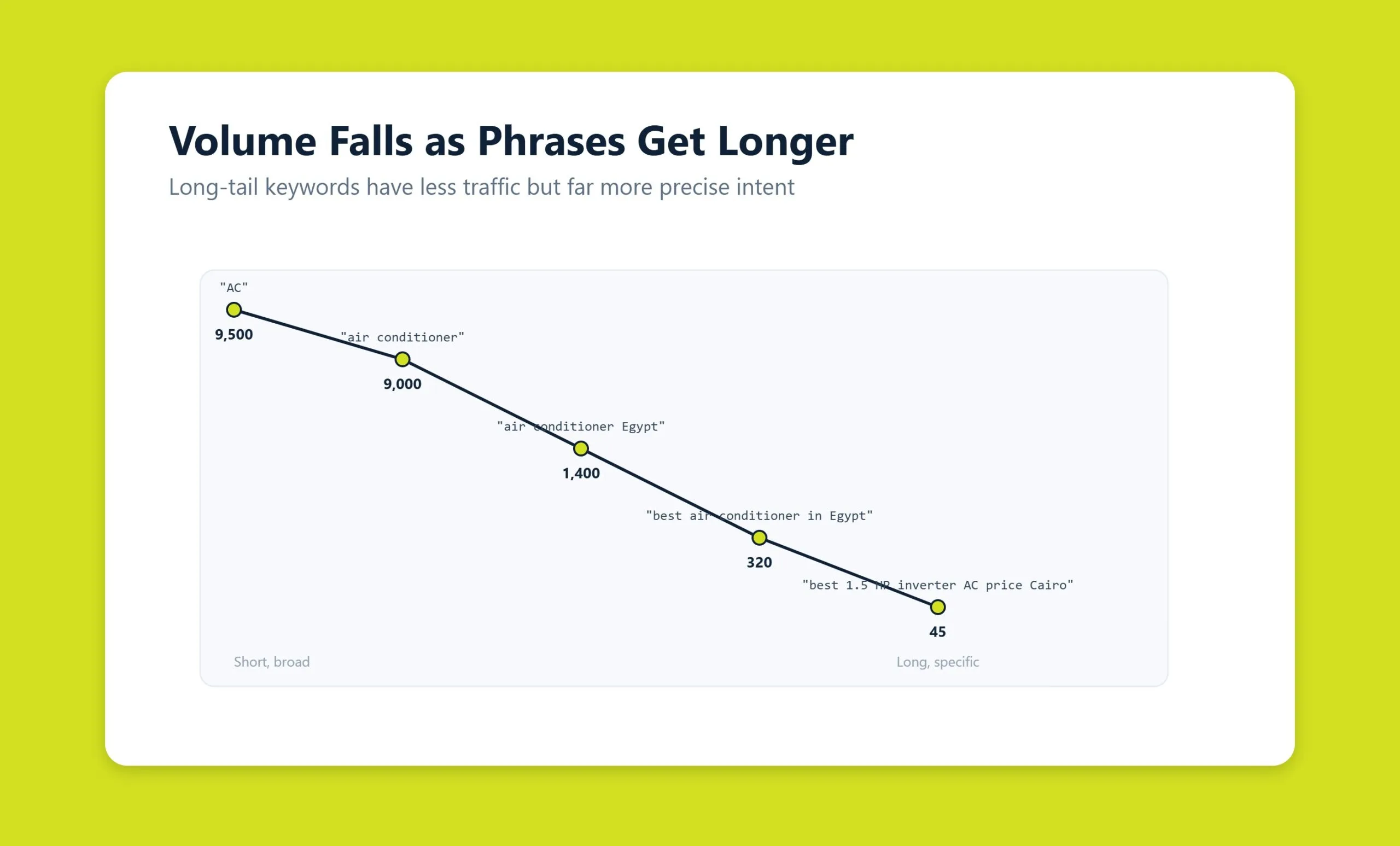
These are searched very often: roughly 10,000+ times a month. They’re usually broad, ambiguous terms: single words or short phrases like “smartphone,” “children’s clothing” or “running.” They deliver enormous reach but are extremely competitive and rarely convert well, because intent is so vague.
Mid-volume keywords
Searched roughly 1,000 to 10,000 times a month, mid-volume terms are more specific, “smartphones with wide-angle cameras,” “Italian comedy films 2020.” Competition varies by niche, and these keywords often strike a healthy balance between traffic and relevance.
Low-volume keywords
Searched fewer than 1,000 times a month, these are narrow, precise phrases, sometimes six to eight words long. Anyone using a low-volume query knows exactly what they want, which is why these terms convert so well: “Italian films from 2020 about an epidemic.”
Micro low-volume keywords
These are searched barely more than zero times a month. Individually they bring almost no traffic, but they are superb for optimization: a person searching such a hyper-specific phrase is highly likely to be genuinely interested in your information, product or service. At scale, thousands of micro queries add up to meaningful, high-intent traffic.
How to tell whether a keyword is high, mid or low volume
As a rule of thumb, the shorter and simpler the phrase, the higher its volume; the longer and more specific, the lower. But there’s no need to guess. Google Keyword Planner, Ahrefs and Semrush all report exact or bracketed monthly volumes, so you can classify any term in seconds.
Long-tail keywords and seasonality
The low-volume and micro tiers together form what SEOs call the long tailthe vast universe of specific, lower-frequency phrases that, in aggregate, account for the majority of all searches. Long-tail keywords are the workhorses of a smart strategy: cheaper to rank for, richer in intent, and far more likely to convert than head terms. A comprehensive SEO program deliberately targets long-tail queries across dozens or hundreds of pages to compound traffic over time.
Keywords also carry a seasonality dimension. Seasonal terms peak at certain times of year, “best winter resorts,” “Halloween costume ideas,” “back-to-school checklist.” Non-seasonal terms hold steady all year, like “pizza delivery in London.” To confirm whether a keyword is seasonal, check Google Trends and review its demand curve over the past twelve to twenty-four months.
Additional keyword attributes
Beyond the core classifications, keywords can carry extra properties worth understanding.
- Competition (difficulty): an estimate of how hard it is to rank for a term. Many strong sites competing for a keyword means a bigger investment is required. Don’t confuse difficulty with volume: a low-volume term can still be highly competitive.
- Vital queries: terms with a single definitive answer, usually navigational, “Nike official website,” “IRS website.” One official page satisfies the query.
- Ambiguous (spectral) queries: phrases with multiple possible meanings. “Jaguar”: the animal, the car, or the operating system? The engine has to guess, so results are mixed until behavior clarifies intent.
How to research keywords
Solid keyword research is the foundation of every ranking page. The workflow below moves from raw discovery to a finished plan.
Google Keyword Planner
Free with any Google Ads account, Keyword Planner is the natural starting point. Enter a seed term or your URL and it returns related keywords with monthly volume ranges, competition levels and suggested bids. Because the data comes straight from Google, it’s a reliable baseline for volume and for discovering terms you hadn’t considered.
Ahrefs
Ahrefs’ Keywords Explorer is a favourite for depth. It reports search volume, keyword difficulty, clicks, parent topics and, crucially, the “traffic potential” of the top-ranking page, which tells you how much traffic a keyword’s full cluster can deliver. Its questions and “matching terms” reports are excellent for building out informational and long-tail sets.
Semrush
Semrush combines keyword research with competitive intelligence. The Keyword Magic Tool expands a seed into thousands of grouped variations, while the Keyword Gap report shows terms your competitors rank for that you don’t: one of the fastest ways to find opportunity. You can also pull a competitor’s full keyword profile to reverse-engineer their strategy.
In practice, most teams triangulate: Keyword Planner for baseline volume, Ahrefs or Semrush for difficulty, intent and competitor gaps, plus manual review of Google’s autocomplete and “People also ask” boxes. If you’re unsure where to start, a professional SEO audit will surface the gaps and quick wins in your current keyword coverage.
How to map keywords to pages
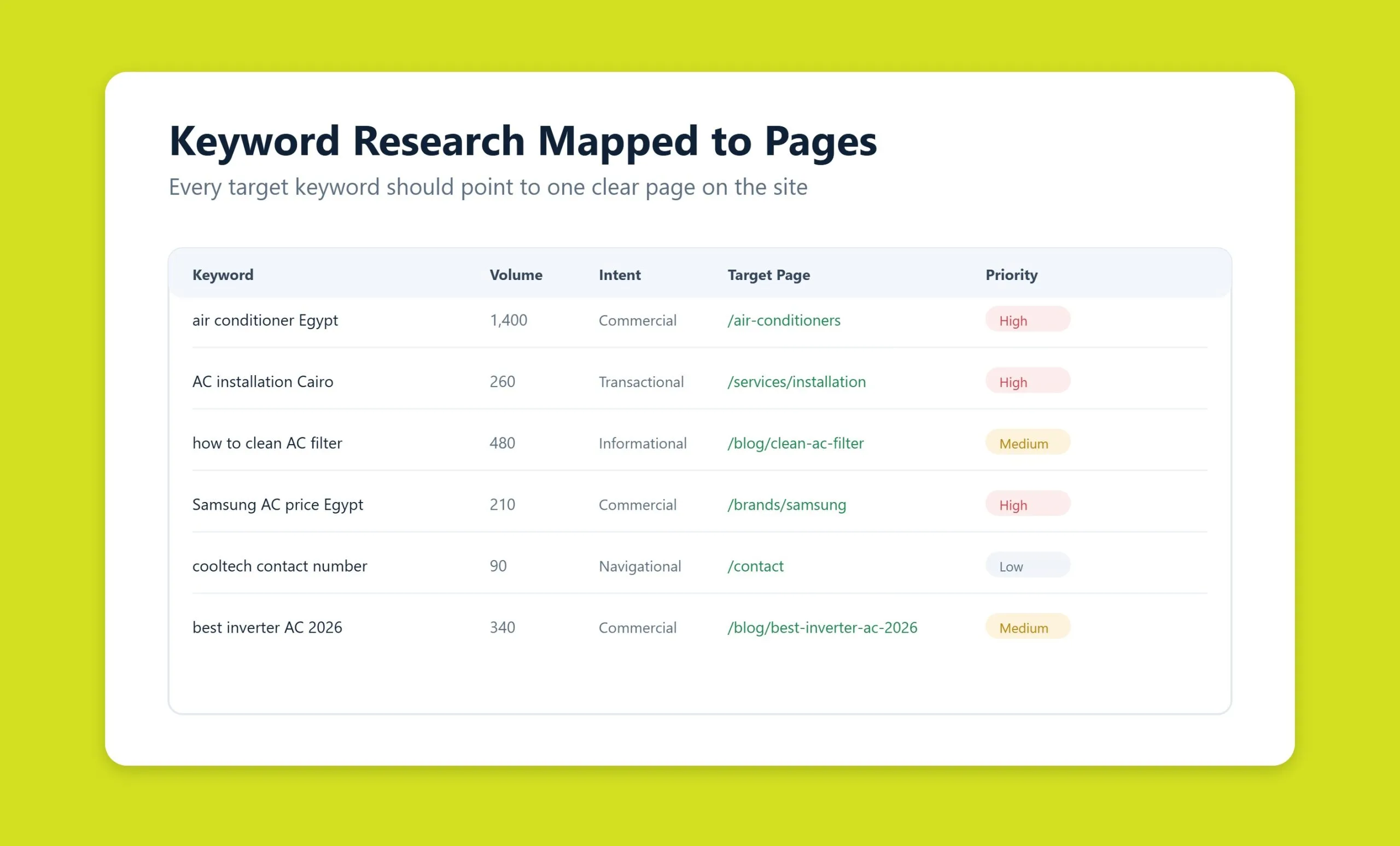
Once you’ve built your keyword map, the next step is clustering: grouping keywords that share the same intent so each group maps to a single page. Doing this by hand is slow, so most teams use clustering tools that analyze search results and bucket terms automatically. The output is more than a keyword list: it’s a page-by-page breakdown that doubles as a near-ready brief for your writers.
A few principles keep keyword mapping clean:
- One primary intent per page. Don’t try to rank a single page for both “what is a CRM” (informational) and “buy CRM software” (transactional), split them.
- Match keyword to page type. Transactional terms belong on product and service pages; informational and commercial terms belong on blog posts, guides and comparisons.
- Avoid cannibalisation. Two pages targeting the same keyword compete with each other and split your authority. Assign each cluster to one canonical page.
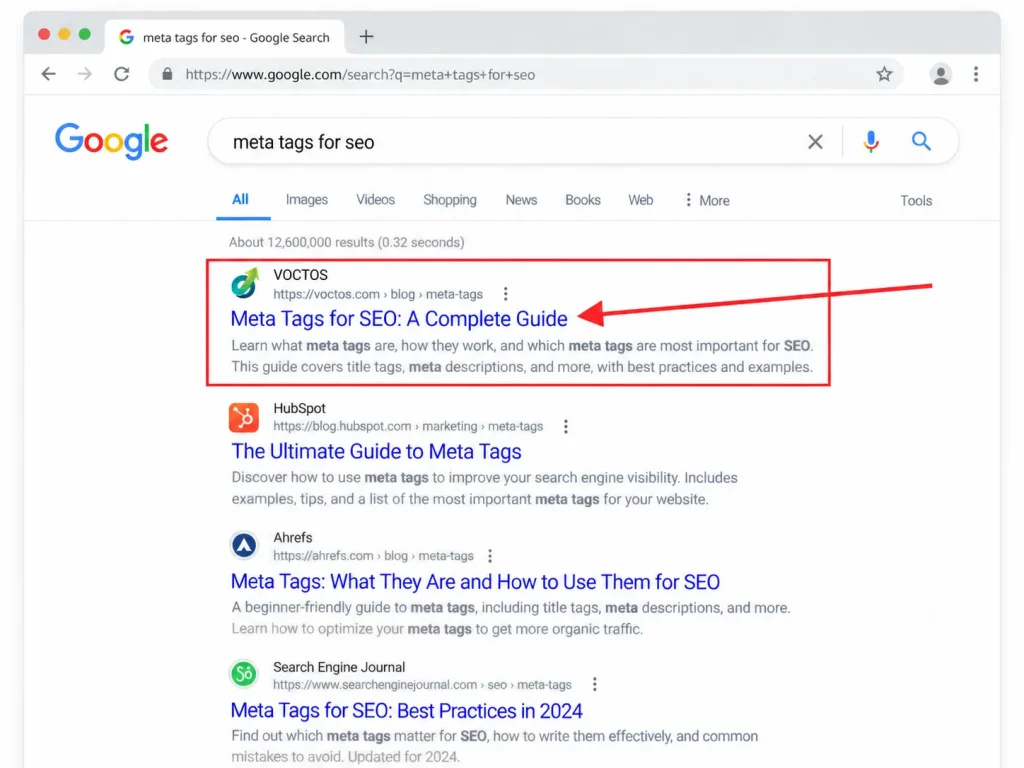
- Place keywords naturally. Use your primary term in the title tag, meta description, H1 and opening paragraph, then distribute related terms and synonyms evenly through the body and in image alt text. Keywords should read as if a human wrote them, because a human should have.
As search evolves, this mapping discipline extends beyond traditional results. AI-powered answer engines increasingly summarise content directly, which means structuring pages around clear intent and well-answered questions also improves your visibility in generative engine optimization (GEO)the practice of being cited by AI assistants like ChatGPT, Gemini and Google’s AI Overviews.
Frequently asked questions
What is the difference between a keyword and a search query?
In everyday SEO use the terms are interchangeable. Strictly, a “search query” is exactly what a user types, while a “keyword” is the target term an SEO chooses to optimize for. Because good optimization aims to match real queries, the two overlap almost completely in practice.
How many keywords should one page target?
One page should target a single primary keyword plus a cluster of closely related secondary terms and synonyms that share the same intent. Trying to rank one page for unrelated intents dilutes relevance and risks keyword cannibalisation, so split distinct intents across separate pages.
Are long-tail keywords better than high-volume keywords?
They serve different goals. High-volume head terms deliver reach but are competitive and convert poorly. Long-tail keywords bring less traffic individually but carry stronger intent, face less competition and convert far better. A balanced strategy uses both, head terms for awareness, long-tail for conversions.
Which tool is best for keyword research?
Google Keyword Planner is the best free starting point for volume data. For depth, keyword difficulty, intent, traffic potential and competitor gaps, Ahrefs and Semrush are the industry standards. Most professionals combine a free source for baseline volume with a paid platform for analysis and competitive research.
How often should I update my keyword research?
Review your keyword strategy at least every quarter, and revisit it whenever search behavior, your product line or the competitive landscape shifts. Seasonal terms need attention ahead of their peaks, and new opportunities surface constantly as language and demand change.
Related guides
Don't miss the chance to
make your website more visible!
Initial consultation and
audit of the current situation

Read also

Article Behavioral Factors in SEO: What They Are and How to Improve Them
Article JavaScript Links Are Hiding MENA Sites From ChatGPT and Claude

Article VOCTOS Is a Top SEO, PPC and SEM Company in Egypt on Clutch for 2026
Article Commercial Ranking Factors: The Complete List

Article The Title Meta Tag: What It Is and How to Write It
Article The Role of Meta Tags in Search Engine Optimization
Article Can You Sue an AI for Defamation? Where the Law Stands

Article Cloudflare’s 15 September AI Crawler Defaults: The Check Gulf and Egypt Brands Should Run Today







Real Results
More Wins
SEO & GEO for Delta Medical Labs
 GEO
GEO
1M+ monthly organic visits, 159,200 ranked keywords, 5,570 pages cited by AI engines, and 1,186 #1 rankings in KSA.

Arabic SEO, GEO & guest posting for VPNly
 SEO
SEO
65K peak monthly organic visits, 55 guest posts, and 149 pages cited by AI engines.

SEO & GEO for Ogaei Virtual Care
GEO
From 3 to 7,931 monthly organic clicks in 7 months, 2.9M+ impressions, and 40+ keywords in Google’s Top 10.

SEO for Eduverse
SEO
12× search traffic in 10 months, 45% of target keywords in the top 5, and 55% in the top 10.
Trusted by