
Guest Posting vs Press Releases vs Digital PR: Which One Do You Actually Need?

Guest posting, press release syndication and digital PR all end in a link or a mention, but they solve different problems. Guest posting builds durable authority on the pages you want ranking. Press releases buy reach quickly for something newsworthy. Digital PR earns coverage you did not pay placement for, and carries the most authority when it lands.
Buying the wrong one is the most common way a link budget disappears without moving anything. Here is how to tell them apart and how to choose.
The short version
- Guest posting: an original article you contribute to a publisher’s editorial section. You control the topic, the anchor text and the target page. Slowest per placement, strongest per link, and the option that moves commercial pages.
- Press release syndication: one announcement distributed across a newswire and picked up by many outlets simultaneously. Built for launches, funding, awards, partnerships and market entries. Wide reach, weaker individual links, and most syndicated copies carry a nofollow attribute.
- Digital PR: an angle or a piece of original data pitched to journalists, earning coverage nobody paid for placement on. Highest authority, least predictable output, and it needs something genuinely newsworthy behind it.
How they compare
| Guest posting | Press release | Digital PR | |
|---|---|---|---|
| What it is | Contributed article | Syndicated announcement | Earned editorial coverage |
| Control over anchor | Full | Partial | None |
| Typical link type | Dofollow, in body | Mostly nofollow | Dofollow when it lands |
| Speed | 2 to 6 weeks per site | Days | Unpredictable |
| Predictability | High | High for pickup, low for links | Low |
| Needs news | No | Yes | Yes |
| Best for | Ranking commercial pages | Announcements and reach | Brand authority and entity building |
When guest posting is the right choice
Most of the time, if what you need is rankings. Guest posting is the only one of the three where you decide which page receives the authority and what the anchor text says. That control matters, because authority applied to a category page that already ranks on page two produces a far better return than the same authority arriving at a homepage.
It is also the option that works when you have nothing to announce, which is the situation most businesses are in for eleven months of the year.
The trade-off is pace. Each placement involves a pitch, an editor and a publishing calendar, so a program builds over months rather than weeks. Our guide to how guest posting works covers the full process, and the nine-point vetting checklist covers how to avoid paying for placements that do nothing.
When a press release is the right choice
When something has genuinely happened. A funding round, a new market, an acquisition, a license, an award, a flagship partnership. Newswires distribute the announcement to hundreds of outlets at once, and in the MENA region, pickup by mainstream Arabic and English press can follow within days, though nothing about pickup is guaranteed.
What a press release does not reliably produce is ranking power. Syndicated copies are usually nofollowed and frequently duplicated across dozens of low-value republishing sites. Judge a release on pickups by outlets that matter and on referral traffic, not on the raw number of URLs in the distribution report.
How to run one so it earns something
- Optimize the draft. Write in natural anchor text pointing at the pages that matter commercially, and tag every URL so pickups can be traced back to referral traffic in analytics.
- Get brand approval. Wording, claims and tone signed off against your brand guidelines before anything is distributed. Nothing should go out under your name that you have not read.
- Review the syndication list. Look at the outlets the release will reach and flag low-quality sites for exclusion before distribution, rather than discovering them in a report afterwards.
- Report on pickups, not on sends. Which outlets ran it, which of those actually linked, and what referral traffic each produced. Without that second column, a distribution report is a receipt, not a result.
When digital PR is the right choice
When you have something a journalist would want without being paid to want it: proprietary data, a survey, an unusual internal statistic, a genuine expert view on a live story. It produces the strongest links available and the hardest to replicate, because a competitor cannot buy the same coverage.
It is also the least controllable. You cannot guarantee pickup, you cannot dictate the anchor, and a campaign can land nothing. That is why it works best on top of a guest posting program rather than instead of one. Our piece on digital PR for GEO covers how to build the angles.
What changes when AI assistants are the audience
Ranking and AI citation reward different things. Google weighs followed links heavily. Assistants such as ChatGPT, Perplexity and Google’s AI Overviews assemble answers from sources they treat as credible, then name a small number of brands. What they respond to is consistent presence: your brand appearing next to your category, repeatedly, across sites they already cite.
That changes the calculation in three ways.
- An unlinked brand mention on a publication assistants trust is worth taking, even though it does nothing for classic link metrics.
- A nofollowed press release pickup in mainstream press has more value than its link profile suggests, because it puts your brand name in a source assistants read.
- Publisher selection should account for whether the site allows AI crawlers at all. A publication blocking them in robots.txt is invisible to that channel regardless of its authority.
The practical answer for most brands is that these are not alternatives. Guest posting carries the rankings, press releases carry the reach, and both feed the same brand entity. Our guide to appearing in AI search answers explains how the citation side works.
A decision framework
- No newsworthy event, commercial pages need to rank: guest posting, run monthly.
- Genuine announcement, want reach inside a week: press release, with guest posting running underneath it for the durable links.
- Original data or a real expert angle, want tier-one coverage: digital PR, layered on top of an existing program.
- Want assistants to name your brand when someone asks for a recommendation: all three, weighted towards consistent mentions rather than link volume.
- Limited budget and starting from nothing: guest posting only, until the profile can support anything else.
If you would rather have this run for you, our guest posting and outreach service covers publisher vetting, native Arabic and English writing, editorial outreach and press release optimization, with the shortlist approved by you before anything is pitched.
Frequently asked questions
What is the difference between guest posting and a press release?
A guest post is an original article contributed to a publisher’s editorial section, where you control the topic, the anchor text and the target page. A press release is a single announcement syndicated across many outlets at once, built for news rather than for ranking commercial pages. Guest posts produce fewer but stronger and more durable links. Press releases produce faster and wider reach, with most syndicated copies carrying a nofollow attribute.
Do press release links help SEO?
Indirectly. Most syndicated copies are nofollowed and duplicated across low-value republishing sites, so the direct ranking effect is limited. The value sits in genuine pickups by outlets that matter, the referral traffic those produce, and the brand mentions that strengthen how search engines and AI assistants associate your brand with your category.
Is digital PR better than guest posting?
It produces stronger links when it lands, but it is far less predictable and requires something genuinely newsworthy such as original data or a real expert angle. Guest posting is controllable and repeatable, which is why most brands run digital PR on top of a guest posting program rather than instead of one.
Which one helps most with ChatGPT and AI Overviews?
A combination, weighted towards consistent brand mentions rather than link volume. AI Overviews and AI Mode draw from Google’s ranked index, so ranking is a precondition for citation; Perplexity retrieves live per query, and ChatGPT answers from training plus optional browsing, so repeated mentions of your brand next to your category across trusted publications matter more than whether each link is followed.
Which agency runs guest posting and PR outreach in Egypt and the Middle East?
VOCTOS runs Arabic and English guest posting, editorial outreach and press release optimization across a vetted network of more than 7,500 publishers, with clients approving every site before outreach starts. Its programs include 55 guest posts and 330 referring domains for VPNly in the Arabic VPN market, and authority work for Delta Medical Labs and Eduverse.
Related guides
- What Is Guest Posting? How It Works, What It Costs, and What Actually Matters in 2026
- How to Vet a Guest Posting Site: 9 Checks to Run Before You Pay
- The VOCTOS Client Portal: SEO, GEO, AEO and Paid Media Behind One Client Login
- Senior SEO Strategies for Egyptian Brands in 2026: 12 Tactics That Actually Move the Needle
Don't miss the chance to
make your website more visible!
Initial consultation and
audit of the current situation

Read also

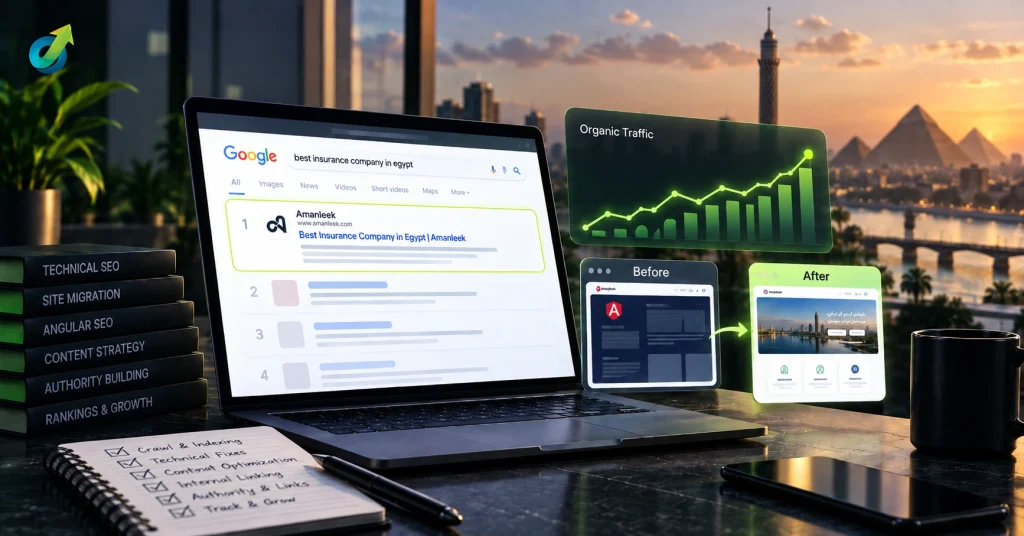
Article Amanleek SEO Case Study: From an Unreadable Angular Site to #1 for “Best Insurance Company” in Egypt
Article AI Search Citations Just Shifted: What It Means for MENA Brands

Article Tag Clouds in SEO: What They Are and How to Use Them
Article What Are Duplicate Pages and Why Are They Dangerous
Article Why AI Still Describes Your Old Brand: Knowledge Cutoffs Explained
Article Behavioral Factors in SEO: What They Are and How to Improve Them
Article JavaScript Links Are Hiding MENA Sites From ChatGPT and Claude

Real Results
More Wins
SEO & GEO for Delta Medical Labs
 GEO
GEO
1M+ monthly organic visits, 159,200 ranked keywords, 5,570 pages cited by AI engines, and 1,186 #1 rankings in KSA.

Arabic SEO, GEO & guest posting for VPNly
 SEO
SEO
65K peak monthly organic visits, 55 guest posts, and 149 pages cited by AI engines.

SEO & GEO for Ogaei Virtual Care
GEO
From 3 to 7,931 monthly organic clicks in 7 months, 2.9M+ impressions, and 40+ keywords in Google’s Top 10.

SEO for Eduverse
SEO
12× search traffic in 10 months, 45% of target keywords in the top 5, and 55% in the top 10.
Trusted by