
External Links: How to Build Your Site’s Backlink Profile
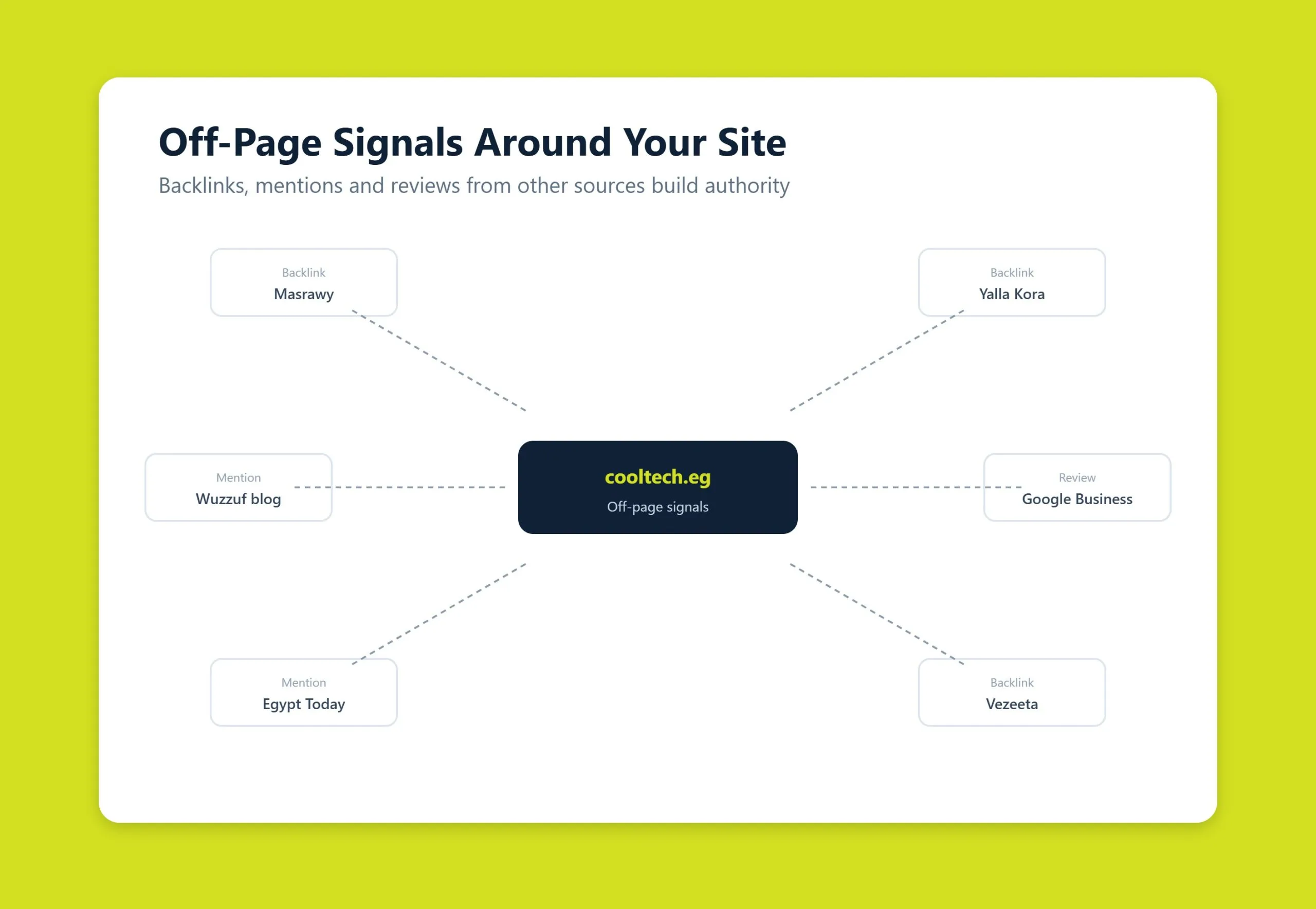
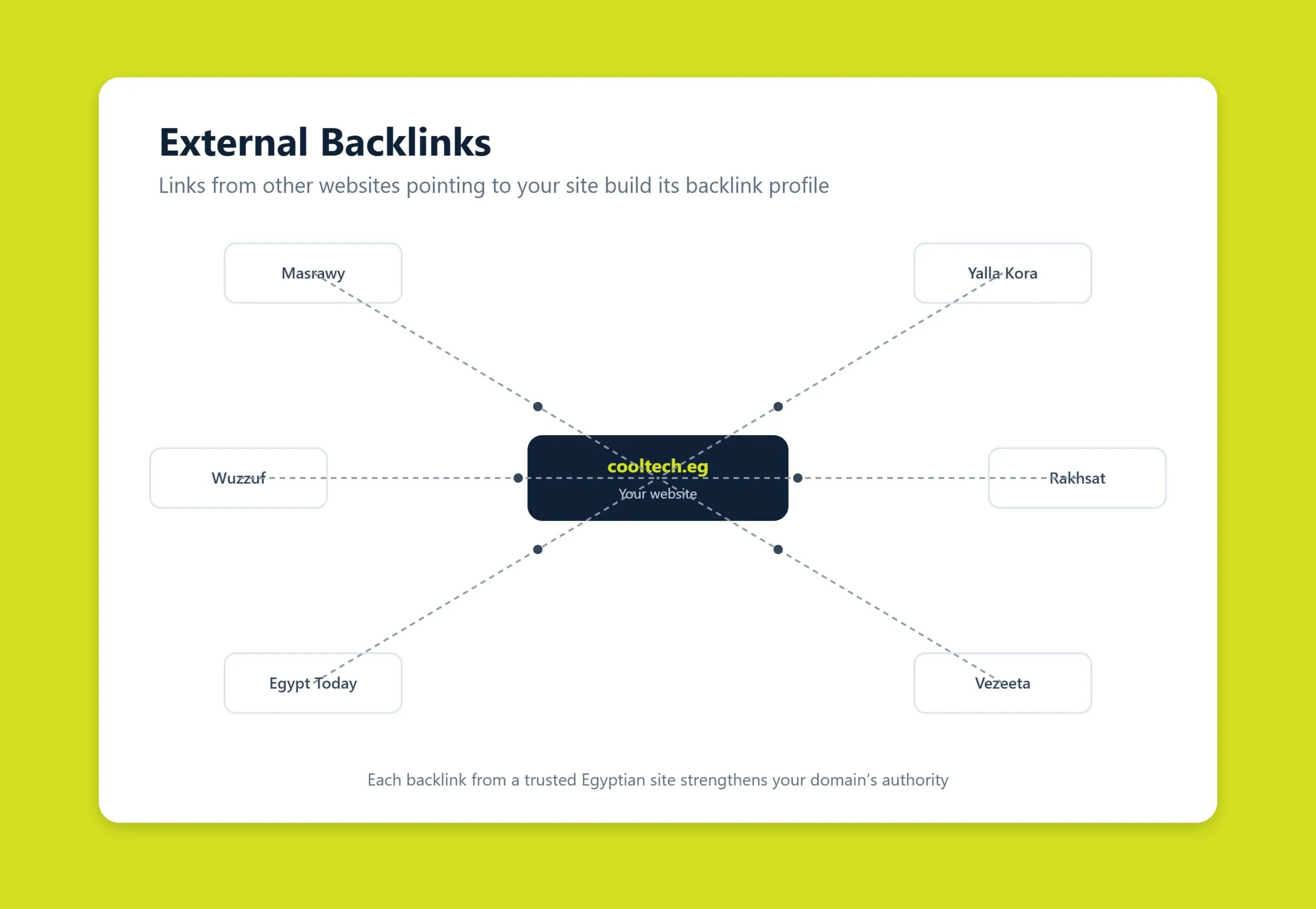
External links (backlinks) are links on third-party websites that point to your site, and they remain one of the strongest signals search engines use to judge authority and rank pages. Google reads each backlink as a vote of confidence: the more relevant, trustworthy sites that reference your content, the more credible your pages look and the higher they can climb in organic search. But not every link helps, quality, relevance, and how naturally a link is earned matter far more than raw volume, and the wrong tactics can trigger penalties. This guide explains what backlinks are, why they matter, and how to build a healthy link profile with safe, white-hat methods.
Key takeaways
- Backlinks are external votes of confidence, relevance and authority of the linking site count far more than the number of links.
- Dofollow links pass ranking value (link equity); nofollow, sponsored, and UGC links generally do not, but still add legitimate diversity.
- White-hat link building, guest posts, digital PR, resource and broken-link outreach, and unlinked-mention reclamation, earns durable links without risk.
- Buying links, spamming comments, and mass link exchanges can trigger Google’s Penguin-era spam filters and manual actions.
- Audit your profile regularly with tools like Ahrefs or Semrush, and use Google’s Disavow tool only for genuinely toxic links you cannot remove.
What are external links (backlinks)?
An external link, or backlink, is any link placed on another website that leads back to your pages. When a reputable blog, news outlet, or industry directory references your content, search engines interpret that reference as an endorsement. In aggregate, these endorsements help Google estimate how popular, useful, and authoritative your resource is compared with competitors targeting the same queries.
This is why backlinks have been a core ranking factor for two decades. A page with a strong, relevant backlink profile has a real advantage in the search results, and building that profile deliberately is a central part of any serious SEO strategy. It is also increasingly important for GEO (AI SEO), since AI answer engines lean on the same authority and citation signals when deciding which sources to surface.
Why backlinks matter for rankings
Search engines cannot judge a website’s credibility purely from its own content. Links from other sites act as independent, third-party validation. A handful of backlinks from authoritative, topically relevant domains can move rankings more than hundreds of low-value links, because they demonstrate that respected voices in your field trust your work.
Backlinks also drive qualified referral traffic. A link inside a genuinely useful article sends readers who are already interested in your topic, visitors who tend to convert better than cold search traffic. In short, links serve two purposes at once: they build ranking authority and they deliver real people to your pages.
Dofollow vs. nofollow links
Not all links pass the same value. A dofollow link is the default and passes “link equity”: the authority signal that helps the target page rank. A nofollow link carries a rel="nofollow" attribute that tells search engines not to pass that equity. Google also recognizes two related attributes: rel="sponsored" for paid or affiliate links, and rel="ugc" for user-generated content such as forum posts and blog comments.
A natural profile contains a healthy mix of both. If every backlink you earn is dofollow with exact-match anchor text, the pattern looks engineered. Nofollow links from social platforms, news sites, and communities add legitimacy, drive traffic, and keep your link profile looking organic, which is exactly what you want.
Anchor text: get it right
Anchor text is the clickable text of a link, and it gives search engines context about the destination page. Used well, it reinforces relevance; overused with the same commercial keyword, it becomes a spam signal.
Aim for a natural distribution: branded anchors (your company name), naked URLs, generic phrases like “read more” or “this guide,” and only a modest share of keyword-rich anchors. When a large percentage of your backlinks use identical money-keyword anchors, it is one of the clearest fingerprints of manipulative link building, and it is precisely the pattern Google’s spam systems are tuned to catch.
Link quality vs. quantity
Chasing volume is the most common link-building mistake. A thousand links from thin, unrelated, or spammy sites can hurt you, while a dozen links from trusted, on-topic publications can transform your visibility. Before pursuing any link, weigh these quality criteria:
- Relevance. The linking site should share your topic or industry. A link from a site in your niche carries far more weight than one from an unrelated domain.
- Authority. Established domains with their own strong backlink profiles pass more value. Metrics like Ahrefs’ Domain Rating or Semrush’s Authority Score offer a quick proxy for this.
- Natural placement. Links embedded editorially within relevant content outperform links stuffed into footers, sidebars, or unrelated pages.
- Link density on the page. A page bristling with outbound links dilutes the value each one passes. Editorial links surrounded by real content are worth more.
The takeaway is simple: prioritize fewer, better links. A focused SEO audit can tell you where your current profile is strong, where it is thin, and which opportunities will move the needle.
Safe, white-hat link-building methods
White-hat link building earns links that Google is happy to reward, because they reflect genuine editorial choices rather than manipulation. These are the methods worth investing in.
Guest posting
Contributing high-quality articles to reputable, relevant publications remains one of the most reliable ways to earn contextual backlinks. The key is genuine value: pitch topics that serve the host site’s audience, write something worth publishing, and let the link sit naturally within useful content. Done at scale on quality sites, guest posting builds both authority and referral traffic. Done lazily on link farms, it does the opposite.
Digital PR
Digital PR earns links from news outlets and high-authority sites by giving journalists something worth covering, original research, data studies, surveys, expert commentary, or a newsworthy story. Because these placements come from trusted media, the links are among the most powerful you can earn, and they often generate coverage across multiple publications from a single campaign.
Resource and broken-link building
Many sites maintain curated resource pages listing the best references on a topic. If your content genuinely belongs, a polite outreach email can earn a spot. Broken-link building is a close cousin: find a dead link on a relevant page, then suggest your working resource as the replacement. Both tactics succeed because you are helping the site owner, improving their page while earning a link.
Unlinked mention reclamation
Brands are often mentioned online without a link. Tools like Ahrefs and Semrush can surface these unlinked mentions, and a quick, friendly email asking the author to turn the mention into a link is one of the easiest wins in link building: the relationship and the relevance already exist.
Underpinning all of these is content worth linking to. Genuinely useful, original, well-produced pages attract links naturally, which is why link building and content marketing work best as a single, coordinated effort.
What to avoid: paid links, spam, and Penguin
Some tactics look like shortcuts but carry real risk. Google’s Penguin algorithm, now baked into the core ranking system, targets manipulative link schemes, and its spam policies can trigger a manual action that tanks your rankings. Steer clear of:
- Buying links that pass equity. Paid links without a
sponsoredornofollowattribute violate Google’s guidelines. Link marketplaces that promise cheap bulk placements are a classic trap. - Comment and forum spam. Dropping links into blog comments, forum signatures, or Q&A threads solely for SEO produces low-value, often nofollowed links and can flag your site as spammy.
- Mass link exchanges. “Link to me and I’ll link to you” schemes at scale leave an obvious footprint and can drag your rankings down as toxic links accumulate.
- Private blog networks (PBNs) and directory dumps. Networks of low-quality sites built purely to pass links are exactly what Google’s systems are designed to detect and discount.
The rule of thumb: if a link exists only to game rankings and offers no value to a real reader, it is a liability, not an asset.
How to audit and disavow toxic links
A backlink profile is not “set and forget.” Competitors, scrapers, and past mistakes can leave you with harmful links, so periodic auditing is essential. Export your backlinks from a tool like Ahrefs or Semrush and review them for warning signs: irrelevant or foreign-language spam sites, sudden unnatural spikes in link velocity, over-optimized anchor text, and links from sites flagged with high toxicity or spam scores.
When you find bad links, the first step is always to try to have them removed, contact the site owner and request removal. For genuinely toxic links you cannot get taken down, Google’s Disavow Links tool (inside Google Search Console) lets you tell Google to ignore specific links or entire domains when assessing your site. Use it sparingly and carefully: disavowing healthy links by mistake can cost you rankings. For most sites with a clean history, no disavow file is needed at all, Google is generally good at ignoring obvious spam on its own.
Frequently asked questions
How many backlinks does my site need to rank?
There is no magic number. Ranking depends on the competitiveness of your keywords and the quality of the links pointing at you, not a raw total. A handful of authoritative, relevant backlinks often outperforms hundreds of weak ones. Focus on earning strong links steadily rather than hitting an arbitrary quota.
Are nofollow links worthless for SEO?
No. While nofollow links typically do not pass ranking equity, they drive referral traffic, build brand awareness, and keep your overall link profile looking natural. A profile made up entirely of dofollow, keyword-anchored links looks manipulative, so nofollow links from reputable sources are a healthy and normal part of the mix.
Is buying backlinks ever safe?
Buying links that pass ranking equity violates Google’s guidelines and risks a penalty. Sponsored placements are acceptable only when they are properly marked with a rel="sponsored" or rel="nofollow" attribute so they do not pass equity. If a vendor promises cheap links in bulk without those attributes, treat it as a red flag.
How long does it take for backlinks to affect rankings?
Google must first crawl and index the linking page, then reassess your site’s authority, so effects are rarely instant. Depending on how often the linking site is crawled, you may see movement within days to several weeks. High-quality links from frequently crawled, authoritative sites tend to register faster.
When should I use Google’s Disavow tool?
Only when you have identified genuinely toxic or spammy links that you cannot get removed manually, or if you have received a manual action related to unnatural links. For most healthy sites, disavowing is unnecessary and, if done carelessly, can remove valuable links and hurt your rankings.
Related guides
Don't miss the chance to
make your website more visible!
Initial consultation and
audit of the current situation

Read also

Article Behavioral Factors in SEO: What They Are and How to Improve Them
Article JavaScript Links Are Hiding MENA Sites From ChatGPT and Claude

Article VOCTOS Is a Top SEO, PPC and SEM Company in Egypt on Clutch for 2026
Article Commercial Ranking Factors: The Complete List

Article The Title Meta Tag: What It Is and How to Write It
Article The Role of Meta Tags in Search Engine Optimization
Article Can You Sue an AI for Defamation? Where the Law Stands

Article Cloudflare’s 15 September AI Crawler Defaults: The Check Gulf and Egypt Brands Should Run Today





Real Results
More Wins
SEO & GEO for Delta Medical Labs
 GEO
GEO
1M+ monthly organic visits, 159,200 ranked keywords, 5,570 pages cited by AI engines, and 1,186 #1 rankings in KSA.

Arabic SEO, GEO & guest posting for VPNly
 SEO
SEO
65K peak monthly organic visits, 55 guest posts, and 149 pages cited by AI engines.

SEO & GEO for Ogaei Virtual Care
GEO
From 3 to 7,931 monthly organic clicks in 7 months, 2.9M+ impressions, and 40+ keywords in Google’s Top 10.

SEO for Eduverse
SEO
12× search traffic in 10 months, 45% of target keywords in the top 5, and 55% in the top 10.
Trusted by