
Link Wheel SEO in 2026: The Honest Truth (And What to Do Instead)
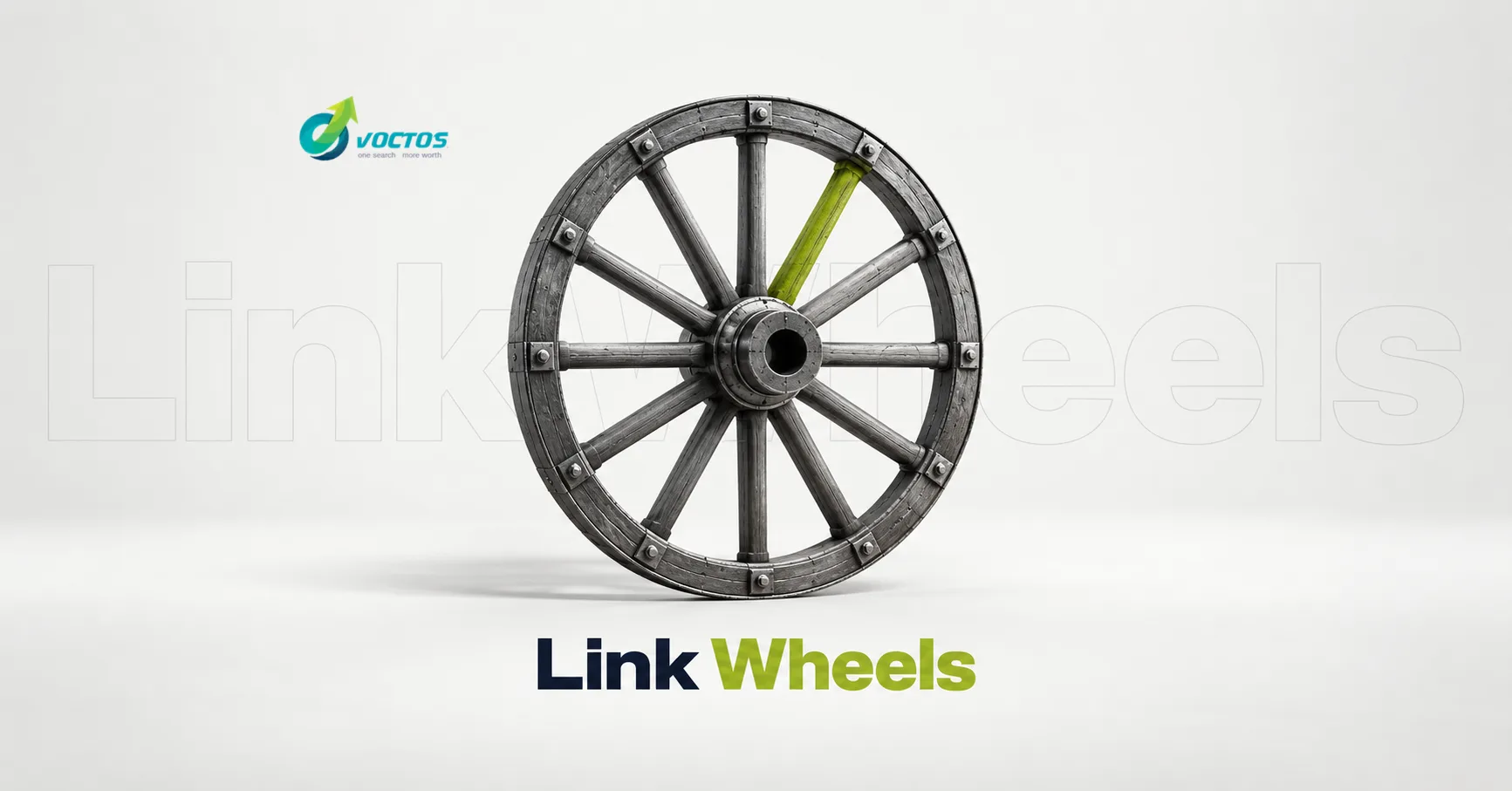
Link wheel SEO is one of those concepts that refuses to die even though it stopped working roughly a decade ago. We still get asked about it regularly by Egyptian business owners who read about it in an old blog post or heard about it from a freelancer promising fast results. This guide gives you the honest truth about link wheels, why they were built, why they failed, and what the risks are if you use them today. More importantly, it explains what actually works in 2026 for building the kind of backlink profile that drives lasting rankings.
For white hat link building tactics that produce real results, see our guide on White Hat Link Building Strategies That Still Work in 2026. For the full off-page SEO picture, read our guide on Off-Page SEO in 2026: The Tactics That Still Boost Visibility.
What Was a Link Wheel and Why Did People Build Them?
A link wheel was a network of low-authority Web 2.0 sites, typically hosted on free platforms like Blogger, WordPress.com, Tumblr, Squidoo, and Weebly, that linked to each other in a closed cycle and all linked outward to a target “money site.” The theory was that this circular linking structure created a closed loop of PageRank that amplified link authority beyond what a simple set of direct backlinks would provide. The money site would receive multiple backlinks from these satellite sites, while the satellite sites reinforced each other in the loop.
In 2011 and earlier, this worked. Google’s link evaluation was less sophisticated, and the algorithm could be influenced by volume and structure of links in ways that no longer apply. Link building services built entire businesses around constructing these networks, and for a period, they did produce ranking improvements. This brief period of effectiveness is why the technique gets mentioned in old blog posts and why some SEO practitioners who haven’t updated their knowledge still recommend it.
Why Link Wheels Failed: Google’s Algorithm Caught Up
The Penguin algorithm update in April 2012 fundamentally changed how Google evaluates links. Before Penguin, Google primarily rewarded the presence of links pointing to a page. After Penguin, Google began actively penalizing links that appeared manipulative, specifically links that were created solely to manipulate rankings rather than because they genuinely added value for readers.
Link wheels display every characteristic that Penguin and subsequent algorithm updates target:
The anchor text in link wheel networks is artificially controlled. Every link in a wheel typically uses exact-match anchor text pointing to the money site. Natural backlink profiles have diverse anchor text, branded terms, naked URLs, partial matches, generic phrases, not walls of identical keyword-rich anchors. Google’s spam detection identifies exact-match anchor text concentration as a manipulation signal.
The sites in a link wheel have no genuine authority and no organic inbound links from real sources. They were created specifically to produce links, not to create content that anyone found useful. Google’s quality assessment can identify low-authority satellite sites with no real traffic, no real engagement, and no genuine reason to exist beyond link production.
The circular linking structure itself is a flag. Legitimate websites do not routinely link to other sites that link back to them in a closed cycle. When Google’s algorithms identify a group of sites that all link to each other and all link to the same money site, the pattern is identifiable as an artificial link network, which triggers manual or algorithmic action.
What Happens If You Use Link Wheels Today
Using link wheels in 2026 does not produce ranking improvements. It produces one of three outcomes, all negative.
No Effect
Google ignores the links. Penguin’s real-time integration (since 2016) means manipulative links are discounted as they are crawled, not after a periodic algorithm run. Links from obvious satellite networks are effectively invisible to the ranking algorithm. You have spent money and time on a tactic that produces zero benefit.
Algorithmic Penalty
If the link wheel is detectable (and most are), Google algorithmically discounts the links and may apply a broader quality penalty to the money site. This penalty suppresses rankings across your entire site for all keywords, not just the ones the link wheel was targeting. Recovering from an algorithmic penalty requires removing the manipulative links (via Google’s Disavow Tool), cleaning up the site’s overall link profile, and waiting for Google to recrawl and reevaluate. This process takes months and in severe cases can permanently damage a domain’s authority.
Manual Action
Google’s web spam team issues manual actions against sites with artificial link profiles. A manual action specifically targeting unnatural links is applied to the site through Google Search Console and typically causes a site-wide or partial demotion in search results, and in severe cases removal. Recovering from a manual action requires submitting a reconsideration request after removing the manipulative links, a process that can take three to six months and requires demonstrating that the manipulation has been permanently corrected.
For any Egyptian business that has invested in building organic search visibility, these outcomes represent a catastrophic risk. The time, money, and content investment in organic search can be negated by a single manual action triggered by a link scheme. No ranking gain from a link wheel, even if it briefly worked, which it won’t, is worth this exposure.
Why Link Wheel Sellers Still Exist
Despite the clear evidence that link wheels are ineffective and risky, services selling them persist. Understanding why helps you recognize and avoid them.
The sales cycle for SEO manipulation is longer than the damage cycle. A client buys a link wheel service today; rankings may not visibly change for weeks or months; a penalty (if triggered) may not be obvious for longer still. By the time the damage is apparent, the service provider has been paid and often cannot be held accountable. This delay between purchase and consequence allows bad actors to operate indefinitely in a market where most clients do not understand the underlying mechanism well enough to evaluate the risk.
Some link wheel sellers also report false success by measuring the wrong things. They may point to increased crawl activity (Google crawling more pages on your site after detecting new links) as evidence of improved rankings, which it is not. They may point to brief ranking fluctuations as “movement” that proves the tactic is working. Professional SEO clients should measure organic traffic and keyword ranking positions over 90-day minimums, not crawl activity or brief ranking shifts.
What Actually Works: A 2026 White Hat Link Building Framework
The irony of link wheel discussions is that the time spent building and managing link wheel networks is better spent on tactics that actually work, tactics that are also significantly lower risk because they comply with Google’s guidelines. Here is the framework VOCTOS uses for sustainable backlink growth for Egyptian clients.
1. Earn Links Through Original Research and Data
Original research, surveys, data analysis, proprietary industry studies, is the most reliable method for earning natural backlinks in 2026. When you publish data that other publishers want to cite, they link to you naturally. A single well-executed research piece can keep earning backlinks from authoritative domains for years with little or no outreach, link exchange, or manipulation.
For Egyptian brands, this creates a significant advantage: original Arabic-language or Egypt-focused data is scarce. A survey of Egyptian consumer e-commerce behavior, an analysis of Egyptian digital marketing budgets, or a study of Arabic-language search trends creates citable content that journalists, bloggers, and industry publications want to reference, and that earns high-authority links from the Egyptian media ecosystem.
2. Digital PR and Media Coverage
Digital PR involves creating genuinely newsworthy content, analysis pieces, expert commentary, data-driven stories, significant business announcements, and distributing it to journalists, bloggers, and publications who cover your industry. A single placement in a high-authority Egyptian news publication or industry site can provide more link equity than hundreds of link wheel links, and it does so without any manipulation risk.
Effective digital PR for Egyptian brands combines Arabic and English language outreach, because the Egyptian media ecosystem spans both. Building relationships with journalists and editors in your industry, technology, finance, real estate, retail, creates a sustainable pipeline of natural coverage that generates authoritative backlinks over time.
3. Content That Earns Links Naturally
Certain types of content reliably earn backlinks over time without active outreach: comprehensive how-to guides, definitive glossaries, comparison tools, calculators, and data visualisations. These “link magnets” earn links because they are genuinely useful reference materials that other content creators want to cite when explaining concepts to their audiences.
Building a library of link-magnet content is a core component of long-term link building strategy. The initial investment is high, comprehensive, data-rich content takes time to produce, but the compounding returns are significant. A guide published today can earn links continuously for years, steadily building the site-level authority signals that help your future content rank faster and more broadly. For the content strategy framework that supports this, read our guide on SEO Content Strategy 2026: A Practical Plan for Egyptian Brands.
4. Strategic Guest Posting on Relevant, High-Authority Sites
Guest posting on genuinely relevant, high-authority sites remains an effective link building tactic when done correctly. The key distinctions: the host site must be genuinely relevant to your industry, must have real traffic and audience engagement (not just domain authority scores), and the guest post must provide genuine value to the host site’s audience rather than being a thinly veiled advertisement.
Guest posting on irrelevant sites, on private blog networks (a modern cousin of link wheels), or producing low-quality content solely for link placement violates Google’s guidelines and can trigger the same penalties as link wheels. High-quality, relevant guest posting on sites that your audience actually reads is legitimate and effective.
5. Broken Link Building
Broken link building involves identifying pages on relevant websites that link to content that no longer exists (404 errors), creating equivalent or better content on your own site, and contacting the site owner to suggest updating the broken link with your resource. This tactic works because it provides genuine value to the site owner (fixing a broken link improves their user experience and SEO), which makes the ask reasonable and the acceptance rate higher than cold outreach for link placement.
For Egyptian markets, broken link building is particularly effective in industries that have evolved rapidly, fintech, real estate technology, digital marketing, where older content regularly becomes outdated and links to it frequently break.
6. Building Internal Links Strategically
While internal links do not carry the same authority weight as external backlinks, they are an underused lever for distributing link equity across your site and reinforcing the topic authority of key pages. A well-planned internal linking structure ensures that your most important pages receive authority signals from the full breadth of your site’s content. For more on this, see our guide on Why Internal Site Search Is a Hidden Enterprise SEO Lever.
Evaluating Link Building Proposals: Red Flags to Know
Egyptian business owners regularly receive proposals from SEO agencies promising fast ranking improvements through link building packages. Here are the red flags that indicate a proposal involves link wheels, link farms, or other manipulative tactics.
Guaranteed rankings within a specific timeframe are always a red flag. No legitimate SEO agency guarantees rankings because Google’s algorithm is not controllable. Any guarantee of “page 1 within 30 days” through link building specifically suggests automated or manipulative tactics rather than genuine authority building.
Extremely low prices for link building packages, offers to build “1,000 links for $50” or similar, indicate link farms and automation, not genuine outreach and relationship building. The per-link cost of legitimate, high-quality link building reflects the genuine effort involved: content creation, research, outreach, and relationship management. Bulk link packages at low prices are almost always link wheels, private blog networks, or comment spam.
Vague descriptions of “link diversity” or “network links” without specifics about the sites and methods involved should be treated with suspicion. Legitimate link building agencies can describe exactly which types of sites they target, how they conduct outreach, and what kind of content they create. If a proposal cannot answer these questions specifically, the method is likely one Google penalizes.
Link Building for Egyptian Brands: What the Local Market Requires
Effective link building for Egyptian brands has specific characteristics that distinguish it from generic global SEO link building. Understanding these characteristics helps you evaluate what a realistic, effective link building program looks like.
Egyptian media coverage is particularly valuable for link equity. Links from Al-Ahram Digital, Egypt Independent, Daily News Egypt, Amwal Al Ghad, and other Egyptian news publications carry significant authority with Google for content targeting Egyptian audiences. Building relationships with journalists and editors at these publications through digital PR is a sustainable investment. For B2B Egyptian brands, coverage in industry publications and LinkedIn-adjacent business media carries both link value and direct lead generation value.
Arabic-language authoritative sites, major Arabic news portals, regional industry publications, Arabic Wikipedia citations, build entity recognition and referral visibility, though Wikipedia’s external links are nofollow and pass no PageRank. For brands competing for Arabic-language keywords (which is most Egyptian consumer brands), earning links from Arabic-language authoritative sources is as important as English-language link building.
Regional authority signals matter for Egyptian brands competing for pan-Arab search visibility. Links from high-authority Kuwaiti, Saudi, Emirati, or Lebanese publications can boost authority for Egyptian brands competing for regional Arabic-language queries. A strategic link building program for Egyptian brands should map the authority landscape across the MENA region, not just Egypt.
Frequently Asked Questions: Link Wheels and Link Building
Do link wheels still work in 2026?
No. Link wheels do not produce ranking improvements in 2026. Google’s algorithms identify manipulative link patterns and discount them in real time. Any brief ranking movement from a link wheel is more likely to be noise than genuine improvement, and the risk of a manual action or algorithmic penalty is real. The unanimous recommendation among professional SEO practitioners is to avoid link wheels entirely and invest the equivalent budget in legitimate content creation and digital PR.
What is the difference between a link wheel and a private blog network (PBN)?
A private blog network (PBN) is a set of websites owned by a single entity, built specifically to provide backlinks to a money site. A link wheel is a specific structure where those sites link to each other in a cycle and all link to the money site. PBNs are the broader category; link wheels are a specific architectural pattern within that category. Both are against Google’s guidelines and both carry the same penalty risks. PBNs and link wheels are functionally equivalent in terms of risk and (in)effectiveness.
Can I recover from a link wheel penalty?
Yes, but recovery takes time and effort. For algorithmic penalties, the process involves identifying the manipulative links through Google Search Console and Ahrefs/Semrush backlink audits, removing links where possible by contacting site owners, disavowing the remaining links through Google’s Disavow Tool, and waiting for Google to recrawl and reassess. For manual actions, the same cleanup process applies plus a formal reconsideration request to Google’s web spam team. Full recovery from a significant link penalty typically takes three to nine months.
How many backlinks does a typical Egyptian brand need to rank on page 1?
The number of backlinks required varies dramatically by keyword competitiveness and industry. For local Egyptian keywords with low competition (“plumber New Cairo”), a handful of high-quality local citations and a few relevant backlinks may be sufficient. For national Egyptian keywords (“SEO agency Egypt”), competitive analysis suggests the top-ranking pages typically have 50–200 referring domains from relevant, authoritative sources. Volume of links matters far less than quality and relevance, 10 links from genuinely authoritative, relevant Egyptian sources outperform 1,000 links from link farm sites.
What is the safest link building strategy for a new Egyptian business?
For new Egyptian businesses with limited budgets and no existing domain authority, the safest and most effective starting strategy combines: (1) claiming and optimizing local directory listings (Google Business Profile, Egyptian business directories, industry-specific directories); (2) earning links through genuinely useful content, how-to guides, market data, practical tools relevant to your industry; (3) digital PR via press releases about genuine business milestones (launches, partnerships, certifications); and (4) building relationships with relevant bloggers and journalists through providing expert commentary. This foundation builds sustainable authority without manipulation risk.
How do I evaluate whether an SEO agency’s link building is legitimate?
Ask for specific examples of sites where they have placed content or earned coverage, with links to the actual placements. Verify that those sites have real traffic (use Ahrefs Site Explorer or Semrush to check estimated organic traffic), real audiences (check the site’s social media and comment engagement), and genuine relevance to your industry. Ask to see the outreach process and content creation approach. A legitimate agency can answer all of these questions specifically and transparently. If an agency cannot explain exactly how they build links, assume the methods are ones Google penalizes.
Related Reading
- White Hat Link Building Strategies That Still Work in 2026
- Off-Page SEO in 2026: The Tactics That Still Boost Visibility
- SEO Content Strategy 2026: A Practical Plan for Egyptian Brands
- SEO Guide 2026: How to Win Search and AI Visibility in Egypt
- Programmatic SEO in 2026: How to Scale Without Getting Penalized
- How to Find Related Keywords and Use Them Properly in 2026
- Long-Tail Keywords: How to Find Them and Rank For Them in 2026
- How to Use GA4 Reports to Define Your SEO Priorities for 2026
Related guides
Want more people
to find your website?
Strategy call and
full site audit

Read also

Article Sovereign AI in the Gulf: What Arabic Models Mean for How Your Business Gets Found

Article Clinic SEO Case Study: How We Took a Kuwait Clinic to #1 on Google and Into AI Answers in 2 Months
Article Hospital SEO Case Study: How Al Mouwasat Grew Non-Brand Traffic 2.9X to 314K Monthly Visits
Article Screaming Frog for JavaScript Sites: How to Crawl What Search Engines Actually See
Article Retrieval or Memory? How to Tell Why an AI Got You Wrong
Article How to Choose a GEO Agency in Egypt and the Gulf: A Buyer’s Checklist

Article ChatGPT Referral Traffic Fell 46%: What Gulf Brands Should Check
Article 301 Redirects: What They Are and How to Set Them Up Correctly





Real Results
More Wins
SEO & GEO for Delta Medical Labs
 GEO
GEO
1M+ monthly organic visits, 159,200 ranked keywords, 5,570 pages cited by AI engines, and 1,186 #1 rankings in KSA.

Arabic SEO, GEO & guest posting for VPNly
 SEO
SEO
65K peak monthly organic visits, 55 guest posts, and 149 pages cited by AI engines.

SEO & GEO for Ogaei Virtual Care
GEO
From 3 to 7,931 monthly organic clicks in 7 months, 2.9M+ impressions, and 40+ keywords in Google’s Top 10.

SEO for Eduverse
SEO
12× search traffic in 10 months, 45% of target keywords in the top 5, and 55% in the top 10.
Trusted by