
Which Sources Do AI Engines Actually Trust? The Citation Hierarchy
The published data disagrees with itself, and the disagreement is the most useful finding in it. Yext analyzed 6.8 million AI citations and found roughly 86 percent traced to first-party pages and business listings with community forums near 2 percent. Other studies of AI Overviews and ChatGPT put Reddit close to 40 percent of cited sources. Both are correct, because they measured different questions.
Anyone quoting one of those numbers without the other is selling you a strategy that covers half your problem. Here is what separates them, and what the source hierarchy looks like once you account for it.
The split that explains the contradiction
Ask an engine about a named company and it behaves like a lookup. It goes to the entity: your site, your listings, your structured data, the encyclopedia entry if one exists. First-party dominance is real, and the 86 percent figure describes this world.
Ask an open recommendation question with no company named, and the engine behaves like a researcher canvassing opinion. It goes where people compare things, which is forums, roundups, review platforms and video. The 40 percent Reddit figure describes this world.
Both questions get asked about you constantly, by the same buyer at different stages, and they need different work. Owning the named question and ignoring the unnamed one is how brands end up with a flawless AI description that never gets recommended to anyone.
The hierarchy, in the order engines lean on it
Reference and editorial
Encyclopedia entries, established news outlets, analyst and research firms, academic sources, government and regulator pages. These carry the most weight per citation. Engines treat editorial oversight and institutional identity as a proxy for reliability, and one line in a source of this type outweighs a great deal of enthusiastic writing elsewhere.
You cannot buy your way in, and that is exactly why it works.
Verified platforms and curated lists
Review platforms and vetted directories. Trustpilot, G2 and Capterra profiles are roughly three times more likely to be cited than an equivalent page elsewhere, and the reason is structural rather than mysterious: they are consistently formatted, they carry visible verification signals, and they aggregate many opinions into a shape a model can summarize easily.
This is the most actionable tier on the list. A thin or abandoned profile is a gap the engine fills from somewhere you control less.
Community and professional discussion
Reddit, specialist forums, YouTube, LinkedIn, Q&A sites. Weight per citation is lower, and volume in the unnamed recommendation question is very high. Real discussion with real detail gets picked up. Thin promotional posting does not, and it is visible to the communities themselves, which is a separate cost. We wrote about how this works in practice in our note on Reddit and community citations.
Your own site and listings
Last in perceived authority and first in volume. Engines reach for your own pages constantly, particularly for the named question, because that is where the facts about you should live. The weakness is obvious to the model as well as to you, which is why a claim that appears only on your own site is worth less than the same claim confirmed somewhere independent.
What moves within each tier
Three properties keep showing up in what gets cited, across all four tiers.
Extractability. A passage that answers one question completely, in its own paragraph, without needing the sentences around it. Models cite passages rather than pages. A page that covers everything loosely tends to lose to a page that answers one thing cleanly.
A visible date. Recency is weighed, and an undated page is hard to prefer. Publication and update dates that a machine can read are worth more than they look.
Agreement across sources. A fact that appears identically in four independent places is treated as settled. The same fact stated once, on your own site, is treated as a claim. This is why entity work across listings and registers moves answers more reliably than writing more content does.
What the hierarchy means for the work
Read from the top and the priorities invert what most content plans assume.
- Getting one accurate line into a reference-tier source beats twenty blog posts.
- Completing and maintaining review platform profiles is the fastest available win for most companies, and it is usually unowned internally.
- Being present in genuine community discussion is what decides the unnamed recommendation question, and it cannot be faked at scale.
- Your own site is necessary and not sufficient. It sets the record straight. It rarely wins the recommendation.
Frequently asked questions
Which number should I believe, 86 percent or 40 percent?
Both, for different questions. Check which query type a study measured before you plan around its number. A study of named brand questions and a study of open recommendation questions are describing two different mechanisms.
Do all six engines use the same hierarchy?
The broad shape is similar and the details are not. Perplexity retrieves for nearly every query and shows its citations. Google AI Overviews draws from pages already ranking. Copilot follows Bing, which is a different ranking set from Google. We report each engine separately for this reason.
Can I pay to be cited?
Not in the reference tier, which is the point of it. Paid placements in roundups exist and engines are increasingly able to tell sponsored content from editorial. Being genuinely present in the sources that already get cited is slower and it holds.
What about llms.txt?
Worth having and not a shortcut. It helps engines find and parse what you publish. It does not raise the authority of what they find, and it does not put you in a tier you have not earned.
Where to apply this
Our AI reputation management engagement traces each problem answer to the tier that produced it, then works the tier rather than guessing. If your issue is absence rather than inaccuracy, our GEO service covers the same hierarchy from the visibility side.
Related guides
Don't miss the chance to
make your website more visible!
Initial consultation and
audit of the current situation

Read also

Article Internal Linking: We Mapped All 34,655 Internal Links on Our Own Site

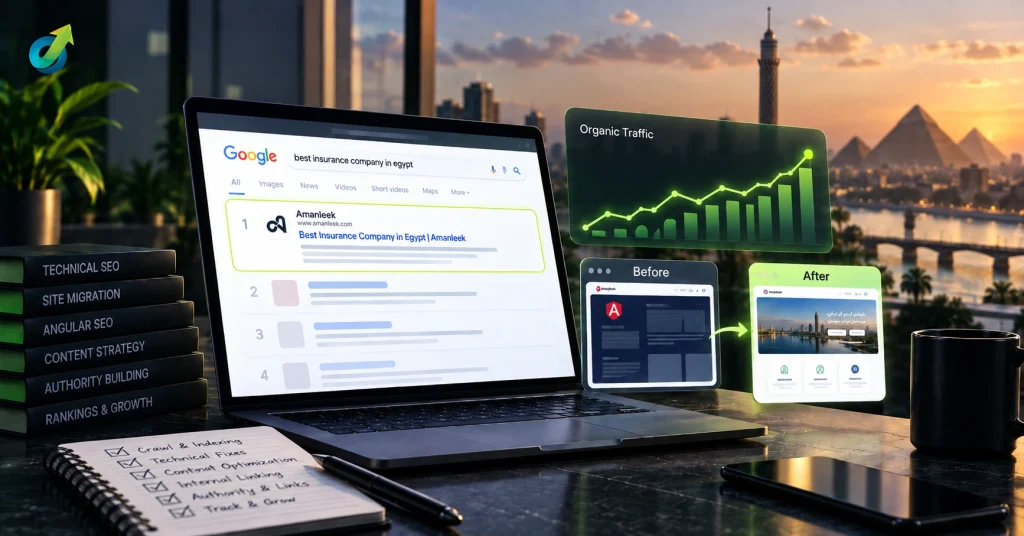
Article Amanleek SEO Case Study: From an Unreadable Angular Site to #1 for “Best Insurance Company” in Egypt
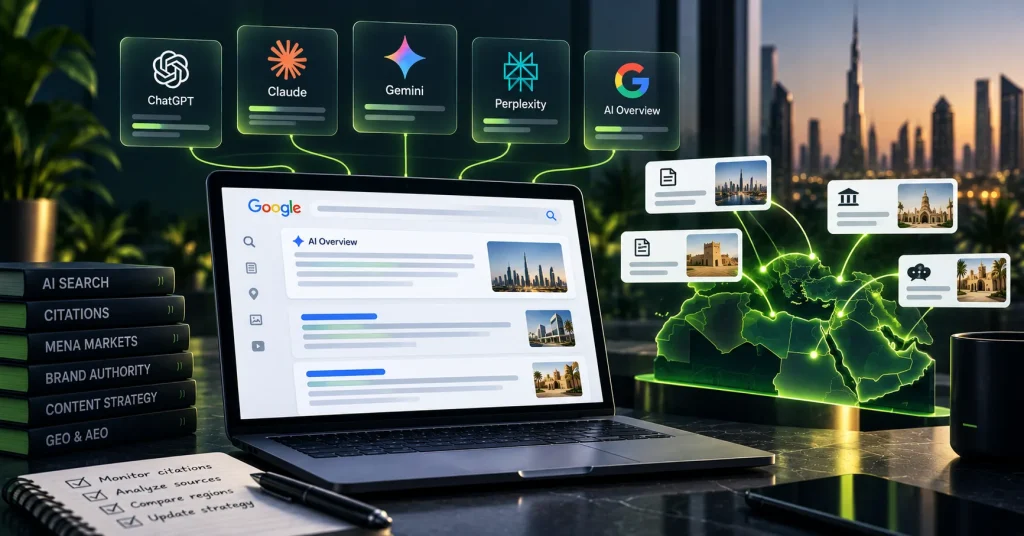
Article AI Search Citations Just Shifted: What It Means for MENA Brands

Article Tag Clouds in SEO: What They Are and How to Use Them
Article What Are Duplicate Pages and Why Are They Dangerous
Article Why AI Still Describes Your Old Brand: Knowledge Cutoffs Explained
Article Behavioral Factors in SEO: What They Are and How to Improve Them

Real Results
More Wins
SEO & GEO for Delta Medical Labs
 GEO
GEO
1M+ monthly organic visits, 159,200 ranked keywords, 5,570 pages cited by AI engines, and 1,186 #1 rankings in KSA.

Arabic SEO, GEO & guest posting for VPNly
 SEO
SEO
65K peak monthly organic visits, 55 guest posts, and 149 pages cited by AI engines.

SEO & GEO for Ogaei Virtual Care
GEO
From 3 to 7,931 monthly organic clicks in 7 months, 2.9M+ impressions, and 40+ keywords in Google’s Top 10.

SEO for Eduverse
SEO
12× search traffic in 10 months, 45% of target keywords in the top 5, and 55% in the top 10.
Trusted by