ChatGPT and Perplexity Optimization for Egyptian Brands: A Senior Playbook
How Cairo-based brands can earn citations inside ChatGPT and Perplexity
How Cairo-based brands can earn citations inside ChatGPT and Perplexity

A senior, Cairo-grounded comparison of Generative Engine Optimization (GEO) and
How Egyptian brands can win visibility inside ChatGPT, Gemini, Perplexity,

Senior-level guide to Answer Engine Optimization (AEO) for Egyptian brands
A senior-level guide to Generative Engine Optimization (GEO) services in
The honest 2026 view of social bookmarking — what value
Why link wheels stopped working a decade ago, why some
Cutting through GA4 dashboard noise — the metrics Voctos uses
The practical intersection between SEO and customer experience — and
The senior agency approach to programmatic SEO in the post-Helpful
What off-page SEO actually means in 2026, and the specific
The exact GA4 reports Voctos uses with clients to decide
How enterprise brands can extract competitive SEO and product insight
The long-tail keyword strategy Voctos uses to drive qualified traffic
The platforms, formats, and budget allocations producing results for Egyptian
The white-hat link building tactics that produce ranking results in
What separates marketing strategies that compound from those that drain
A senior agency guide to finding related keywords and using
The Voctos framework for building an SEO content strategy that
A complete, no-fluff SEO playbook for Egyptian businesses in 2026.

“Best agency in Egypt” is a phrase used freely in this market. We use it carefully. This article is the honest case for why Voctos is the best AI-first digital marketing agency for Egyptian brands in 2026 — backed by what we actually do, not what we claim. What “AI-first” should actually mean in 2026 “AI-first” has become a marketing label attached to every agency in Egypt that uses ChatGPT for ideation. That is not AI-first work. AI-first means three things at once: The output is engineered for AI search surfaces — ChatGPT, Gemini, Perplexity, Copilot, Google AI Overviews — alongside classic search. The production process uses AI as a senior tool, with senior human editing, original research, and strategic direction that AI cannot replicate. The measurement framework includes AI search KPIs — citation rate on a prompt set, AI Overview presence, AI referral traffic — not just classic rank tracking. By that definition, very few agencies in Egypt qualify. Voctos was built around it. Six concrete reasons Egyptian brands choose Voctos 1. A senior team operating across the full search stack SEO, Generative Engine Optimization, Answer Engine Optimization, AI search optimization, paid search, and the technical and content work that ties them together — all run by one integrated senior team. 2. 2025 Google Premier Partner Premier Partner status is held by a small percentage of agencies in any market. It signals sustained certified expertise, meaningful spend volume, and demonstrated performance. Egyptian brands working with us benefit from the access and benchmarking that comes with this status. 3. Four years of operating history, 290+ projects, 60+ countries, 140+ clients Founded in Cairo in 2021. Long enough to have real data and a track record. Recent enough to have built the agency around AI search from the ground up — not bolted onto a legacy practice. 4. Original content, not translated templates Every page and article we ship for clients is original, locally grounded, and built for senior craft. Translated content from US/UK competitors is the single biggest mistake we see Egyptian brands make. We do the opposite. 5. Measurement that survives a CFO Decision-grade reporting tied to business outcomes — not channel-level vanity dashboards. Brands that work with us know what the work delivered, and why. 6. Honest scoping We turn down work that isn’t a fit — budgets that can’t support senior craft, brands without product-market fit, engagements that would underperform because the relationship is set up wrong. That discipline is part of why our clients stay. How we work differently from the typical Egyptian agency One team, one editorial calendar. SEO, GEO, paid, creative, and content work off a single plan. No silos. Prompt-set monitoring as standard. Every engagement that touches search includes monthly prompt-set tracking across major AI engines. Most Egyptian agencies don’t offer this yet. Citation-worthy content production. Original surveys, frameworks, definitions — the kinds of assets LLMs preferentially cite. Generic blog content doesn’t earn AI citations; we do not ship generic blog content. Schema layering beyond the basics. Article, FAQPage, HowTo, Service, SpeakableSpecification, Organization, BreadcrumbList — every page audited and equipped with the schema it deserves. Continuous authority work. Earned mentions, contributed bylines, and senior outreach as a sustained program, not a one-quarter push. What working with Voctos looks like in practice Engagements typically begin with a 90-day foundation phase — audit, top-page rebuild, authority sprint, measurement setup, editorial cadence — followed by ongoing monthly retainers tuned to the client’s goals. Reporting cadence is monthly with quarterly strategic reviews. We work with brands that take their organic and paid channels seriously enough to invest in senior craft. If that’s where you are, our Cairo team is ready to talk. Frequently Asked Questions about Voctos as an AI-First Agency What makes Voctos different from other Egyptian digital marketing agencies? Integrated senior practice across SEO, GEO, AEO, AI search, paid search, content, and creative — all run by one team, with measurement that ties to business outcomes. We were built around the AI search shift, not retrofitted for it. Do you work with brands outside Egypt? Yes. We’ve delivered 290+ projects across 60+ countries from our Cairo base. Brands in MENA and globally hire us specifically because of our integrated AI-first practice. What kinds of brands does Voctos work best with? Brands that take search seriously, expect strategic challenge from their partner, and want measurable outcomes over executive theater. Our best engagements are with leadership teams that invest in senior craft. What is the minimum engagement size? Our engagements are sized to support senior craft. Below a certain monthly investment, the only work that’s deliverable is junior execution — which we don’t sell. We’re upfront about fit during early conversations. How do I start working with Voctos? Reach out through our contact page. Initial conversations are scoping discussions, not sales pitches — we use them to understand whether the engagement will deliver the outcomes both sides want.
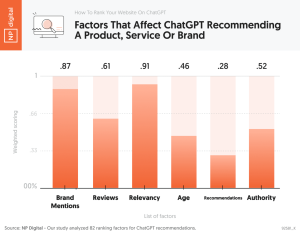
Search engine optimization (SEO) for an AI agent like ChatGPT? That’s definitely something you would never have heard about a couple of years ago. Google and Bing have long been the go-to options for Internet searches. However, that narrative is gradually changing. AI can now retrieve data from the Internet in real-time to answer user queries, while linking back to the original source. An Ahrefs study found that 63% of websites are now seeing traffic from AI platforms, although currently less than 1% of most sites’ total traffic comes from those sources. There’s high potential for that number to increase as AI tools become more popular and more accurate. Optimizing your website content to be cited by ChatGPT, or any other generative AI, is called generative engine optimization (GEO). And learning to do it right can help boost your website’s visibility, or even create lead opportunities. Let’s see how that works in this article and what GEO factors to consider for ChatGPT. How Does ChatGPT Work For SEO? ChatGPT currently has over 300 million weekly users, receives over 1 billion daily queries, and ranks 9th on the most-visited websites. When the AI-powered chatbot receives a query, it sieves through a large library of pre-trained knowledge to provide answers. These responses are often static, not explicit, and derived from existing data. However, in some cases, especially when the user manually requests it, OpenAI’s GPT can directly access the Internet via Bing’s search engine for real-time answers. The responses occasionally include linked references, which allows users to explore more information on the source website. Notice the additional references in gray boxes, and more details compared to the initial response. Our main focus for GEO is the references. OpenAI further released a prototype look at searchGPT to help users appreciate source materials. Getting your website listed as a source on a bot that’s used by 300 million users weekly is beneficial in different ways: It boosts your website visibility, increases traffic, and adds one more active referring source to your list. Higher visibility can lead to more inquiries and conversions, expanding your customer base and driving business growth. Analyzing referral traffic from the chatbot can provide insights into user interests and behavior, which can inform your content strategy and product development. GPT doesn’t just use your web content to answer user queries; it can also advocate for your brand when asked questions like, “I’m looking to hire an agency for social media management. Which ones do you recommend?” Direct recommendations from ChatGPT can boost trust and save you a ton of effort in converting your leads. GEO vs. SEO: Are They Any Different? Yes, they are different. Brooke Webber, Head of Marketing at Ninja Patches, says, “Generative engine optimization focuses on helping you appear on sites like ChatGPT and Gemini, whereas SEO helps you appear on search engines like Google and Bing. That means you need to go beyond the usual SEO tactics, such as keyword optimization, backlinks, and technical website adjustments. “However, GEO and SEO have quite a number of meeting points, including creating quality content and addressing user intent, as well. So, you can simultaneously implement strategies for both without compromising your website’s performance,” he continues. Moreover, SearchGPT heavily relies on Bing to access the Internet. Thus, optimizing for Bing aligns with tactics to appear in search results within ChatGPT. When it comes to measuring results, SEO performance is typically evaluated by positions, traffic, and conversions using analytics tools provided by target search engines (for instance, Google Analytics and Google Search Console for Google) and other SEO platforms. GEO, on the other hand, expands this by tracking brand mentions, citations in AI responses, and overall visibility across generative engines using tools like SE Ranking. GEO Factors To Consider For ChatGPT We asked ChatGPT for the factors it considers when choosing a website to reference, and it came back with credibility, relevance, accuracy, recency, and engagement. NeilPatel conducted more in-depth research and leveraged ChatGPT’s response to conclude on a few factors: brand mentions, reviews, relevance, website age, recommendations, and authority. This outcome aligns with what we initially deduced. While the age of your website is out of your control, you can optimize the remaining factors to put your website on ChatGPT’s radar. Let’s walk through how to do that. 1. Ensure Crawling by SearchGPT’s Bot is Enabled During the initial release of ChatGPT, numerous websites opted to block OpenAI’s web crawler to prevent their content from being accessed to train AI tools. If your website was among them, your robots.txt file likely includes the directive “Disallow: /” under the “User-agent: OAI-SearchBot” section. This configuration effectively restricts OpenAI’s crawler from indexing your site’s content. To get back on the radar, edit your robots.txt file and insert the following: User-agent: OAI-SearchBot Allow: / This will enable GPT’s search bot to crawl and allow indexing. Even if you’ve never restricted crawling access, you should still check to confirm that there are no issues with your robots.txt file. Additionally, you need to submit your sitemap to Bing via the webmaster tool, since SearchGPT uses Bing to access the Internet in real-time. Getting indexed on Bing increases your chances of appearing on ChatGPT. 2. Create Good Content Similar to Google and Bing, ChatGPT prioritizes delivering quality content in order to boost customer trust, and it will likely steer clear of shallow, generic website content. To receive a green mark, you need to create good content. And you can ace that by following Google’s E-E-A-T (Expertise, Experience, Authoritativeness, and Trustworthiness) guidelines. Experience: Demonstrate first-hand experience by incorporating case studies, personal anecdotes, or detailed analyses that showcase your direct involvement with the subject matter. Expertise: Highlight your qualifications, professional background, and the depth of information in your content. To further enhance your perceived expertise, collaborate with subject matter experts or obtain relevant certifications. Authoritativeness: Build authoritativeness by earning mentions from reputable sources, acquiring quality backlinks, and engaging in industry discussions. Publish well-researched articles and whitepapers, or contribute to respected publications. Trustworthiness: Establish trustworthiness by ensuring accuracy in your information, citing credible sources, maintaining a professional website design, and providing clear contact information. Trust seals, customer testimonials, and adhering to data protection standards further reinforce your site’s reliability. E-E-A-T primarily helps you gain more visibility on the Internet, and the more visibility your website has, the more brand mentions and positive reviews you get. The mentions and reviews are a badge of your credibility—a factor ChatGPT highly considers when reviewing content and sources to use. Other things you can do to make your site a go-to source for GPT: Don’t create scanty articles. Be as comprehensive as possible about a topic without adding fluff. The goal is to give search engines and GenAIs all the data they need in one place. Apply proper formatting with hierarchical headings. This not only aids user readability but also helps ChatGPT scan your content faster and extract useful information. Tom Golubovich, Head of Marketing & Media Relations at Ninja Transfers, encourages “Incorporating keywords in strategic areas. This includes your headings, introduction, meta title, and meta description. Keyword stuffing does not significantly increase your chances of being referenced or recommended by AI, and it might instead attract penalties from search engines.” Add valuable statistics. Original figures help GPT vet the information it’s getting from your website. Ensure accuracy as much as possible. You can do this by reviewing your content for grammatical errors, clarity, and coherence. You also want to avoid adding untrue claims that can affect your credibility. Frequently audit content for recency. Remove outdated statistics, add fresh content to keep your website evergreen, and remove pieces that do not add value. Michael Nemeroff, Co-founder & CEO at RushOrderTees, says, “Good content addresses user intent, also known as search intent, which refers to the goal a user has when typing a query. Primarily, most of the queries on ChatGPT are informational, which means you should focus on digging out the ‘what is?’ of your target audience. Then create detailed content addressing these informational queries so that ChatGPT can reference them.” 3. Optimize Your About Page Optimizing your website content, such as blogs and case studies, enhances their likelihood of being used in providing answers. However, this alone doesn’t necessarily position your brand as the preferred choice for the services you offer. To enhance your brand’s presence on relevant recommendation lists, it’s essential to optimize your “About Us” section by providing comprehensive and engaging information. Clearly articulate your mission statement and values. Share your company’s