

Challenges we solve
You rank on Google.
ChatGPT still names someone else.
There is no second page in an AI answer. Either the model says your name or it does not, and the reasons it skips you have almost nothing to do with the things a classic SEO report measures.
“Which medical labs in Cairo can I actually trust for a full blood panel?”
Based on what I can find, a few names come up consistently: Competitor A, Competitor B and Competitor C. They are cited across accreditation directories and recent reviews…
Illustrative. Your category, your question, your competitors — the shape of the problem is the same.
What that costs you
A buyer who asks an assistant gets a shortlist of three. You are not on it, so you are not in the comparison, the pricing conversation or the call. Nothing shows up as lost traffic in Analytics, because the visit never happened.
No impression to measureNo click to attributeNo ranking that warns youCheck your site in 60 secondsDo this first
The 60-second self-test
Six checks you can run yourself, right now, before you talk to anybody. Each one takes seconds and each one rules out a different cause.
Open your robots.txt
Type your domain followed by /robots.txt. Search it for GPTBot, ClaudeBot, PerplexityBot and OAI-SearchBot. If any of them sit under a Disallow rule, stop here. Nothing else on this page matters until that changes.
Read your own first sentence
Open the page you most want cited. Does the first sentence answer the question the page is about, in a way someone could quote without reading further? If it opens with “In today’s digital landscape”, a model has nothing to lift.
Search your own brand name
Ask an assistant who you are. If it describes the wrong company, an old address, a service you dropped or a founder who left, you do not have a visibility problem. You have an accuracy problem, and it is the more expensive one.
Ask the shortlist question
Not “who is your brand” — ask the question a buyer asks: best X in Y. Note every name that comes back and every source cited underneath. That list is your real competitive set, and it is rarely the one in your deck.
Count who else mentions you
Search your brand name in quotes, excluding your own domain. If almost everything that comes back is written by you, the model has no third-party source corroborating that you exist.
Or let the tool do all five
Paste your URL and get a score across 45 signals, the four pillars behind it, and your three highest-impact fixes. No account, no form, under a minute.
Run the free scanDiagnosis
Six reasons an engine skips you
In almost every case it is one of these six, and most of them are fixable in weeks rather than quarters.
The crawlers cannot reach you
GPTBot, PerplexityBot, ClaudeBot and OAI-SearchBot are separate from Googlebot, and plenty of sites block them without knowing. If they cannot fetch the page, nothing else on this list matters.
Your content is not extractable
Models lift a clean, self-contained claim. A page that buries the answer under six paragraphs of preamble gets skipped in favor of one that leads with it.
You are not a resolved entity
If the web describes your name three different ways, the model has no stable thing to attach a recommendation to. Schema, knowledge panel and consistent naming are the fix.
Nobody else mentions you
Models weigh third-party corroboration heavily. A brand that only talks about itself reads as a brand nobody has verified.
You are missing from the lists they read
On shortlist questions, engines lean on roundups and comparison pages. If you are absent from those, you are absent from the answer.
The model has an old or wrong fact about you
Different problem from being missing, and more expensive. A wrong answer repeated at scale loses deals quietly, so it gets fixed first.
Move across the pack to read each one.
Want to know which of the six applies to you?
Paste your URL and get a score across 45 signals in under a minute. No account, no form.
Free, no signup.Diagnosis
Which one is you?
Six patterns cover almost every case we see. Find your symptom, read the cause, and start with the fix next to it rather than buying a program that addresses all six at once.
INSIDE THE VOCTOS CLIENT PORTAL
Find out which of the six reasons applies to you, on your own data.
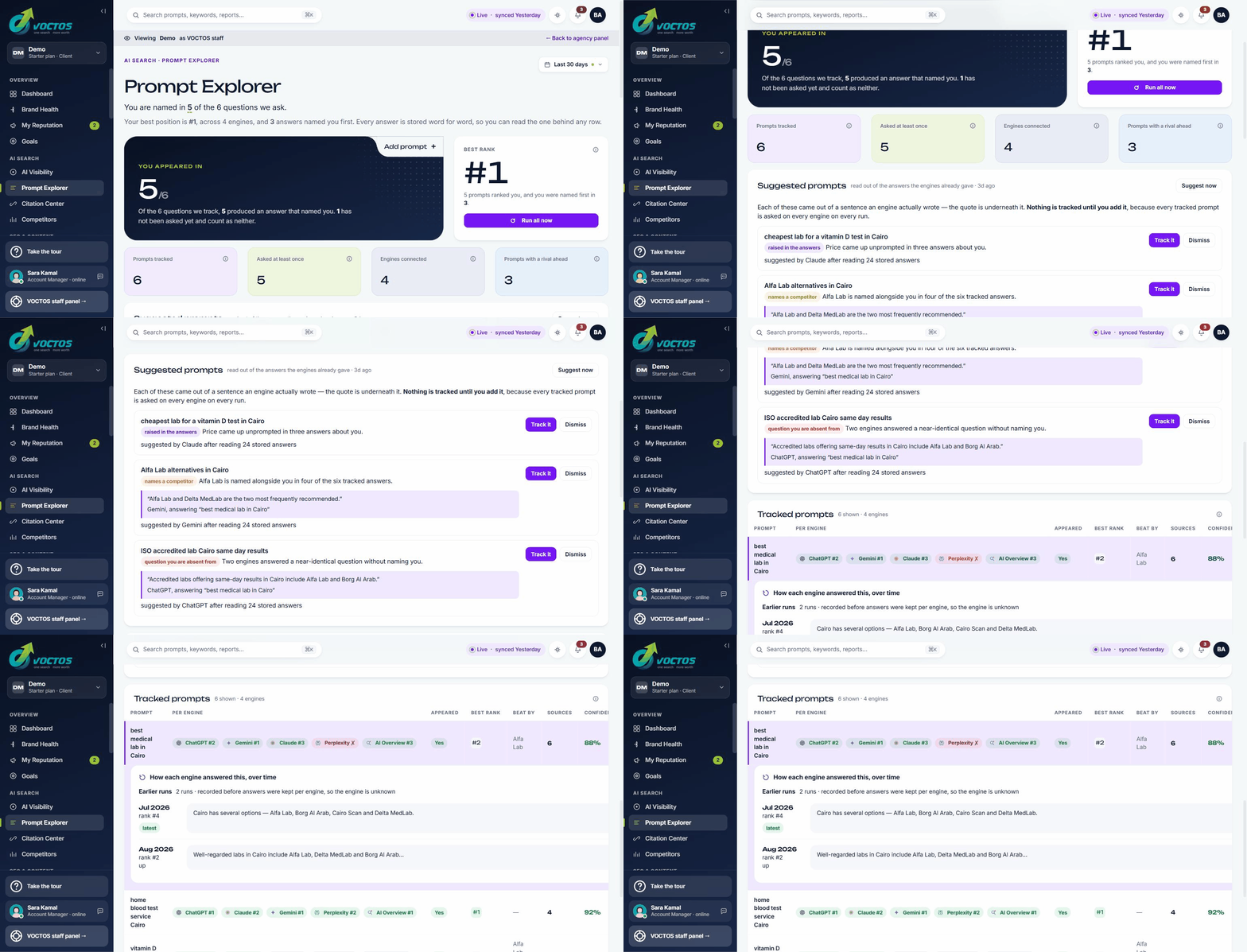
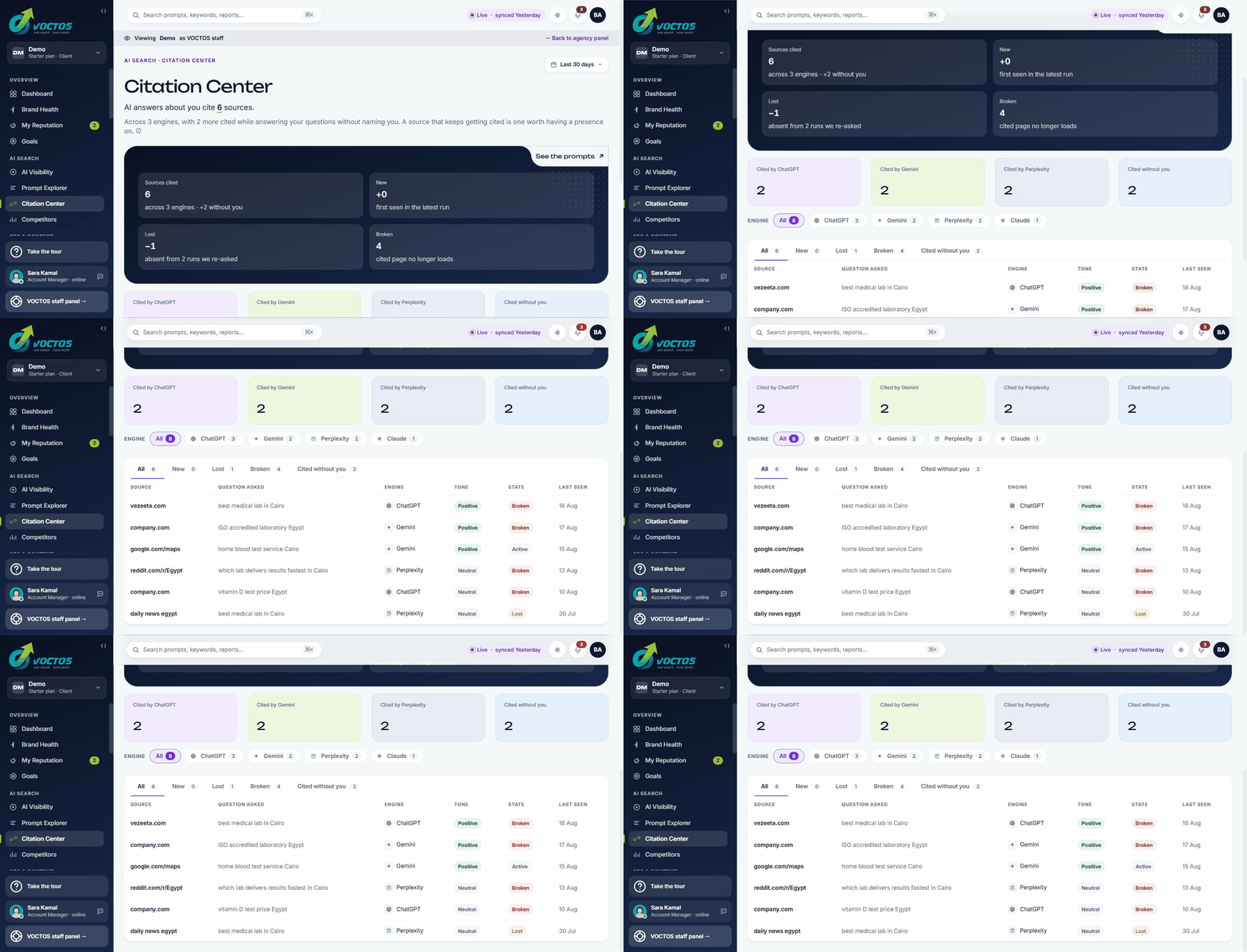
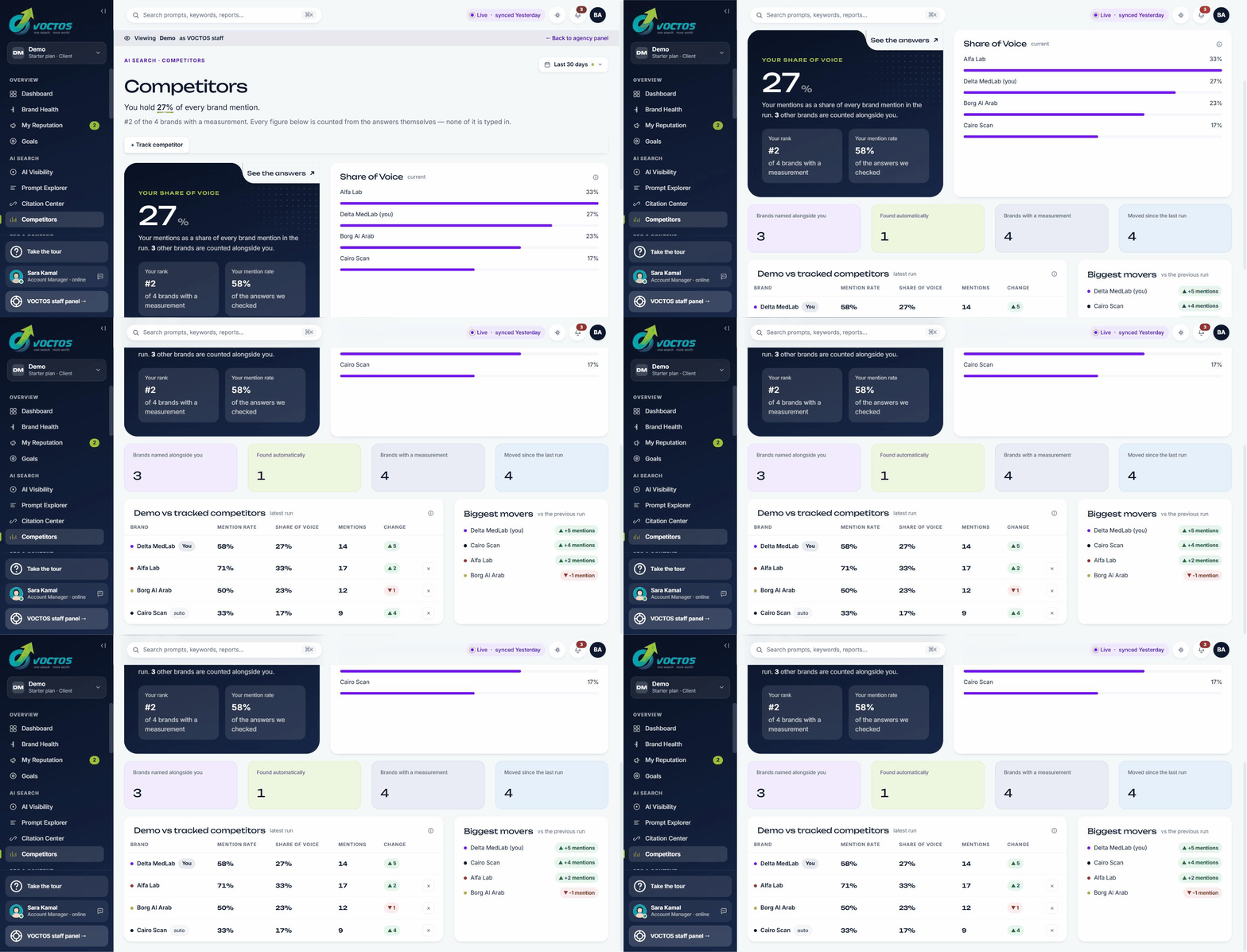
Four screens from the live client portal. Rather than guess which reason is yours, the portal shows the prompts you are missing from, the pages the engines quoted instead, and who they named in your place. The screenshots below are live views of a demo workspace. The layout is exactly what you get; the figures inside are demo data.
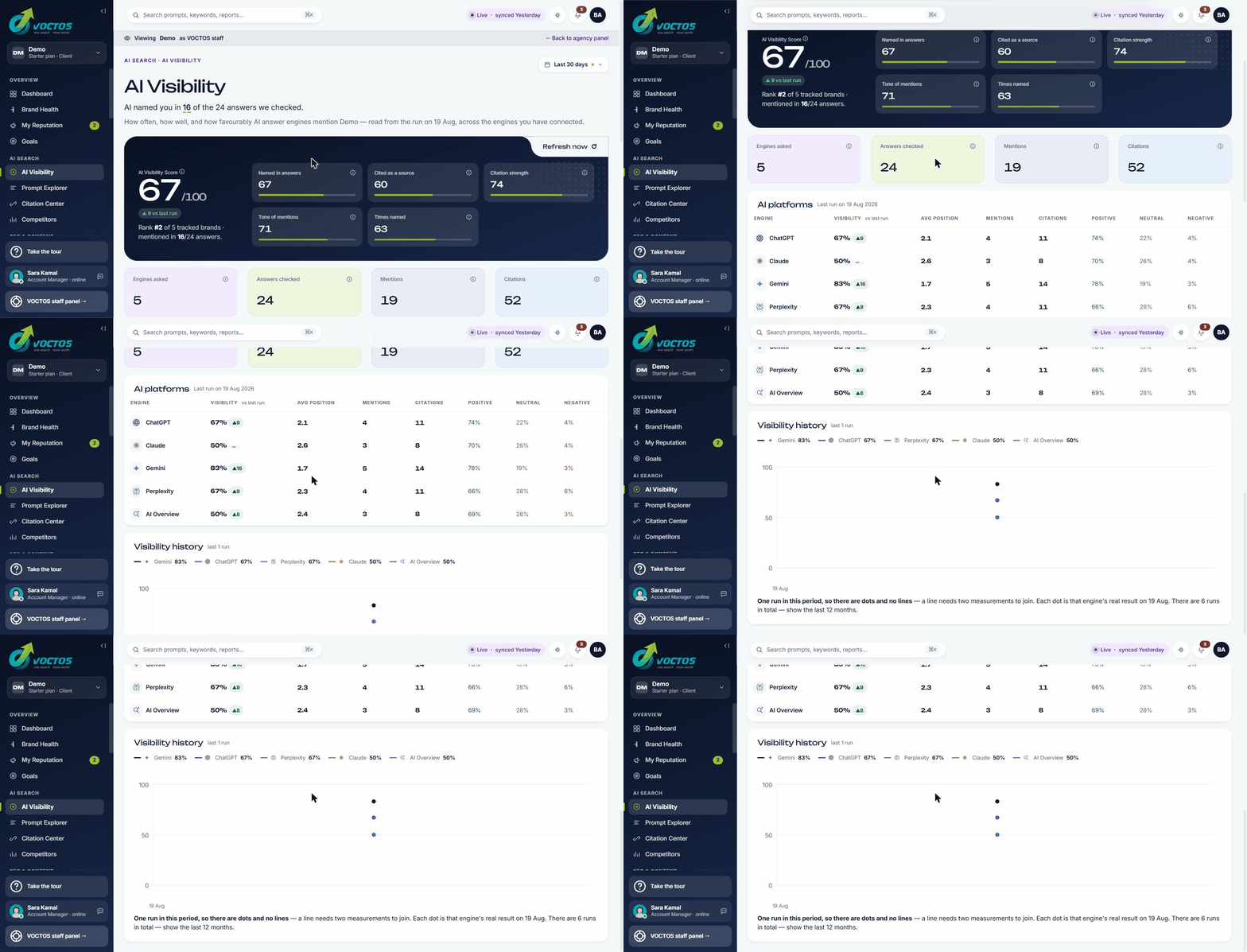
How often the engines name you, and which way that is moving. You choose the questions your buyers actually ask; we run them across ChatGPT, Google AI Overviews, AI Mode, Gemini, Perplexity and Copilot on a fixed schedule and record whether you were named, where in the answer you appeared, and who appeared beside you. Because the prompt set stays the same from run to run, the trend line means something. You are watching the same questions over time rather than a fresh sample each month.
Straight answers
What fixes this, and what will not
The market is full of quick answers to this question. Most of them are wrong, and two of them are actively harmful.
What moves it
- ✓Opening every important page with a self-contained answer a model can lift without rewriting you.
- ✓Letting the AI crawlers in, and confirming in your logs that they actually came.
- ✓Making your entity unambiguous: one name, one description, consistent across schema, your profiles and third-party listings.
- ✓Earning mentions on the pages the engines already cite in your category, rather than on any site that will take a link.
- ✓Fixing wrong facts at the source, because the model is repeating something it read somewhere real.
What will not
- ✗Adding llms.txt on its own. It helps, it is cheap, and it changes almost nothing by itself.
- ✗Stuffing your pages with the phrase your buyers type. Models are not matching strings.
- ✗Buying links. It did not work for Google and it does not work here either.
- ✗Waiting for it to correct itself. Models are retrained on the web as it is, so an unfixed source stays unfixed.
- ✗Any guarantee of a specific answer. Generative output is probabilistic. Nobody honest sells certainty here.
Want the read on your own site? Run the free scan first, then talk to us. See it for yourself →
What to expect
The ninety days after you fix it
Nothing here happens in week one, and anyone who tells you otherwise has not watched a model change its mind. This is the honest shape of it.
Access and accuracy
Crawlers let in and confirmed in the logs. Wrong facts traced to their source and corrected. This is the cheapest work and the only part with an immediate effect, because you stop actively losing ground.
Entity and structure
One consistent description everywhere, Organization and Service markup, and the pages that matter rewritten to answer in the opening lines. Re-crawl and re-index follow on the engines’ schedule, not yours.
Corroboration
Placements and mentions on the sources the engines already cite in your category. This is the slowest input and the one that moves the needle most, because models weight third-party agreement heavily.
First movement, measured
Prompts you were absent from start returning you, usually in one engine before the others. You judge it on stored answer history across runs, not on a single screenshot taken on a good day.
What we will not promise
A specific answer from a specific engine on a specific date. Generative output is probabilistic and rewritten constantly. What we will commit to is the input work, the measurement, and telling you plainly when something did not work.
How we can work together
Where to start reading
How AI search answers get built
What happens between the question and the answer, and where a brand can enter that process.
Read the guide→How to measure AI visibility
The method, the sampling rule and the failure cases, so you can judge anyone who quotes you a number.
Read the playbook→What AI Overviews actually cite
A 16-prompt audit in Arabic and English. Useful if you want to see what sources really win before you spend anything.
Read the audit→Getting into the lists AI quotes
Roundups and comparison pages are what engines reach for on shortlist questions.
Read it→llms.txt and crawler access
What it does, what it does not, and how to check whether the AI crawlers reach you at all.
See the service→The four GEO layers most agencies skip
If you are already doing the basics and still not appearing, the gap is usually here.
Read it→Not appearing in AI search — frequently asked questions
In our engagements, early citation gains usually appear within 6 to 10 weeks, and entity work compounds over months after that. Nobody controls a model directly, so we set targets from your current citation baseline rather than promising a date.
No. It is cheap, it does no harm, and it changes almost nothing by itself. The crawl data published so far shows AI bots overwhelmingly fetch your HTML, not that file. Ship it, then do the real work.
Because ranking and being cited are two different jobs. AI Overviews and AI Mode do lean on Google rankings, but ChatGPT, Claude and Perplexity assemble answers from what they can verify about you as an entity and from third-party sources. Being first on a page of links does not make you the brand a model trusts.
It happens more often than anyone expects. GPTBot, ClaudeBot and PerplexityBot are separate from Googlebot, so a default security plugin or CDN rule can block them without affecting your rankings at all. We check the server logs rather than assume.
Usually yes, but not by asking the model. We find the sources it is reading, correct or outrank them, and then re-run the prompt to confirm the answer changed. It takes weeks, not hours.
Almost never. Most of what AI engines reward, you should be doing for search anyway: clean crawlability, clear facts, a resolved entity and credible third-party coverage. GEO sits on top of SEO; it does not replace it.